

































Every home has its own mix of equipment: a furnace in the basement or a closet, an outdoor condenser by the side wall, a mini-split in an addition, ducts in the attic or none at all. The basics of good care stay the same. For homeowners in Edmonton who searched for “AC maintenance”, this page explains AC maintenance in a way that fits whichever of those setups sits in your own home.
Does a new air conditioner still need regular maintenance?
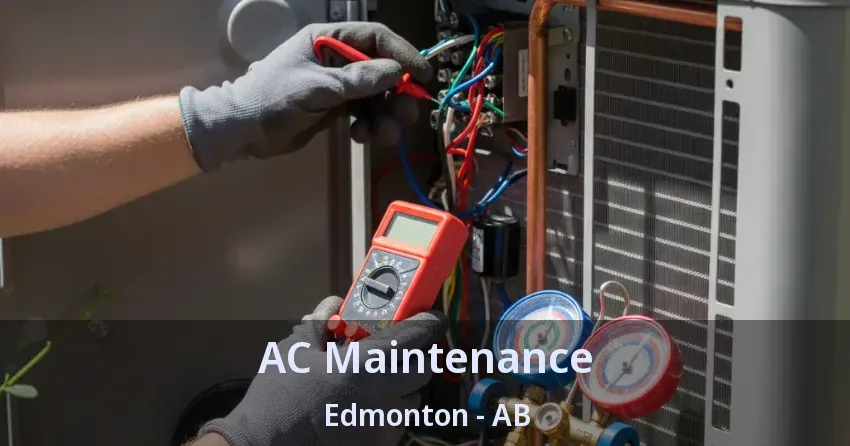
Yes. A new unit starts clean, but its coils, drain and filter begin collecting dirt from the first day it runs, and many manufacturers ask owners to keep up with regular service. An early visit also catches installation details that can drift, such as a drain line that sags or a loose electrical connection. The first check gives you a baseline of readings to compare against in later years, which makes slow changes easier to spot. If you just had a system installed and are reading up on “AC maintenance”, plan the first visit before its second cooling season at the latest.
Why is routine care worth it for your air conditioner?
Its value lies mostly in what a technician finds before it turns into a failure. On routine visits we regularly come across clogged drain lines about to overflow, burned contacts on a relay, a fan motor running hot and burners coated with dust. None of those stop the system today, but any of them could on the hottest or coldest night of the year. A tune-up also restores lost airflow and cleans the surfaces that move heat, so the equipment does not work harder than it needs to. Think of it like an oil change: unremarkable, modest next to a repair bill and easy to skip until it matters.
How does a central air conditioner work?
It moves heat rather than making cold, and once you picture that, most AC problems make sense. Indoors, the evaporator coil works like a sponge for heat and humidity, which is why it drips water into a drain pan and why a clogged filter starves it of air until it freezes. Outdoors, the condenser has to dump that heat, so leaves, grass clippings and dirt packed into its fins make the whole system struggle. The compressor, the fan motors and the capacitors that start them are the parts we see wear out most. Keeping air moving across both coils is half of good AC care.
What thermostat issues look like a broken furnace or air conditioner?
A faulty or poorly set thermostat can make a working system look broken, so it is worth ruling out first. Dead batteries, a switch left on the wrong mode, a schedule that changed after a power outage or a loose wire can all stop heating or cooling. Placement matters too: a thermostat in direct sun, near a lamp or in a drafty hallway reads the wrong temperature. Before calling, check the mode and setpoint, replace the batteries and confirm the screen is working. Mini-splits use a remote or wall controller, which can have the same problems. If the equipment still will not respond, the wiring or the system needs a technician.
What happens during a seasonal maintenance visit?
A proper tune-up is a checklist with judgment behind it. It starts with a question about how the system has behaved, then the technician runs it and listens. The filter comes out, the coils get a look and, where needed, a cleaning, and the drain gets flushed. Electrical parts are tested under load, because a capacitor can look fine and still be weak. On gas furnaces, the flame is watched, the safety switches are proven to trip and the venting is followed. On mini-splits, the indoor heads get special attention. The visit should end with the readings explained and wear flagged, without turning into a sales pitch.

How often should furnace, AC and mini-split filters be changed?
Many standard disposable filters are changed every one to three months, but the right interval depends on the filter type, the season and the home. Thin fiberglass filters clog quickly, while thicker pleated or media filters last longer. Homes with pets, smokers or renovation dust may need more frequent changes. Ductless mini-splits have washable filters in each indoor unit that are typically rinsed every few weeks during heavy use. Check the filter monthly at first and note how quickly it gets dirty. Always match the size printed on the old filter and point the airflow arrow the right way.
When should you schedule HVAC maintenance?
Schedule cooling maintenance in spring and heating maintenance in fall, before each system faces its busiest season. That timing lets the technician find worn parts while the weather is mild, and appointments are usually easier to get than during a heat wave or the first cold spell. Heat pumps and mini-splits that work year-round benefit from a visit before each season. If you missed the window, a mid-season visit is still worthwhile. Tying maintenance to a fixed reminder, such as a clock change or the start of the school year, makes it easier to remember.
Should the outdoor AC unit be covered in the off-season?
It usually does not need a full cover. Outdoor units are built to sit in rain and snow, and a tight wrap can trap moisture inside and give mice a sheltered place to nest. A simple top cover or a board that keeps falling leaves, ice and debris off the fan grille is a reasonable compromise where leaf fall is heavy or icicles drop from the roof. Remove anything on top before the first warm day, so nobody switches on the cooling with the unit blocked. Mention any cover you use during AC maintenance, so the technician can check underneath it.
What HVAC maintenance can homeowners do themselves?
Homeowners can safely handle the filter, the thermostat and keeping the equipment clear, while anything involving gas, wiring or sealed components belongs to a technician. Change or wash filters on schedule, replace thermostat batteries and keep supply and return vents free of furniture and rugs. Leave a few feet of open space around the outdoor unit and the furnace, and remove leaves or debris from around outdoor units by hand. Glance at the condensate drain area for water. Do not open burner compartments or electrical panels, do not touch the sealed lines and never try to relight or adjust gas parts.
Find a time that fits
Tell us the days and hours that suit you and we will look for an opening that matches. We confirm the arrival window ahead of time so you can plan your day in Edmonton. Request a time for AC maintenance.
