

































Heating and cooling questions rarely need an engineer to answer them. A few minutes with the questions below should cover what people in Edmonton most often ask after looking up “AC repair”. Each answer about AC repair stands on its own, so skim the headings and read whatever matches your situation, whether that is a strange noise, a planned upgrade or routine care.
Why does the air conditioner keep tripping the breaker?
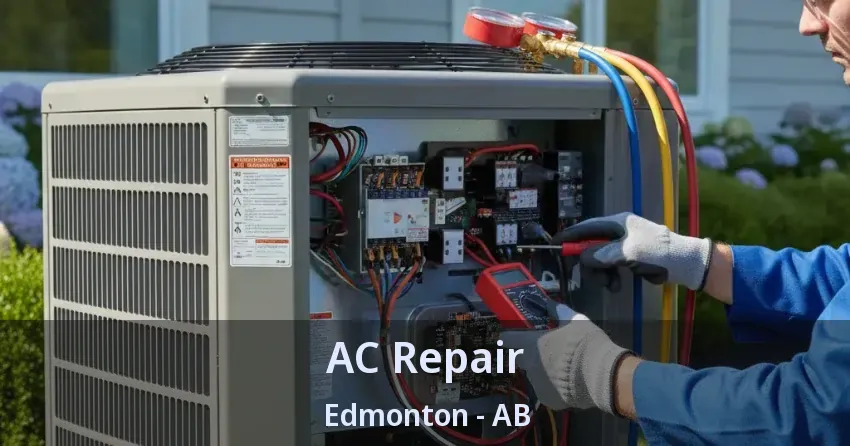
A breaker that trips when the AC starts usually points to an electrical fault or a motor struggling to start. Common culprits are a failing capacitor, a compressor that is hard to start, a shorted fan motor, loose or corroded wiring and a dirty outdoor coil that makes the unit draw more current. Resetting the breaker once is reasonable; if it trips again, leave it off and call for service, because repeated resets can damage the compressor or wiring. Do not open the outdoor unit’s electrical panel yourself. Note when it trips, since that helps narrow down the cause during AC repair.
Can a bad thermostat cause HVAC problems?
Rule it out first, because a thermostat problem can look exactly like a failed system and is far simpler to fix. A surprising number of no-heat and no-cooling calls end at the thermostat: a blank screen, a schedule that reset itself, a setting stuck on fan only or a new smart thermostat wired to the wrong terminals. Location causes quieter trouble, with a unit near a sunny window or a supply vent cycling the system at odd times. When we test, we often bypass the thermostat at the equipment; if the system starts, the problem is upstream. Wiring work belongs to a technician, but the settings and batteries are fair game.
Why does the AC run all day but the house never cools down?
An air conditioner that runs constantly without bringing the temperature down is usually short on capacity for the conditions, losing cool air on the way or not moving heat properly. Common causes include a dirty filter or coils, leaky or poorly insulated ducts in a hot attic, an undersized unit, a problem in the sealed cooling circuit and extreme heat beyond what the system was designed for. Closing blinds and keeping doors shut helps in the meantime. If it keeps falling behind on ordinary summer days, an “AC repair” visit should include airflow and temperature measurements, not just a quick look.
What causes your air conditioner to short cycle?
Short cycling is the system either protecting itself or being fooled, and the job is to work out which. When a furnace lights, runs a minute and shuts down, we look at the flame sensor, the high-limit switch and airflow, since an overheated heat exchanger trips the limit. When an air conditioner or mini-split starts and stops, we check for an iced coil, a failing capacitor and oversized equipment that satisfies the thermostat too quickly. Sometimes the thermostat itself is the culprit, mounted in a sunny hallway or wired loosely. Each start is hard on motors and contacts, so it is worth tracking down promptly.
What happens during an HVAC repair visit?
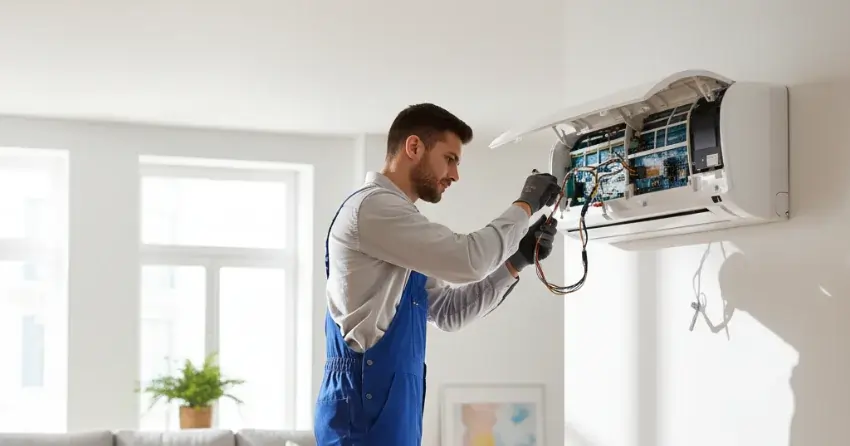
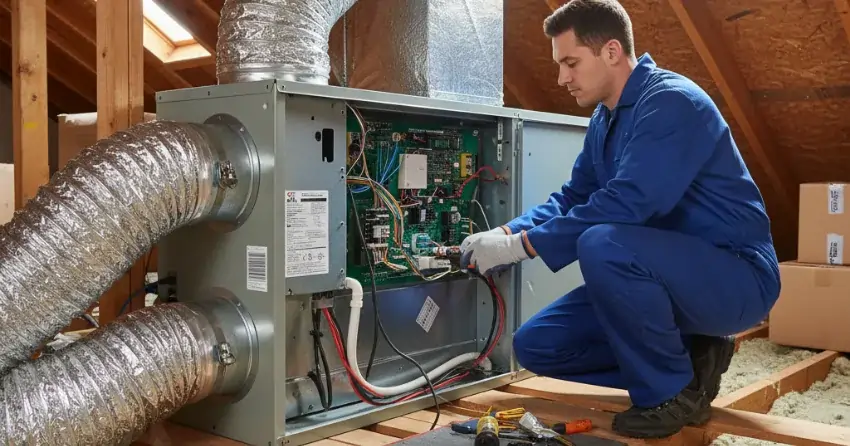
An HVAC repair visit starts with a conversation about what you noticed, followed by a step-by-step diagnosis. The technician checks power and controls, runs the equipment, measures voltages and temperatures and tests the parts most likely to cause the symptom. Once the cause is found, you should hear what failed, what the repair involves and what it will cost before work starts. Common parts are often carried on the truck, while others may need ordering. After the repair, the system is run through a full cycle to confirm it works, and the technician explains anything else worth watching.
Should you repair or replace an aging HVAC system?
Repair usually makes sense when the equipment is in good overall condition and the fix is modest compared with its remaining life; replacement starts to make sense when major parts fail on older equipment or repairs keep coming. Weigh the age of the system, its repair history, how well it keeps the home comfortable, its energy use and the availability of parts. A cracked heat exchanger or a failed compressor on an old unit often tips the balance. Ask the technician to explain both options in writing, including what each one fixes, so you can decide without pressure.
Why do repair prices for your air conditioner vary so much?
Every repair price is built from the same pieces: the part, the time and the trip. The part ranges from small and inexpensive to major and costly, and some brands use specialized components that take longer to source. Time depends on access, because a furnace in an open basement is quicker to work on than an air handler wedged into an attic in summer. The visit itself, especially outside normal hours, carries its own charge. A company that explains each piece before starting makes it easy to see what you are paying for and to compare if you want a second opinion.
Should you keep using your air conditioner until the repair visit?
Switching it off is usually safer than pushing it. A struggling compressor, a motor running hot or a furnace that keeps tripping its limit switch can turn a modest repair into a major one if it keeps running. Ice on the AC lines, water on the floor, a burning smell or a new, loud noise are all reasons to turn the system off at the thermostat and wait. Any hint of gas means leaving the house and calling the utility from outside. If you need temporary heat, a space heater made for indoor use, kept well away from anything that can burn, is safer than improvising.
How do you choose an HVAC company?
Choose an HVAC company that diagnoses before it sells, explains clearly and puts prices in writing. A good company asks about your equipment and symptoms, arrives within the window it gave and shows you what it found. For installations, it should measure your home rather than guess the size, and its quote should list equipment, labor and extras. Read recent reviews for comments about honesty and follow-up, not just speed. Be cautious of pressure to replace a system on the first visit, scare tactics about safety without evidence or prices that change once work starts.
Know where things stand after the visit
When the work is done, you should understand what was found, what was handled and whether anything needs attention later. That is how Gas Fireplace Edmonton closes every job. Book your visit and leave with a clear picture of your air conditioner.
