






























Chimney care attracts plenty of half-truths: that gas never leaves anything behind, that a roaring fire burns the flue clean, that a sweeping log does the whole job. A search for “chimney service” tends to turn up all of them at once. The answers here sort fact from folklore for anyone in Edmonton with a fireplace, stove or other appliance venting through a chimney, and they explain what chimney care can and cannot do for yours.
How can you tell soot from creosote in your chimney?
Soot and creosote are different deposits: soot is a dry, powdery carbon dust, while creosote is a tarry residue from wood smoke that can be flaky, sticky or glassy. Soot comes from incomplete burning and can be left by wood, oil or a gas appliance that is not running cleanly. It is lighter and brushes away easily, but it still narrows the flue and can hold moisture and odors. Creosote is the bigger fire concern because of its oily base. Seen from the firebox, soot looks like fine black powder, while creosote looks crusty, shiny or tar-like. A technician adjusts the cleaning to match.
What does chimney service usually include?
The phrase “chimney service” covers a range of work, and most companies offer it as a menu. The core is cleaning the flue, smoke chamber and firebox along with a visual or camera inspection. Common additions include fitting or replacing a cap, repairing or upgrading the damper, clearing nests or debris, dealing with odors and making small masonry or crown repairs. Larger jobs, such as relining or rebuilding, are usually quoted on their own. When you call, describe what you want to achieve and ask which items are standard and which are optional, so the visit matches your needs.
How do you know if a chimney fire happened without anyone noticing?
Signs of a chimney fire include a loud roaring or popping sound, dense smoke, a strong hot smell and sparks or flames from the top of the chimney, but many chimney fires burn quietly and are only discovered later. Afterward you might notice puffy, honeycomb-like flakes of creosote on the roof or ground, a warped damper or cap, cracked flue tiles or discolored metal. If you think a fire is happening, get everyone outside and call the fire department. If you suspect one happened in the past, stop using the fireplace or stove until the chimney has been inspected.
What happens during a chimney sweep?
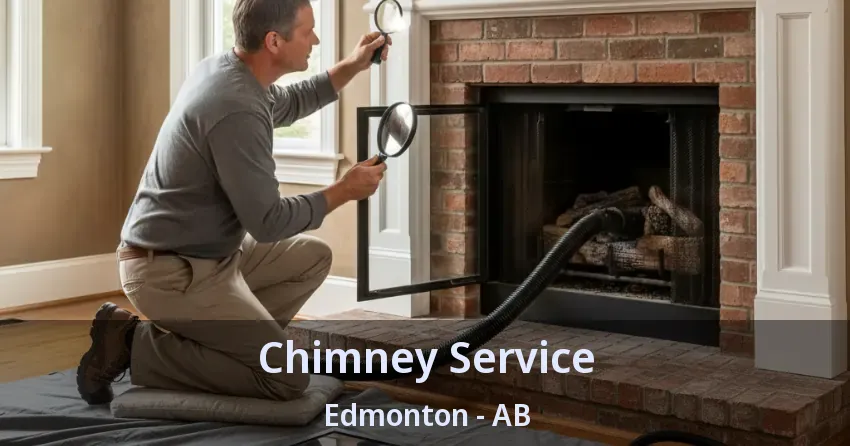
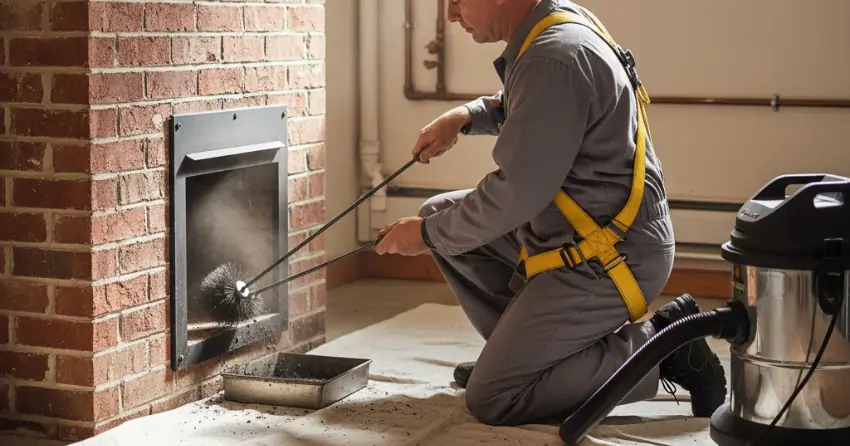
On our visits the flue, smoke chamber, damper and firebox all get cleaned, working along the path of the smoke from the hearth up to the cap. We protect the floor and nearby furniture, seal the opening around our vacuum hose so dust stays contained, then work the flue with rods and a brush matched to the liner: stiff wire for clay tile, softer poly for stainless steel. The smoke chamber above the damper gets hand tools, because creosote clings to its sloped walls. Before and after, we look at the flue condition, often with a camera. At Gas Fireplace Edmonton, the visit ends with a short walkthrough of what came out, how heavy it was and anything we would keep an eye on.
Why do quotes for chimney care vary from one property to another?
A chimney quote is mostly time, access and materials, in that order. A single-story house with a gentle roof pitch and one lightly coated flue is quick. A three-story chimney, a slate or tile roof that needs extra care, or a cluster of flues on an apartment building calls for more equipment and more hands. Condition matters too: a flue we can brush in one pass costs less than one that needs rotary tools or several trips. Parts such as caps, dampers or liner sections are separate from labor. We would rather explain those factors up front than surprise anyone later.
How long does a chimney sweep take?
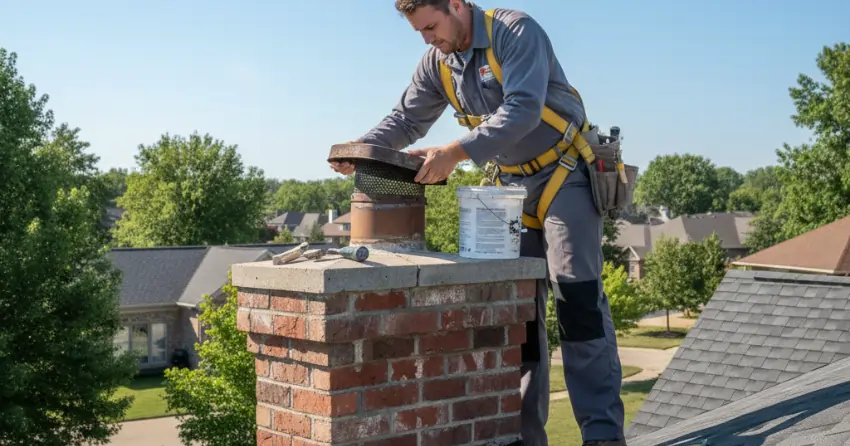
A standard chimney sweep usually takes about an hour to an hour and a half for a single flue. Expect more time if there are several flues, if a stove or insert has to be disconnected, if the roof is steep or high, or if the buildup is heavy or glazed. A camera inspection or a written report adds a little more. Plan to be available for the whole visit and for a short conversation at the end, when the technician explains what was found. If your day is tight, describe your setup when booking so the company can give you a realistic window.
Does someone need to be there during your chimney care visit?
Someone usually needs to be home during a chimney visit, because most of the work starts at the fireplace or stove inside. An adult who can let the technician in, show where the appliances are and answer a few questions is enough. Try to be around at the end too, when the findings are explained and you can ask about anything that was noted. Roof-only tasks, such as checking a cap, can sometimes be done while you are out, but agree on that in advance. Landlords can arrange for a tenant or property manager to be present instead.
Can several chimney jobs be combined into one visit?
Often they can, and it usually saves time and a second trip to the roof. A sweep and inspection pair naturally with a cap installation, a damper repair or sealing a small crack in the crown, provided the parts are on hand. Booking these together also means the technician sees the whole system at once. Some tasks, such as major masonry or liner work, may still need a separate day because of materials or curing time. Let the company know everything on your list when arranging chimney care, and ask which pieces can be grouped.
Where should CO alarms go in a home with a fireplace?
We recommend CO alarms on every floor of every home we work in, including one near the bedrooms, because a chimney is a safety system and alarms are its backup. Even a well-swept flue can be blocked overnight by a nest or a fallen tile, and a fireplace can spill fumes when exhaust fans pull against it. We also suggest a smoke alarm in or near the room with the fireplace or stove, placed as its maker directs rather than right above the hearth, and a fire extinguisher within reach. If your alarms are older than anyone can remember, replacing them is a small job with a large payoff.
Booking takes a few clicks
Use the short form to tell us what you need and when you are available. We confirm the details with you before anything is scheduled. Open the quote form and Gas Fireplace Edmonton will be in touch about chimney care for your home.
