






























Looking after a chimney comes down to a few ideas that are easy to grasp once someone lays them out. Every answer below leads with the point and then gives the reasoning, so you can read one or all of them. It is written for anyone in Edmonton who arrived after searching “chimney sweep” and wants to understand chimney cleaning well enough to ask good questions and spot a vague answer.
What is creosote and why is it dangerous?
Creosote is the residue that forms when wood smoke cools on its way up the chimney and its tars, gases and moisture condense on the flue walls, and it is dangerous because it burns easily and very hot. A thick layer can catch from a stray spark or an unusually hot fire, and the resulting chimney fire can crack liners and push heat toward nearby framing. Creosote builds faster with damp wood, smoldering fires and chimneys on cold outside walls. It may look like black flakes, a sticky tar or a hard, shiny glaze. If you see any of these on the damper or around the firebox, book a sweep.
Do modern homes still need a chimney sweep?
Yes, newer construction has not made sweeping unnecessary. Factory-built fireplaces, high-efficiency wood stoves and inserts still produce creosote, and their metal flues need cleaning and checking just like masonry ones. Some modern stoves burn cleaner, which helps, but how they are used matters more than how new they are. Gas units leave far less residue yet still depend on a clear, intact vent. Whatever the age of your home, a periodic visit keeps the system working as designed and catches wear before it turns into a repair, so a search for “chimney sweep” makes sense even in a brand-new house.
When does a fireplace or stove chimney need attention?
Black flakes dropping from the damper, a sluggish fire and a campfire smell that hangs around are the signs we see most, and any owner can spot them. When we open a damper and a shower of debris comes down, the flue is overdue. A fire that sulks, needs constant coaxing or leaves a haze in the room tells us the draft is restricted somewhere. A sharp odor long after the last fire usually comes from deposits in the flue. We also ask about the calendar: if nobody remembers when the chimney was last swept, that alone is reason enough to book a look before the next fire.
Is a chimney camera inspection worth it?
A chimney camera is worth using because it shows the full length of the flue, where cracks, gaps and hidden buildup sit far beyond the reach of a flashlight. From the bottom or top you can see only a few feet in; the camera travels the whole way on a flexible rod and records what it finds. It can reveal broken or shifted tiles, missing mortar between sections, damage from an old chimney fire, separated metal joints and obstructions partway up. Ask to see the footage or still images. They make a recommendation much easier to understand and to compare if you want a second opinion.
Can glazed creosote be cleaned out of your chimney?
Glazed creosote comes off with tools and time, since an ordinary brush glides over it like a broom on ice. We describe creosote in three stages: a loose, sooty layer that brushes away, a crunchy, flaky layer that needs stiffer heads, and a glossy third stage that clings to the liner like candy coating. For that last stage we use rotary heads with chains or cutting blades, spun on a drill and matched carefully to the liner so we do not damage it. Chemical modifiers help too, turning the glaze into a brittle crust we can sweep out later. Each method has limits, so we explain them first.
How often should a chimney be swept?
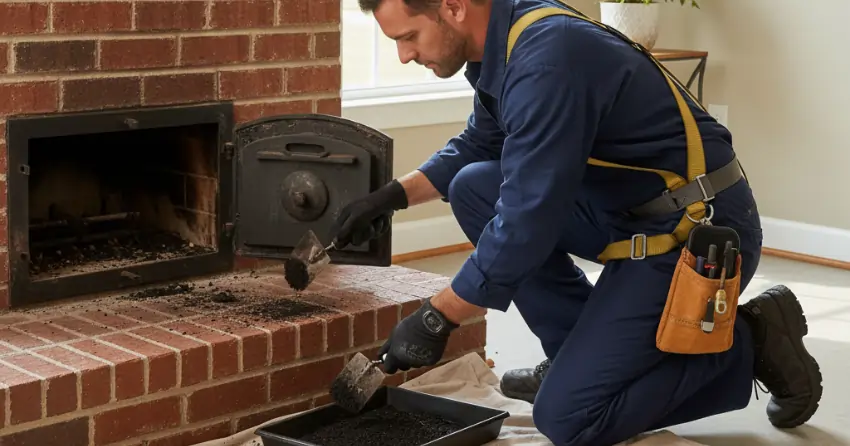
A common guideline is to have a chimney inspected once a year and swept whenever that inspection finds meaningful buildup, which for a fireplace or stove used regularly usually means about once a year. Heavy users, such as households heating mainly with wood, may need sweeping more than once per season. A fireplace lit only a few times each winter may go longer between sweeps, yet it still benefits from the yearly look, because nests, water damage and cracks have nothing to do with how often you burn. Many sweeps regard about an eighth of an inch of buildup as the point where cleaning is due.
Does sweeping always require someone on the roof?
Not always. Many flues can be swept from below, with rods pushed up from the fireplace or stove while a vacuum captures the debris at the opening. Roof access is still common, though, because it lets the technician inspect the cap, crown and flashing, clean the top section properly and clear anything wedged under the cap. Steep, icy or very high roofs may be handled from below on the day, with the roof check rescheduled. If you have concerns about roof access, raise them when you book chimney cleaning so the plan suits your home and the weather.
Can chimney work be done while nobody is home?
Someone should be home, because almost every chimney visit starts and ends at the hearth. The firebox, damper and smoke chamber are reached from inside, and stoves or inserts may need to be opened up. We also prefer to show the owner what we found while the details are fresh, ideally with photos on a tablet or standing in front of the fireplace itself. A trusted neighbor, relative or property manager can stand in if you are at work. For rentals around Edmonton, it helps to tell tenants ahead of time that someone will be working on the roof and at the hearth.
What should you do if the chimney sweep finds damage?
When we find damage, our job is to show it, explain it and let you decide, and you should expect the same from anyone. We take photos or footage, point out the exact spot and describe what happens if it is left alone. Some findings, such as a flue tile cracked by heat, mean the appliance should not be used until it is repaired. Others, like light flaking on a brick face, can be monitored for a season. We price each item separately in writing so nothing is bundled vaguely. If you want time to think or another opinion, that is completely reasonable.
Comparing quotes for chimney cleaning?
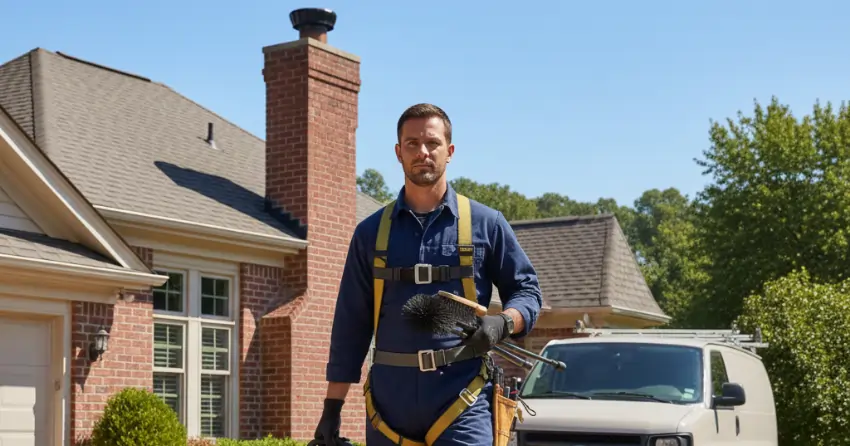
That is a smart move. Ask each company what is included, how long the visit takes and what you will be shown afterward. We are happy to answer those questions in writing. Request a detailed quote from Gas Fireplace Edmonton for your home in Edmonton.
