

































Buying a home with gas appliances often means inheriting piping and connectors nobody has looked at for a long time. Renovations, a new range or a smell you cannot place can also raise questions. Homeowners in Edmonton who searched for “commercial gas line services” will find practical answers here about commercial gas line work, from the signs that point to a leak to the checks that confirm a repair, all written with safety as the starting point.
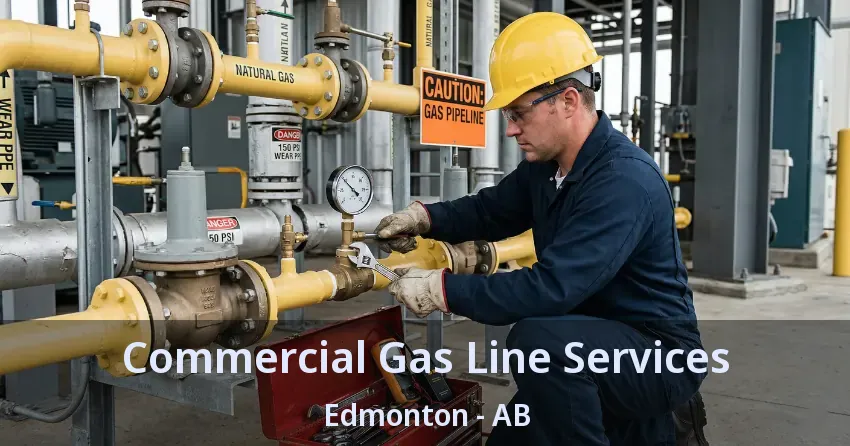
What is your commercial gas line made of?
Residential gas pipe is usually one of a few materials, and the choice depends on the fuel, the location and local rules. Black steel pipe with threaded fittings is the traditional choice inside homes. Flexible stainless steel tubing, often with a yellow plastic jacket, is common in newer construction and for appliance connections. Buried lines are usually polyethylene plastic made for gas, with a steel riser where it comes out of the ground. Some materials, such as copper tubing or galvanized pipe, are restricted in certain areas, so a technician should confirm what applies before anything is added.
Who is responsible for gas piping in a leased commercial space?
It depends on the lease. In many leases the landlord looks after the gas supply up to the tenant’s space, including the meter and main riser, while the tenant maintains the piping and connectors that serve its own equipment. Shared meters and older buildings blur that line. Read the repair and alterations clauses, and ask the property manager whom to contact if you smell gas or need work done. Tenant changes, such as adding a fryer line, usually need the landlord’s consent as well as any permit. If you are unsure, ask both the landlord and the utility to put their answers in writing.
How can you tell if your commercial gas line is leaking indoors?
The most common sign of a gas leak in a house is a rotten-egg or sulfur smell, but there are others worth knowing:
- a hissing or whistling sound near a gas line, valve or appliance;
- houseplants near a gas line wilting or dying for no clear reason;
- a gas bill that rises while your use stays the same;
- headaches, dizziness or nausea in one part of the home, which can also point to carbon monoxide, so treat them as a reason to get everyone outside.
If you notice any of these, leave the home and call the gas utility from outside rather than investigating.
Can a barbecue or pool heater share the house gas supply?
Outdoor runs bring their own concerns: weather, digging and distance. A grill or fire pit needs little gas, so a short branch is often enough. A pool heater is the heavy user and can demand a bigger supply line or an upgraded meter, which we check first. Underground sections are protected from damage and traced so future crews know where the line goes. Before any digging we call for utility locates, and we leave a shut-off valve in an easy-to-reach spot by the appliance. The full run is tested before use, however simple the hookup looks.
How do technicians find a gas leak?
Technicians find gas leaks by narrowing the search step by step, starting where the smell or reading is strongest. An electronic combustible gas detector, often called a sniffer, is passed slowly along pipes, valves and appliance connections, and it reacts to very small amounts of gas. Suspect joints are then confirmed with a bubble solution that foams at the exact point of escape. For hidden or buried piping, a pressure test shows whether the system is losing gas at all, and sections can be isolated to find which one is leaking. The goal is to locate the precise fitting or pipe before any repair begins.
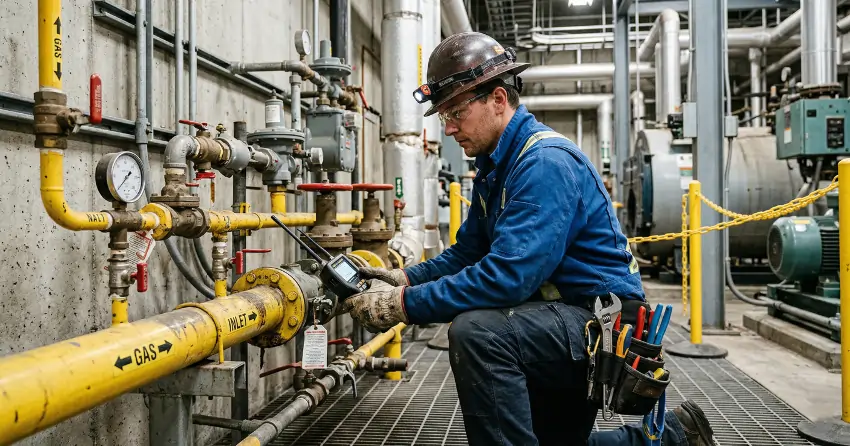
How long will your gas be off during commercial gas line work?
Straight answer: it depends on what has to be reached. When the fitting is in plain view, the work is brief and gas is usually back on during the same visit once the test passes. When we are tracing a leak inside a wall, the search is the longest part, because we isolate sections one at a time. New lines have more stages: planning, piping, testing, inspection and connection. Before starting, we tell you which appliances will be off, for how long, and what could stretch the schedule, such as an inspection slot or a visit from the utility.
How can a business plan gas work around its opening hours?
Planning is most of the work when a business needs its gas piping changed. Decide which appliances can stay off and for how long, and arrange the work for a quiet period, such as before opening, on a closed day or in sections so part of the kitchen keeps running. Tell the building owner or property manager, since shared meters and neighboring tenants may be affected. Staff need to know which equipment will be unavailable. Have equipment ratings, floor plans and any earlier gas drawings ready, and expect testing and, in many places, an inspection before gas returns to service.
What happens if a gas inspection finds a problem?
Findings are usually sorted by urgency. A leak or an unsafe appliance connection is dealt with at once, and the technician may shut off that appliance or section until it is repaired. Wear that is not dangerous yet, such as old connectors, light corrosion or a missing support, is listed for planned repair. Ask for the findings in writing, with the location of each item and the fix suggested. Keep the report with your home records. If a buyer, a seller or the local authority asked for the inspection, the written report is also what they will want to see once repairs are finished.
Which kinds of businesses need commercial gas line work?
Any business that cooks, heats water or runs gas-fired equipment depends on its gas piping. Restaurants, bakeries and cafeterias are the obvious ones, but laundromats, salons and spas, car washes, hotels, schools, greenhouses and workshops with gas unit heaters all use it too. Each has a different load and layout: a bakery needs steady heat for ovens, a laundromat runs many dryers at once and a warehouse may feed a handful of overhead heaters from one long run. When you ask a company about “commercial gas line services”, describe your equipment and opening hours, so the pipe, meter and shut-offs can be planned for what you actually run.
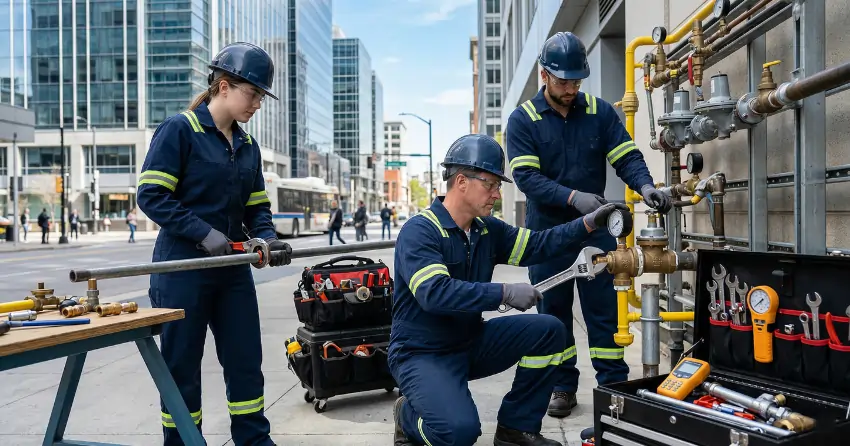
After the utility has made it safe
The utility’s job is to stop the danger. What comes next, finding and repairing the problem on your side of the meter, is work for a qualified gas technician. Ask Gas Fireplace Edmonton about commercial gas line work once your home in Edmonton has been cleared.
