

































Furnaces, air conditioners and mini-splits rarely fail without warning. They tend to run longer, sound different or leave one room behind the others for a while first. Noticing those changes early gives you more options. If a search for “ductless maintenance” brought you here, this page explains ductless mini-split maintenance for homes around Edmonton in a calm, straightforward way, so you can judge how soon to act.
What makes your ductless mini-split different from central air?
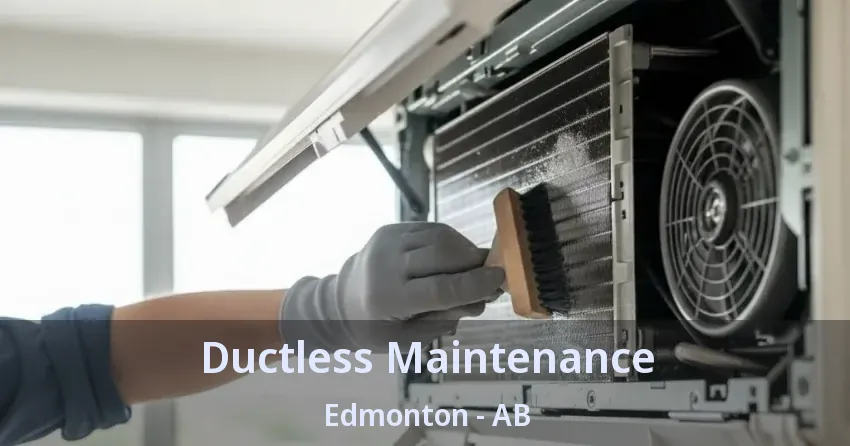
The trick is that each room gets its own air handler, mounted high on a wall or tucked into a ceiling, and a set of insulated copper lines carries heat to and from the outdoor unit. Nothing travels through ducts, which is why mini-splits are so often chosen for sunrooms, additions and bonus rooms that a central system never reached well. The indoor heads run quietly and adjust their speed to the load. What they need in return is regular attention to the washable filters and the indoor coil, since a mini-split head recirculates the air of one room all day long.
Why does a mini-split smell musty when it starts?
A musty smell at startup usually comes from moisture and dust collecting on the indoor coil and the blower wheel inside the head. When the unit cools, water forms on the coil; if the drain is slow or the unit sits idle and damp, a film builds up and releases that odor when the fan starts. Washing the filters helps, and some models have a dry or self-clean setting that runs the fan to dry the coil. A persistent smell usually means the coil, blower and drain need a professional cleaning. Mention it when you book “ductless maintenance” so the right cleaning supplies come along.
Why is the mini-split blinking, dripping or blowing weak air?
Most mini-split problems come down to three things: airflow, drainage and the outdoor unit. Filters and the fine indoor coil clog faster than people expect, because the head recirculates one room’s air all day, and a clogged coil means weak, lukewarm air. The small condensate pump or drain line can block and send water down the wall. Outside, a unit buried in leaves, ice or plants cannot move heat. When an indoor head flashes a code, we look it up for that model, which often points straight at a sensor, a fan motor or a communication fault between the units.
How often should a mini-split be cleaned, and by whom?
Split it into what you do and what a technician does. Your part is the filters, rinsed whenever they look dusty, which can be every couple of weeks in summer. The technician handles the parts behind them. Over time the blower wheel in the head collects a gray, sticky layer that cuts airflow and can smell musty, and the coil fins load up the same way. A drain bag goes around the head, the coil and wheel are cleaned, the drain line is flushed and any condensate pump is checked. Outside, the coil is cleared and the base checked for debris. Most homes need this about once a year.
How often should you change the HVAC filter?
Check monthly and change when it looks gray, and the right interval for your home will soon become obvious. Filters turn up in every possible state, from brand new to so packed that the blower has bent them inward. A clogged filter starves the system of air, which can freeze an AC coil, trip a furnace’s high-limit switch and wear out the blower motor. Thicker media filters last longer than thin ones but still need changing. A very restrictive filter can choke an older system, so ask before upgrading. On mini-splits, the washable screens in each head need rinsing far more often than most owners realize.

Which time of year suits heating or cooling maintenance in Edmonton?
Ahead of the season, every time. The pattern repeats each year: the first hot week fills the phones with no-cooling calls, and many of them would have been caught on a spring check, weak capacitors and clogged drains above all. The fall rush is the same for furnaces that sat idle all summer. Booking a few weeks before the weather turns gives you a choice of times and a technician who is not racing between breakdowns. For year-round systems, two shorter visits often work better than one. And if a season slipped by, the visit is still worth doing late.
What does the outdoor mini-split unit need in winter?
Mostly clear space and drainage. When the system heats, the outdoor coil can frost over, and the unit runs short defrost cycles that may send up a cloud of steam; that is normal. The water from defrosting needs somewhere to go, so keep the area under the unit free of ice buildup, and keep snow and drifting leaves away from the coil. Units on a raised stand or wall bracket handle snow better. Do not chip ice off the coil, which can damage the fins. If ice keeps growing instead of clearing, ask for a check during ductless mini-split maintenance.
What helps the outdoor part of your ductless mini-split run well?
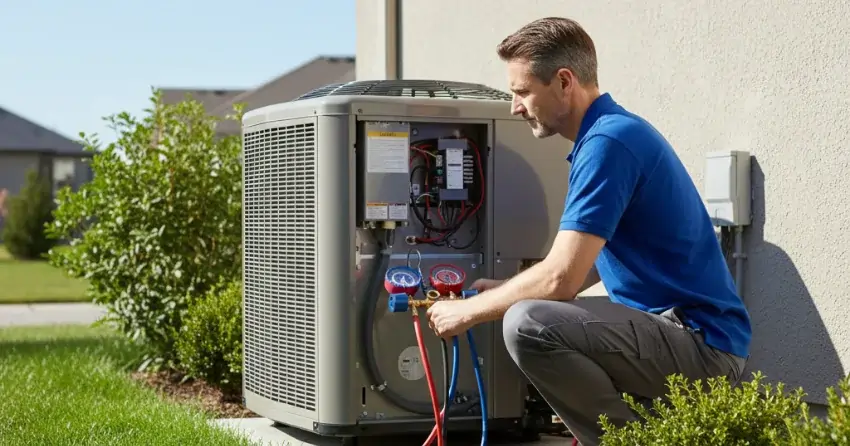
Keep the outdoor unit clear: a couple of feet of open space on every side, nothing stacked on top and the fins free of leaves, grass clippings and cottonwood. Trim shrubs back, point mower discharge away from it and remove debris by hand. Make sure it sits level on its pad and that water drains away from it. Do not cover it tightly while it might run, and leave cleaning inside the cabinet, straightening bent fins and anything electrical to a technician. Glance at it on a hot afternoon: the fan should spin steadily, and the air blowing out of the top should feel warm.
Why hire a local HVAC company?
A crew that works the same streets learns the builders’ habits: furnaces squeezed into hallway closets, condensers on narrow side yards, attic air handlers with long drain runs. That pattern knowledge shortens diagnosis and makes installation quotes more accurate. It also means someone can come back easily if a repair needs a second look. Local companies tend to keep the parts that local equipment needs. When you call one, ask how often it works on homes like yours; a confident, specific answer is a good sign.
Start with a question, not a commitment
You can contact us just to ask whether a visit makes sense. If the answer is no, we will say so. If it is yes, we will explain why. Reach Gas Fireplace Edmonton at (587) 853-6668 for an honest opinion about your ductless mini-split.
