

































Most people only think about their furnace or air conditioner when the house stops feeling right. A room that will not warm up, air that feels weaker than last season or a noise that was not there before can all send you searching. If “ductless service” is what you typed, this page gathers plain answers about ductless mini-split service for homes in Edmonton: what a technician looks at, what you can safely check yourself and how to decide on the next step.
How do ductless mini-splits heat and cool without ducts?
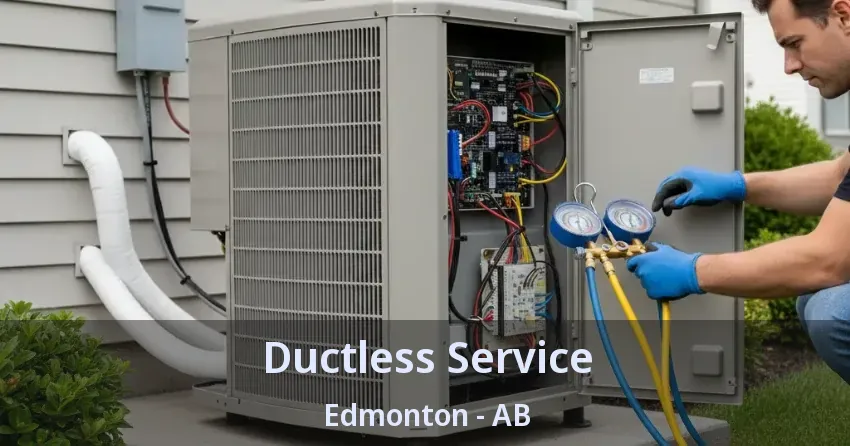
A ductless mini-split moves heat between an outdoor unit and one or more wall, ceiling or floor units indoors, connected by a small bundle of lines through the wall. Each indoor unit has its own fan, filter and controls, so rooms or zones can be set to different temperatures. Most mini-splits are heat pumps, which means they cool in summer and heat in cooler weather by reversing the flow of heat. Because there are no ducts, there is no duct leakage, and they suit additions, converted garages, older homes without ductwork and rooms the main system never kept comfortable.
Does a mini-split need service if it seems to be working fine?
Yes, because the parts that cause trouble build up slowly out of sight. The fine coil behind the filters and the blower wheel inside the head collect dust and moisture, the drain line can start to clog and the outdoor coil gathers debris long before cooling or heating noticeably drops. A routine “ductless service” visit about once a year cleans those areas and checks electrical parts while everything still works. Owners who wait for a symptom often find the head blowing weak, smelling musty or dripping by the time they call.
Should you worry about banging, squealing or rattling from the furnace or AC?
Most new noises are worth a call, because a sound that was not there last month usually means something has loosened, worn or started to fail. Descriptions over the phone fall into familiar patterns. A booming furnace start often comes from gas building up before it lights, which needs prompt attention. A high whine from the outdoor unit can be a fan motor on its way out. A hum without the fan spinning frequently traces to a weak capacitor. Gurgling or dripping from an indoor unit points to a drain problem. Recording a short video of the sound helps the technician a great deal.
Why is a ductless mini-split not cooling or heating well?
Weak cooling or heating, dripping water and a blinking light are the usual signs, and an underperforming mini-split is most often held back by dirty filters, a clogged indoor coil or a setting on the remote. Check the mode, the remote’s batteries and the indoor unit’s filters, which usually lift out from under the front cover and rinse under the tap. Make sure the outdoor unit is clear of leaves, plants and snow. Water dripping from the indoor head usually means a blocked condensate line, and a blinking light is an error code worth writing down. If those checks do not help, a technician should take a look.
How is a ductless mini-split cleaned?
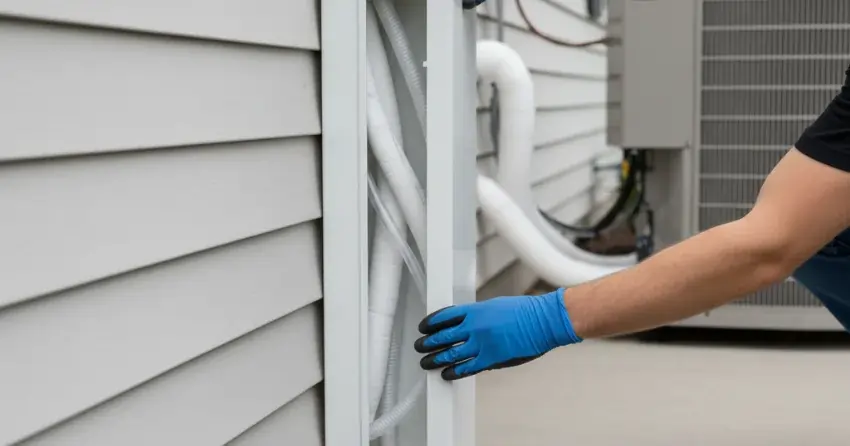
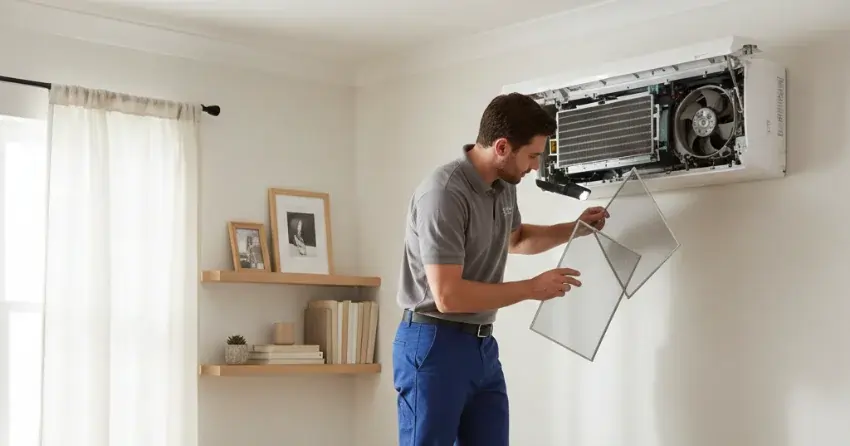
Split it into what you do and what a technician does. Your part is the filters, rinsed whenever they look dusty, which can be every couple of weeks in summer. The technician handles the parts behind them. Over time the blower wheel in the head collects a gray, sticky layer that cuts airflow and can smell musty, and the coil fins load up the same way. A drain bag goes around the head, the coil and wheel are cleaned, the drain line is flushed and any condensate pump is checked. Outside, the coil is cleared and the base checked for debris. Most homes need this about once a year.
How often should HVAC equipment be serviced?
Once a year per season of use is a sensible rhythm for most homes: the furnace in the fall, the air conditioner in the spring, and both visits for a heat pump or mini-split that runs all year. Booking early in each season avoids the rush that comes with the first heat wave or cold snap. Equipment in a dusty space, a home with several shedding pets or a system with a history of repairs may need closer attention. The goal is to see wear coming. A system that gets no attention until it fails tends to fail at the worst possible moment.
What should you tell an HVAC company when booking?
A two-minute description on the phone shapes the whole visit. The company needs to know what kind of equipment you have and where it lives, because an attic air handler in August calls for different tools and timing than a basement furnace. The symptom matters most: is it dead, weak, noisy, leaking or cycling? A photo of the unit’s data label lets the technician check common parts before leaving the shop. Mention anything recent, such as a power outage, a new thermostat or a renovation. And if a family member is elderly, very young or unwell, saying so helps the company decide what to prioritize.
How should you use the mini-split remote to avoid problems?
Pick a steady setting and let the unit do its work. Mini-splits adjust their speed to hold a temperature, so constant big changes, or switching off whenever you leave the room, can make them less comfortable and less economical in practice. Use cool or heat rather than auto if the unit hunts between the two, try dry mode on humid days and point the louvers so air spreads across the room rather than at people. Keep the remote’s batteries fresh. If the unit behaves oddly despite sensible settings, mention the settings you use when you book ductless mini-split service.
What should you compare between two HVAC quotes?
Lay the quotes side by side and line up the pieces, because that is where the real differences hide. One installer may include new ductwork transitions, a pad, a thermostat and haul-away; another may list only the equipment. One may have measured the house while another simply matched the old unit. For repairs, a second opinion should land on the same failed part; if it does not, ask both to explain. Price matters, but clarity matters more. The company that answers your follow-up questions patiently is usually the one that will pick up the phone after the job.
What to have ready when you contact us
A few details help us plan the right visit:
- the type and age of your home;
- what you have noticed and when it started;
- any recent renovations or repairs.
Send us your details and we will reply with next steps for ductless mini-split service in Edmonton.
