

































Think of this page as a reference you can come back to. It covers the parts of owning a gas fireplace that cause the most confusion, from ignition and venting to remotes and routine care, and it explains where the homeowner’s role ends and the technician’s begins. If you landed here by searching for “fireplace remote controls” from Edmonton, you will find honest detail about fireplace remote and receiver repair and no pressure to book anything.
What happens inside a gas fireplace when you switch it on?
A gas fireplace works like a small heating appliance dressed up to look like a wood fire, with controls that decide when gas may flow and a flame source that lights it. When you press the switch, the control system confirms it is safe to proceed, the pilot or igniter supplies a flame and the main valve opens to feed the burner. A sensor sitting in the pilot flame, usually a thermocouple, thermopile or flame rod, proves the fire is there; without that proof, gas stops flowing. Older units run on a tiny current made by the pilot itself, while newer ones use batteries or household power. Knowing which design you own tells us where to look first when something fails.
What are the signs of a failing fireplace remote receiver?
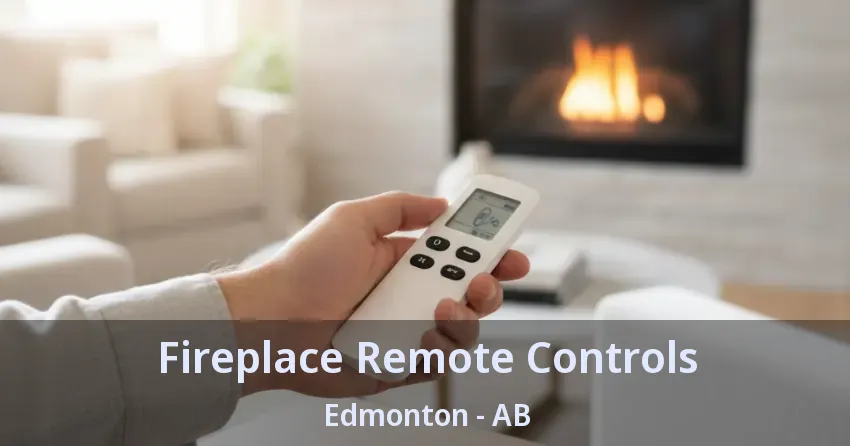
A failing receiver often shows itself through inconsistent behavior. The fireplace may respond only when you stand close, need several presses, ignore commands even with fresh batteries in both units, or click without lighting. Some receivers beep or flash a light to signal low power or a fault; the manual explains what each signal means. Heat is hard on receivers placed directly under the firebox, so older ones sometimes fail without warning. A technician can test the receiver against the valve directly, which shows whether the receiver, the handheld or the fireplace itself is at fault before anything is replaced.
Why won’t my gas fireplace light?
A fireplace that will not light has a break somewhere in the chain of signal, spark, pilot and main burner, so we check those links in that order. A surprising number of no-start calls end with fresh batteries in a receiver hidden behind the lower panel. Next we watch for a spark or a glowing igniter; clicking with no flame often points to a dirty or misaligned igniter, or to gas not reaching the pilot. If the pilot lights but the burner never follows, the sensor or the valve may be at fault. Every step after the remote, the wall switch and the batteries involves gas components, so that part of the checking should be left to a technician.
What does fireplace remote installation involve?
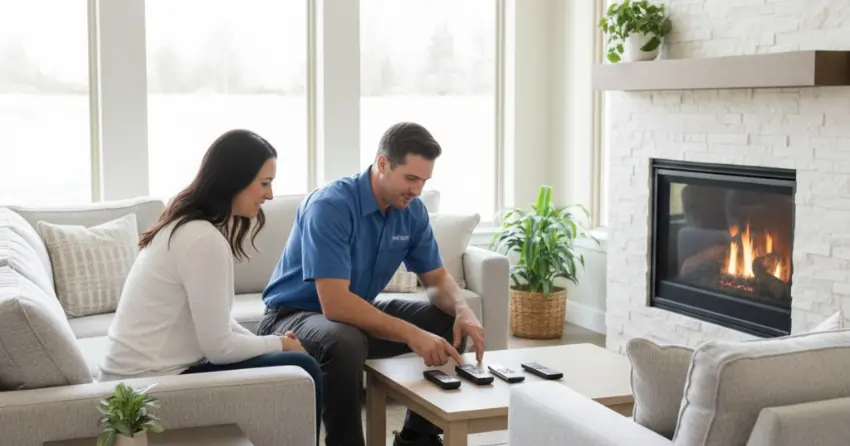
Most fireplaces can take one, and installation starts with confirming what the fireplace will accept. We read the rating plate, look at the valve and ignition and check how the existing switch is wired. With a millivolt system, adding a receiver is usually straightforward. Electronic systems are more particular and often need the matching module. We position the receiver where heat will not shorten battery life, run tidy connections to the control terminals and keep the wall switch working as a backup where possible. The visit ends with pairing, testing every function, including thermostat mode if the remote has one, and showing you how it all works.
When is it time to replace your gas fireplace instead of fixing it?
Repairing a gas fireplace is usually the sensible choice when the firebox, burner and venting are in good shape and the problem is a replaceable part such as a sensor, igniter or valve. Replacement starts to make sense when parts are no longer available, when repairs keep coming back, or when the firebox is cracked, rusted through or damaged by heat. Some owners also replace an older unit to gain features such as a remote, a thermostat or more heat. Ask the technician to explain the condition of the main components, not only the part that failed, so you can weigh the repair against a new unit.
Why does the remote for your gas fireplace need to be synced again?
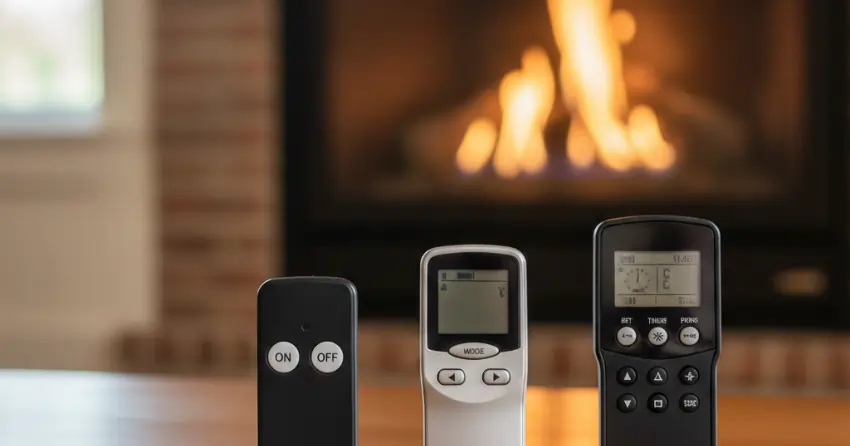
Re-pairing is usually needed after a new handheld arrives or the receiver loses power, because pairing simply teaches the receiver to trust one particular handheld. It fails more often for simple reasons than technical ones. We see replacement remotes bought for the wrong system, receivers with weak batteries that cannot complete the process and buttons pressed too slowly after the learn button. Some combinations are not compatible at all, even when they look alike. When we pair a remote, we confirm the system type first, fit fresh batteries at both ends and then run every function, including flame height and thermostat mode, to make sure the link is solid before we leave.
How do child lock and auto shutoff settings on fireplace remotes work?
Many fireplace remotes include a child lock that disables the buttons until a specific key combination is pressed, which helps keep small hands from lighting the fire. Some systems also offer an automatic shutoff or a timer that turns the fireplace off after a set period. The exact features and button sequences vary by system, so check the manual for yours. These settings add convenience and peace of mind, but they do not replace supervision, a barrier screen in front of hot glass or working carbon monoxide alarms. When you choose new “fireplace remote controls”, compare these safety settings alongside the basic functions.
Which care tasks for your gas fireplace are safe for homeowners?
Dusting, batteries and an eye on the outdoor vent are the jobs we see owners of the most reliable fireplaces handle well. They keep the louvers and fan openings free of dust, change remote batteries before winter and glance at the vent now and then to make sure nothing is growing over it or nesting inside. They also know their limits. We regularly repair damage caused by well-meant fixes: pilot assemblies bent during cleaning, fittings tightened with the wrong tool and logs rearranged for looks. Anything beyond the louvers, the batteries and the view from outside is technician territory, and that boundary keeps both the fireplace and the household safe.
Why hire a local company for gas fireplace service?
Hiring locally makes follow-through easier, and gas fireplace work involves a lot of it: ordering a part, coming back to fit it, checking a fix after a few cold evenings. Being close by makes all of that easier for us and for you. Because the same builders tend to use the same fireplace models and venting layouts across a district, we often know where to look before the panel comes off. Calling Gas Fireplace Edmonton puts you in touch with people based around Edmonton who expect to see your fireplace again, and that expectation tends to encourage careful work the first time.
Some problems stay quiet
Not every issue makes a noise or a smell before it grows. A routine look at your gas fireplace is the simplest way to find out where things stand. Call (587) 853-6668 and book fireplace remote and receiver repair with the Gas Fireplace Edmonton team.
