































Much of a fireplace is hidden from view. Above the opening sit the throat, the damper and the smoke chamber; around it sit the surround, the hearth and the mantel. Homeowners in Edmonton who search for “fireplace restore” are usually dealing with one of these areas and wondering how the others relate to it. The answers here connect the pieces and explain how fireplace restoration fits into the bigger picture of a fireplace that is both safe and good to look at.
Is it worth updating or repairing an older fireplace?
Usually, yes, as long as the structure behind the visible parts is sound. A fireplace that drafts well and has a solid firebox can often be refreshed or repaired with far less disruption than a full replacement, and the room gains a working focal point again. The value depends on the condition of the masonry, the damper and the chimney, how often you plan to use it and whether the work fixes a safety issue or is mainly cosmetic. Start with an inspection, then choose between cosmetic, repair and conversion work with a clear picture of what each involves.
What signs show a fireplace needs more than cleaning?
Look for cracked or missing firebricks, gaps in the mortar joints, smoke that drifts into the room, a damper that sticks or will not close, rust or flaking metal and stains or cracks on the surround or mantel. Bits of mortar or brick in the ash, a strong odor after rain and drafts when the fireplace is cold are other clues. Any of these deserves a professional look, ideally before the next fire. Many homeowners also have the fireplace checked once a year, which catches small problems while they are still simple to fix.
How much mess will your fireplace restoration project make?
We protect the room with floor coverings, sealed openings and a contained work area, and the setup takes time on purpose because masonry dust travels. The floor is covered from the door to the hearth, plastic is taped around the fireplace opening and, for messy demolition, we build a small enclosure so dust stays in one spot. Cutting is done with dust collection where the tools allow, and mixing happens outside or on protected ground. At the end of each day we vacuum and tidy. Some fine dust can still escape on a demolition day, but it should be minor.
How much working time does your fireplace restoration project need?
Small repairs, such as replacing a few firebricks or fixing a damper, often take a single visit, while refacing, mantel work or a conversion can take several working days spread over a week or two. Masonry and mortar need time to cure before the fireplace is used, and some finishes must set before the next layer goes on. Ordering stone, tile, a mantel or a gas insert can add weeks before work starts. Ask for a schedule that shows working days, waiting time for curing or materials and the earliest date you can light a fire again.
Do you need a permit for fireplace remodeling or repair?
Sometimes, and the deciding factors are gas, structure and venting. Cosmetic work on the outside of the fireplace rarely triggers a permit. Connecting a gas line, installing an insert with a new liner or rebuilding part of the firebox or chimney often does, depending on the rules where the house sits. Whoever does the work should know which applies and say so clearly in the quote. If a permit is needed, ask who will apply, who will be present for any inspection and whether the price includes it. Skipping this step can cause trouble later, for example when you sell the house.
What should you find out before restoring a fireplace that was sealed off?
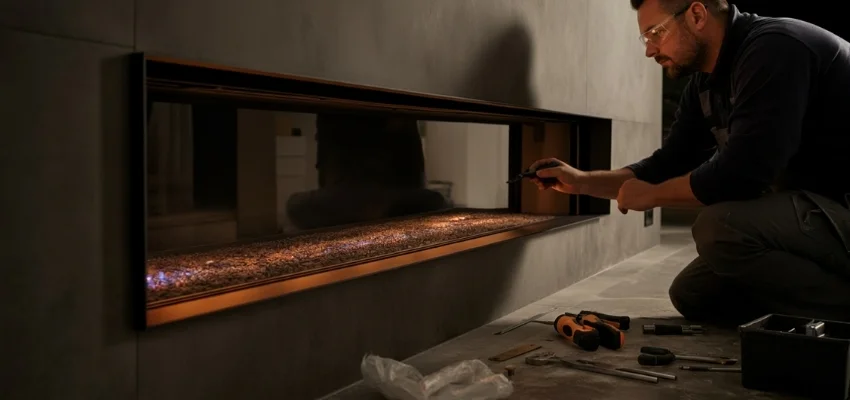
Find out why it was closed. Some fireplaces were sealed simply because the owners stopped using them, but others were closed after a chimney fire, a cracked flue, water damage or a failed inspection. Previous owners, home inspection reports and old receipts may hold the answer. Look for signs of a covered opening, a capped chimney or a fireplace converted to something else. Share whatever you learn with the contractor, because it shapes the inspection and the plan. The history of a sealed fireplace often decides how much of the work is restoration and how much is repair.
When can you use the fireplace again after work?
We give every customer a first-fire date, and it is set by the slowest-curing material in the job. Fresh mortar and refractory products hold water, and heating them too fast turns that water to steam inside the joint, which can crack it before it has hardened. So after firebox, throat or smoke chamber work, we recommend a few small fires before a full one. Tile and stone surrounds have their own adhesive cure times. Gas units are lit and tested on installation day, then left ready to use. Call us if anything looks or smells unusual during those first fires.
What experience should a fireplace restoration company have?
Look for a company that has restored fireplaces of a similar age and style, not just installed new ones. Ask to see before-and-after photos of firebox rebuilds, smoke chamber repairs and finish work on older brick, stone or tile. A good restorer talks about matching original materials and mortar, explains which features can be saved and is honest when something has to be replaced. They should also be clear about which work they do and which goes to other trades, such as a gas technician. Those questions separate real restorers from general contractors when you compare the companies a “fireplace restore” search turns up.
How do you find a dependable fireplace contractor in Edmonton?
Choose a contractor who inspects before quoting, explains the plan in plain language and shows photos of similar finished work. Fireplace projects mix trades, so ask who does the masonry, who handles any gas work and whether a qualified gas technician is involved for conversions. A written quote should list materials, curing or waiting time and how surprises are handled. Read recent reviews for comments on tidiness, communication and whether jobs finished on schedule. Be wary of anyone who wants to cover a damaged firebox or smoke chamber with a new finish without fixing it.
Ready to book fireplace restoration in Edmonton?
Once you know the work is due, the next step is simple. Tell us a little about your fireplace and the days that suit you, and we will suggest a time that works. Request a quote and the Gas Fireplace Edmonton team will follow up with details.
