

































Most of what homeowners ask about wood fires comes down to three worries: is it safe, is it working properly and what will it take to fix? This page tackles all three for households in Edmonton. If you arrived by searching for “fireplace servicing”, you will find fireplace servicing explained without jargon, with notes on what changes from one home to the next and which checks need no ladder or tools.
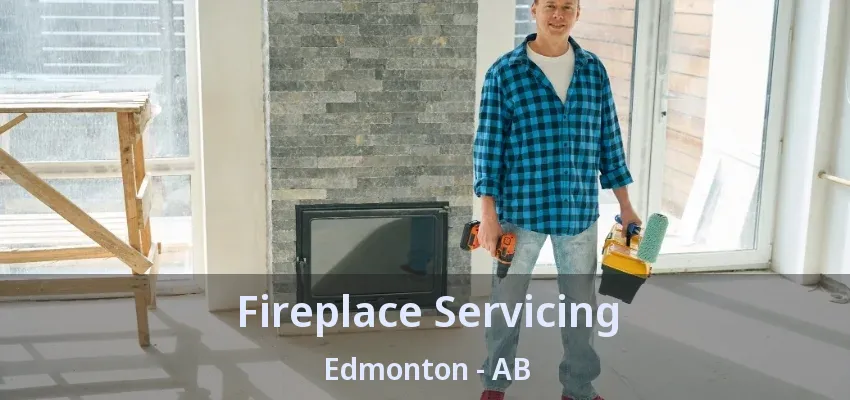
Why is regular attention to your fireplace worth it?
A wood-burning fireplace or stove needs regular care because every fire leaves residue behind, and that residue builds up where you cannot see it. Smoke cools as it rises and coats the flue with soot and creosote, which narrows the passage and can catch fire. Heat also slowly wears down mortar, firebrick, door seals and metal parts. Left alone for years, those small changes add up to poor drafts, smoky rooms and costly repairs. A yearly check, plus a sweep when buildup calls for it, keeps the fire drawing well and catches problems while they are still minor. Working smoke and carbon monoxide alarms complete the picture.
Is servicing worth it if the fire seems to work fine?
Yes, because most of what servicing finds cannot be seen from the room. A fire can light easily and draw well while creosote thickens in the flue, a crown cracks on the roof or a firebrick joint erodes behind the grate. Those problems show up suddenly, as a chimney fire, a leak or a smoky room, after months of quiet progress. Regular fireplace servicing gives you a look at the hidden parts before they force the issue. If nothing is wrong, you gain peace of mind and a baseline to compare against next year.
Why does a fireplace or stove smell when it is not in use?
Odor in warm months is one of the most common calls we get, and the cause is nearly always creosote reacting with humidity. Those deposits absorb moisture and release a stale campfire smell, which drifts indoors whenever the house draws air down the flue. We clean the flue to remove the source, check whether the damper seals and look at the cap, since rain soaking into soot makes things noticeably worse. In homes around Edmonton where the problem keeps returning, a top-sealing damper that closes at the very top of the chimney is often the change that settles it.
How does servicing differ for a wood insert and an open fireplace?
An open fireplace is serviced through its opening, with attention to the smoke chamber, smoke shelf and damper. A wood-burning insert sits inside the old fireplace and usually connects to a liner running up the chimney, so the work focuses on the insert’s baffle, gaskets and glass, the connection to the liner and the liner itself. Some inserts need to be slid forward or removed for a full cleaning, which takes more time. When you book fireplace servicing, say whether you have an insert, so the technician comes prepared.
How do technicians clean a wood-burning fireplace?
A sweep cleans the whole smoke path, and we work from the fire upward and from the room outward. First the hearth and nearby floor are covered, then a high-suction vacuum goes on, keeping the room under slight negative pressure so soot is drawn toward our equipment instead of drifting out. Brushing comes after that: rotary or wire brushes sized to the flue, pushed through in sections until the walls are clear. The smoke shelf behind the damper is where loose debris piles up, so it gets cleaned by hand. We finish by checking the damper seal, looking at the cap and showing the homeowner photos of anything worth discussing.
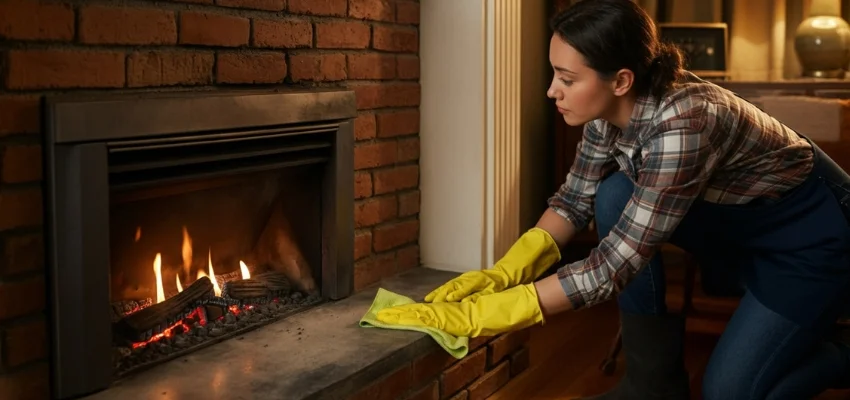
How often does your fireplace need cleaning?
A common guideline is to have the chimney inspected once a year and swept whenever buildup calls for it, which for many households also works out to about once a year. Homes that burn a fire most evenings through the colder months may need a sweep more often, sometimes partway through the season, while a fireplace used a few times a year may go longer between cleanings. Wood stoves used as a main heat source tend to build up creosote faster. Damp wood, smoldering fires and cold outside chimneys all shorten the interval, so let the yearly check guide the schedule.
What should be left in the firebox for the visit?
There is no need to clean the fireplace or stove before the visit, although clearing out a deep pile of completely cold ash is helpful. Technicians empty the firebox as part of the job and can learn something from what is there, such as how much creosote is falling or whether bricks are flaking. What matters most is that the ashes are cold, which can take several days after the last fire, since buried embers stay hot far longer than they look. Do take out unburned logs, kindling and decorations so the firebox is easy to reach.
How does firewood affect the buildup in your fireplace?
Dry, seasoned wood that has been split and stored for six months to a year or longer burns cleanest, because it lights easily and produces less smoke and creosote. Wet wood wastes heat boiling off water, smolders and coats the flue faster. Well-seasoned pieces are lighter, show cracks across the ends and sound hollow when knocked together, and an inexpensive moisture meter takes out the guesswork. Splitting and stacking wood in spring, off the ground and covered on top, usually has it ready for the colder months. Never burn painted or pressure-treated lumber, trash or cardboard boxes.
What should you ask before hiring someone to work on a fireplace or stove?
Ask about scope, evidence and pricing, since those answers reveal most of what you need to know:
- What does the visit include, and what would cost extra?
- Will you inspect the flue and show me photos of what you find?
- How do you keep soot out of the house?
- If repairs come up, will I get a written quote before any work starts?
It is also fair to ask whether they work on your type of appliance. Specific, confident answers are reassuring; vague ones are a cue to compare another company.
Homeowners, landlords and property managers
We work with people who live in their homes and with people who look after rental units around Edmonton. Either way, you get a clear explanation of the work and what we found. Request a quote for one home or several and we will plan the visits with you.
