

































A chimney does its work out of sight, carrying smoke and combustion gases up and away while most of its inner surfaces stay hidden behind brick, metal or drywall. That is why so many questions come up once someone starts looking into “fix blocked chimney”. Below, you will find direct answers about blocked chimney clearing for properties in Edmonton, written by people who spend their days on roofs and at hearths. There is no jargon here and no pressure, just the practical side of the job.
What is the difference between soot and creosote?
Soot and creosote are different deposits: soot is a dry, powdery carbon dust, while creosote is a tarry residue from wood smoke that can be flaky, sticky or glassy. Soot comes from incomplete burning and can be left by wood, oil or a gas appliance that is not running cleanly. It is lighter and brushes away easily, but it still narrows the flue and can hold moisture and odors. Creosote is the bigger fire concern because of its oily base. Seen from the firebox, soot looks like fine black powder, while creosote looks crusty, shiny or tar-like. A technician adjusts the cleaning to match.
What are the signs of a blocked chimney flue?
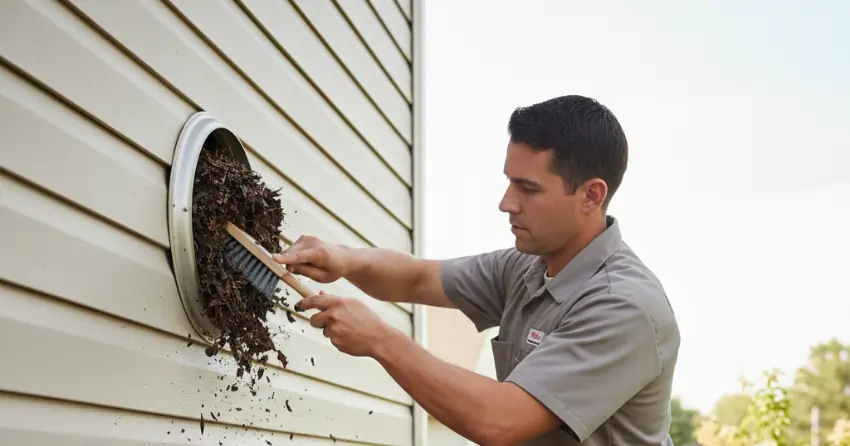
Blockages come from animals, plants, creosote or the chimney itself crumbling, and from inside the room they nearly all look alike: weak draft and smoke where it should not be. Birds and squirrels pack in sticks and grass, and autumn winds drop leaves into uncapped flues. Glazed creosote can let go in sheets and jam at a bend or on the smoke shelf. In older masonry, tiles crack and slide, and loose mortar collects at the base. A stove may puff smoke each time its door opens. Working out which cause you have is the first job, because it decides how the flue is cleared and what repair follows.
What makes smoke spill back down your chimney?
Smoke spills in when the draft is weaker than the push of the fire, and we usually trace it to one of a few causes. In tight, well-sealed houses, exhaust fans and dryers create enough suction that the chimney becomes an air intake instead of an exhaust. Short chimneys, nearby trees or a taller roofline beside the stack can disturb the airflow at the top. Inside the flue, heavy creosote, a nest or fallen debris narrows the path. Sometimes the fireplace opening is simply too large for the flue. Finding which one applies takes a look from both ends, and the fix ranges from a habit change to a repair.
Can a blocked flue be cleared without damaging the chimney?
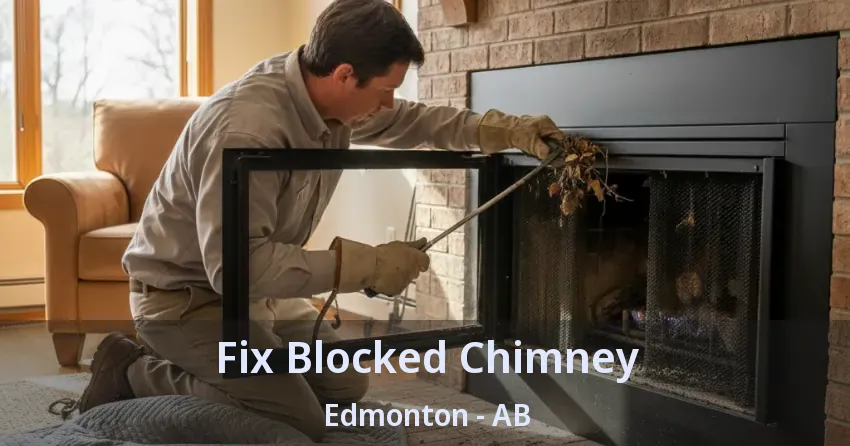
A blocked chimney is cleared by first finding where the obstruction sits, often with a camera, and then breaking it up and removing it with rods, retrieval tools and a strong vacuum, working gently enough to protect the liner. Some blockages come out through the fireplace or stove opening; others are easier to reach from the roof. Once the flue is open, it is swept and checked again, because whatever caused the problem, such as a broken tile or a missing cap, still needs fixing. Avoid poking at a blockage yourself with poles or a hose, which can jam it tighter or crack the flue.
Does a blocked chimney mean major repairs are needed?
Usually not. Most blockages are made of debris such as leaves, nests or fallen creosote, and once that is cleared the chimney often works normally again with nothing more than a sweep and a new or refitted cap. Bigger work comes into play only when the blockage was caused by the chimney breaking down, for example flue tiles that have cracked and slid or a liner that has come apart. Even then, relining the flue is a far more common answer than rebuilding the chimney. Ask to see camera footage before agreeing to anything large after blocked chimney clearing, since it shows plainly whether the structure is part of the problem.
How much time should you set aside for sweeping your chimney?
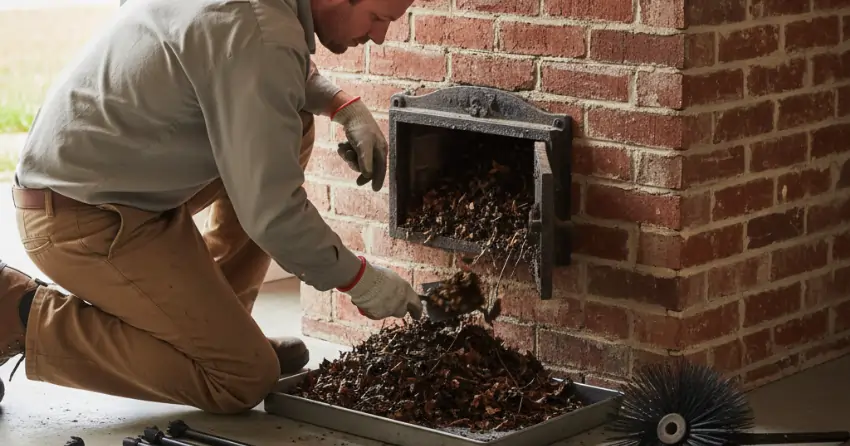
About an hour covers a typical single flue; when a visit runs longer, the chimney is almost always the reason. Laying drop cloths, setting up the vacuum, sweeping, cleaning the smoke chamber and packing up form the core. A wood stove or insert adds time because pipes and baffles come apart. Steep or slippery roofs slow everything down, since roof safety is not something we rush. Heavy creosote or a camera inspection add more. When we book, a few questions about the appliance and the roof let us give you an arrival time and an honest estimate of how long we will need.
What should you do until a blocked chimney is cleared?
We ask owners to leave the appliance off until we have cleared the flue, even when a fire seems to burn normally. A partial blockage is deceptive: on a mild day the draft may carry most of the smoke, then on a cold or windy night it fails and the room fills. We also see cap screens clogged solid with creosote, especially above wood stoves, which chokes the draft without any nest or debris inside. Nests above the damper can catch fire from below. While you wait, keep the damper shut so nothing falls into the room, and note any smells or sounds to tell us when we arrive.
What can you safely do yourself about a blocked chimney?
Your part is mostly to stop using it and gather clues. Do not light the fireplace or stove; if a furnace or water heater vents into the same chimney, mention it right away when you call and keep your carbon monoxide alarms working, and leave gas valves, burners and appliance settings to a qualified gas technician. Keep the damper shut if you suspect an animal. From the hearth, a flashlight can show whether debris is sitting on the smoke shelf. From the ground, check whether the cap is missing or damaged. Resist pushing poles up the flue. People who search “fix blocked chimney” sometimes make things worse by forcing debris tighter.
What written findings should you get after your blocked chimney clearing visit?
A useful chimney report lists what was checked, the condition of each part and what the technician recommends, all in plain language. Expect the date, the type of appliance and flue, and notes on the cap, crown, flashing, liner, smoke chamber, damper and firebox. Photos or video stills should back up anything described as damaged. Recommendations are most helpful when they are ranked: what affects safety now, what should be planned soon and what to watch. Keep each report with your property records, since it helps when comparing repair quotes, tracking changes over the years and answering questions when you sell.
Serving homes throughout Edmonton
From townhouses to detached homes, we see a wide range of setups around Edmonton and plan each visit around the home in front of us. If it is time to have your chimney looked at, get in touch with Gas Fireplace Edmonton and we will arrange a time that suits you.
