

































Convenience is the reason most people choose gas: no logs to carry, no ashes to scoop and warmth at the touch of a switch. That convenience still depends on a valve, an ignition system, a vent and a handful of small parts that need occasional care. Homeowners in Edmonton who look up “gas fire servicing” usually want to know what is normal, what is not and when to call for help. The answers below cover gas fireplace servicing in practical terms, with safety notes wherever they matter.
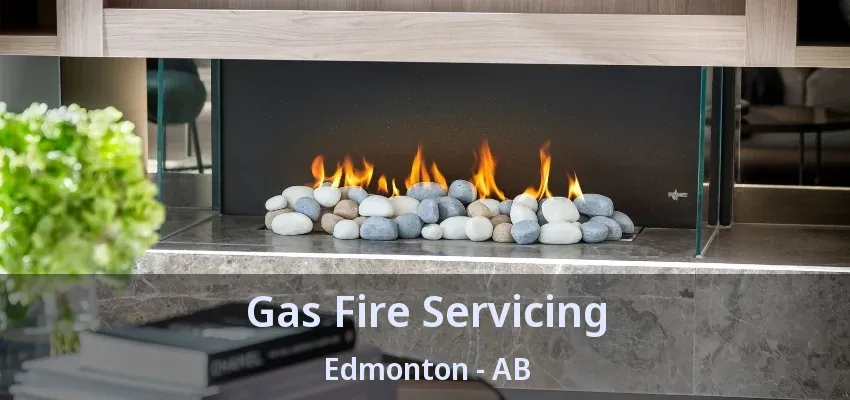
Do gas fireplaces need to be serviced?
Yes, regular service is worth it, because most of the faults we are called out for start small and grow quietly. A pilot slowly coated with dust burns weaker each season until its sensor no longer gets hot enough. A vent cap with a bird nest or spider webs restricts exhaust. Glass gaskets dry out and stop sealing evenly. None of these announce themselves, and a homeowner rarely sees them from the front of the unit. A routine visit once a year lets us clean, measure and adjust before the fire becomes unreliable, and it gives you a chance to mention anything that has seemed different lately.
How should gas fireplace logs be arranged?
Gas fireplace logs should be arranged exactly as the manufacturer’s diagram shows, because each log is shaped and placed to sit clear of specific burner ports. The diagram is usually in the owner’s manual, and many logs have notches or pins that match marks on the grate. Moving a log even slightly can push flames into it, which leads to soot and poor burning. The same goes for embers and decorative media: a thin layer in the right spots looks good, while too much can block the gas flow. If a log is cracked, crumbling or missing, ask for a replacement made for your model.
What tools are used to find a small gas leak at a fireplace?
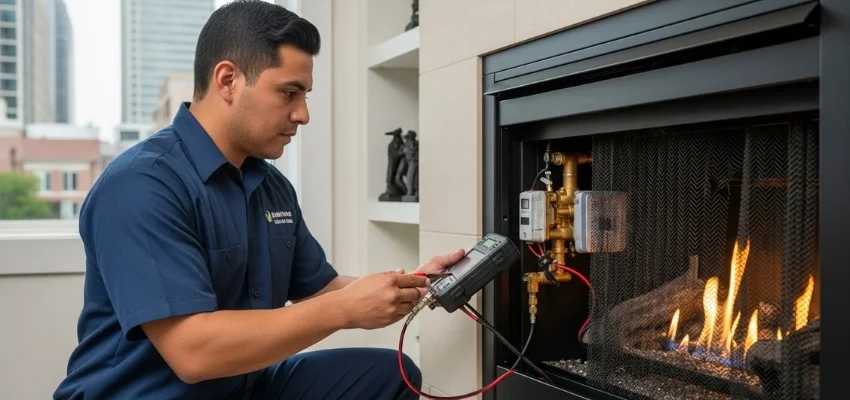
We check for leaks with an electronic detector and leak solution at every visit, and the routine is quick and methodical. With the access panel off, we pass the detector slowly along each fitting, from the shutoff valve to the control and pilot lines, and confirm any reading with leak solution, which forms a steady cluster of tiny bubbles at the exact spot. Fittings disturbed during earlier repairs, connectors that have been bent repeatedly and older valves are where we tend to find trouble. A leak gets repaired before the fireplace is relit, never left for later. Where the house piping itself is suspect, a separate pressure test may be recommended.
How is gas fire servicing different from a repair visit?
Servicing is planned upkeep on a fire that is working, while a repair visit starts with a fault. During “gas fire servicing”, the technician cleans the burner, pilot and glass, resets the logs, checks gaskets and tests ignition, safety shutdown and gas connections, all on a schedule rather than in response to a problem. A repair visit begins with diagnosis, then focuses on replacing or fixing the part that failed. Servicing often uncovers worn parts early, which can turn a future repair into a planned one. Many households book servicing once a year and call for repairs only when something goes wrong in between.
Does the season matter for your gas fireplace?
Late summer is the window we suggest most often, because the fall rush is real in our line of work. As soon as the weather turns, calls about pilots and remotes multiply and appointment slots fill faster. Homeowners who book in late summer usually get the time they want and have the fireplace ready before they need it. We also like spring visits for fireplaces that saw heavy use, because problems noticed during the winter are still fresh in everyone’s mind. In milder climates a fireplace may only run on a handful of evenings, but a yearly visit at a quieter time still keeps it dependable.
Does regular servicing help a gas fire last longer?
Regular servicing tends to help, mainly by catching wear before it causes bigger problems. Cleaning keeps the burner and pilot burning as designed, which reduces soot and stress on the glass and logs. Testing the sensors and ignition shows when parts are weakening, so they can be replaced on your schedule instead of failing on a cold night. A yearly look at the gasket and venting also helps keep combustion clean. Servicing cannot stop every part from wearing out, but households that keep up with “gas fire servicing” usually face fewer surprise repairs and a fireplace that behaves more predictably.
What information does a technician need about your gas fireplace?
Mention the brand, the rough age of the fireplace and exactly what it does, because that short phone conversation shapes how productive the visit will be. Does it do nothing at all, light and go out, or work only now and then? Any smell, soot or noise matters, and so does anything that changed recently, such as a renovation, a new remote or a propane delivery. Those answers tell us which parts to load and how much time to set aside. A photo of the rating plate and a short video of the fireplace trying to start are often more useful than a long description.
What gas fireplace maintenance can you do yourself?
Homeowners can handle the simple upkeep around a gas fireplace, while anything involving gas parts belongs to a technician. Safe tasks include dusting the outside surfaces and louvers once the unit is cool, replacing remote batteries, keeping the space in front of the glass clear, checking that the outdoor vent cap is not blocked by leaves, plants or debris, and testing your carbon monoxide alarms. Leave the valve, pilot, burner, gas connections and venting alone, and never run the fireplace with the glass removed or damaged. Leave glass removal and log placement to the yearly service as well.
What should you ask a gas fireplace technician?
A few direct questions reveal a lot about a gas fireplace technician:
- What does the visit include, and is a leak check part of it?
- Do you work on this make and fuel type, and can you get parts for it?
- How will you show me what you found, and can I see any old parts?
- Is the price for the visit only, or will diagnosis and parts be extra?
Clear, specific answers are a good sign. Vague replies or reluctance to explain the safety steps are reasons to keep looking.
Built around busy households
Kids, pets and work schedules all matter when someone visits your home. Let us know what to work around and we will plan the appointment to match. Choose a time for gas fireplace servicing anywhere in Edmonton.
