

































Convenience is the reason most people choose gas: no logs to carry, no ashes to scoop and warmth at the touch of a switch. That convenience still depends on a valve, an ignition system, a vent and a handful of small parts that need occasional care. Homeowners in Edmonton who look up “gas fireplace servicing” usually want to know what is normal, what is not and when to call for help. The answers below cover gas fireplace service in practical terms, with safety notes wherever they matter.
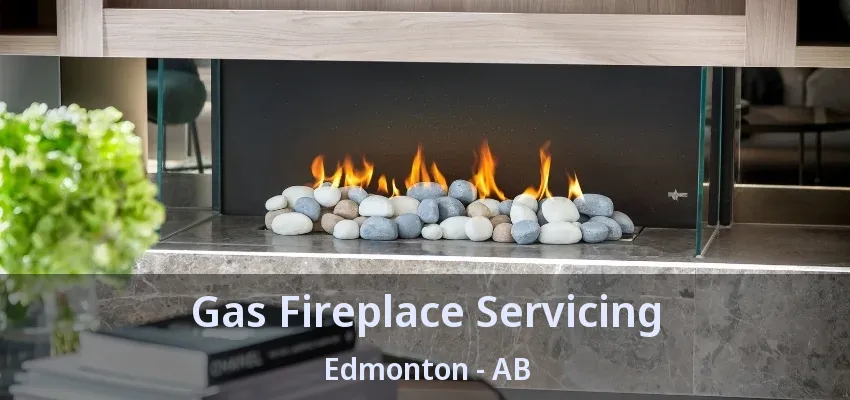
What are the main parts of a gas fireplace?
A gas fireplace works like a small heating appliance dressed up to look like a wood fire, with controls that decide when gas may flow and a flame source that lights it. When you press the switch, the control system confirms it is safe to proceed, the pilot or igniter supplies a flame and the main valve opens to feed the burner. A sensor sitting in the pilot flame, usually a thermocouple, thermopile or flame rod, proves the fire is there; without that proof, gas stops flowing. Older units run on a tiny current made by the pilot itself, while newer ones use batteries or household power. Knowing which design you own tells us where to look first when something fails.
What can stop a remote from controlling your gas fireplace?
A gas fireplace remote usually stops working because of weak batteries, a receiver that has lost its pairing or a receiver switch left in the wrong position. Replace the batteries in the handheld first, then in the receiver if your system has a battery-powered one. Many receivers sit behind the lower panel and have a small switch with on, off and remote settings; it needs to be on remote for the handheld to work. If the remote display lights up but the fireplace ignores it, the two may need pairing again using the steps in the manual. Wiring and valve problems are a job for a technician.
How does servicing differ for older and newer gas fireplaces?
The basic steps are the same, but the details change. Older fireplaces often have a standing pilot powered by a thermocouple or thermopile, so servicing focuses on cleaning the pilot and measuring the sensor output, and parts may take longer to find. Newer models often use electronic ignition with batteries or household power, remote receivers and sometimes variable flame or fan modules, so testing those electronics takes more of the visit. Newer units may also have a barrier screen and more complex venting. Telling the company the age and type of fireplace when you book helps them plan the time.
How is the white film cleaned off the glass of your gas fireplace?
Gas fireplace glass is cleaned with a cleaner made for fireplace glass and a soft cloth, once the fireplace is off and completely cool, to remove the white film that builds up inside. That cloudy film is a normal mineral deposit from burning gas, and ordinary household glass cleaners tend to smear it or leave residue that bakes on during the next fire. On sealed units, cleaning the inside means removing the glass front, and refitting it so the gasket seals evenly is part of keeping exhaust out of the room. Leave the inside of the glass to the yearly service and wipe only the outside yourself.
How do you get ready for your gas fireplace service visit?
Preparing for a gas fireplace visit mostly means letting the unit cool and clearing space. Turn the fireplace off several hours ahead so the glass and metal are cool enough to handle. Move furniture, rugs, decorations and anything on the hearth back a few feet, and take fragile items off the mantel. Find the owner’s manual and the remote if you have them, and jot down any symptoms, such as odd smells or slow lighting. If the vent ends on an exterior wall or the roof, make sure the outdoor cap can be reached. Keep pets and young children in another room during the visit.
Why does a servicing visit sometimes recommend parts for later?
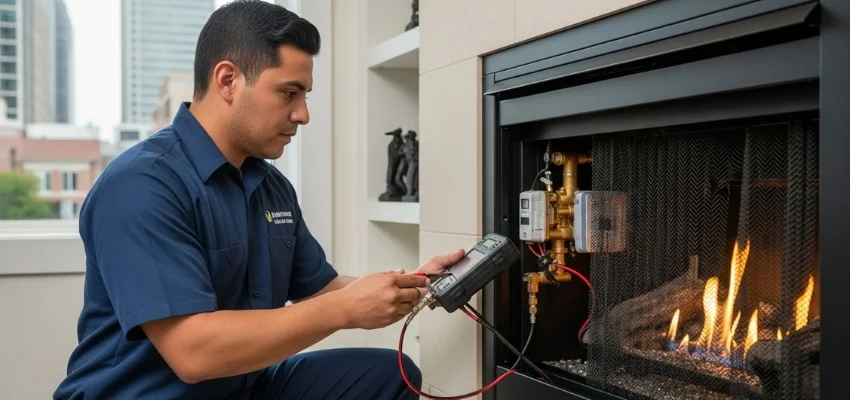
Technicians often find parts that still work but are wearing out, and it makes sense to flag them before they fail. A pilot sensor with a low reading, a gasket that has started to flatten, embers that have lost their glow or a fan that sounds rough are typical examples. Flagging them lets you replace the part at a convenient time, often at the next visit, instead of on a cold evening when the fireplace stops working. Ask how urgent each item is and what would happen if it waited. A clear “gas fireplace servicing” report separates must-fix items from watch-list items.
Can the glass on your gas fireplace burn children or pets?
The glass on a gas fireplace gets hot enough to cause serious burns while the fire is on and for some time after it is switched off. That makes it a real concern for young children, older adults and pets. Many newer fireplaces come with a mesh safety screen in front of the glass, and screens are available for many older models as well. Keep a clear space in front of the fireplace, teach children that the glass is off-limits and use a gate or barrier where needed. Never drape clothing or decorations over the front, and let the glass cool fully before any cleaning.
Where should carbon monoxide alarms go in a home with a gas fireplace?
Alarms belong near bedrooms and on every floor, and we ask about them at nearly every gas fireplace visit because they are the only reliable way to know if exhaust ends up indoors. A well-kept, properly vented fireplace should not cause a problem, but vents can be blocked by nests and seals can fail without warning. In the homes we visit, the gaps we see most are alarms missing from bedroom hallways, units with dead batteries and alarms well past their replacement date. Pressing the test button once a month takes seconds. Combination smoke and carbon monoxide alarms are a convenient choice where only one device fits.
How can you tell if a gas fireplace repair quote is fair?
Compare gas fireplace repair quotes by checking that each one describes the same fault, the same part and the same scope of work. A useful quote names the problem found and the part to be replaced, confirms that it is the part specified for that make and model, and says whether labor, diagnosis and a final test are included. If one quote is far lower, ask what it leaves out; sometimes it treats a symptom rather than the cause. Be cautious about quotes given without anyone seeing the fireplace, since most faults need hands-on testing. Written, specific and unhurried quotes are the easiest to judge.
One call to get things moving
The hardest part is often deciding to deal with it. Once you call (587) 853-6668, we take care of the scheduling, explain the visit and send a technician to your home in Edmonton. It is a straightforward way to get your gas fireplace looked after.
