
































A heating or cooling problem is easier to describe, and to get fixed, when you know what a technician will look for first. Homeowners in Edmonton who searched for “gas furnace service” usually arrive with one symptom and a few side questions. The answers here take them one at a time and explain gas furnace maintenance in everyday terms, so the conversation with whoever you call starts on firmer ground.
How do you keep a gas furnace safe at home?
A gas furnace stays safe when it burns cleanly, vents its exhaust outdoors and is backed up by working carbon monoxide alarms. Install alarms near bedrooms and on each level of the home, test them regularly and replace them when the maker recommends. Have the furnace checked once a year, including the venting and the heat exchanger. Keep the area around it clear of storage, paint and cleaning products, and never block its air supply openings. If you ever smell gas, leave the home without switching anything on or off and call your gas utility from outside.
Does a condensing gas furnace need different service from an older one?
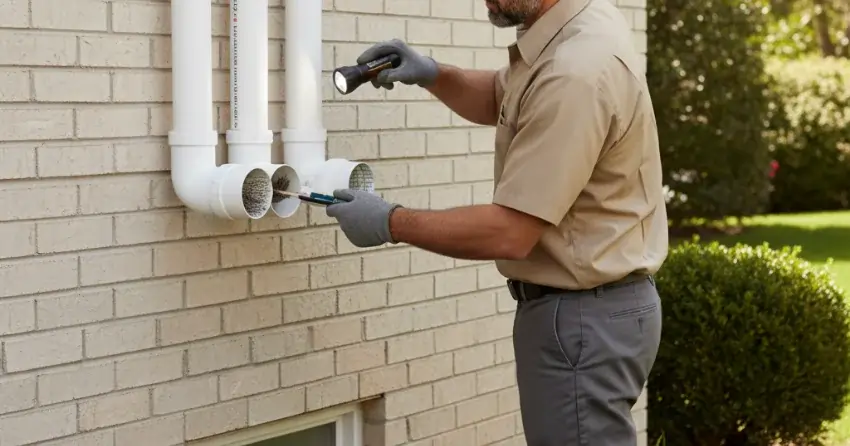
Somewhat. Condensing furnaces, common in newer homes, cool their exhaust enough to produce water, so they have plastic vent and intake pipes, a condensate trap and a drain line or pump that older furnaces lack. Service on these models includes checking that the trap and drain are clear, the vent pipes are sloped and sealed and the outdoor terminations are free of snow, ice and debris. Older non-condensing furnaces use a metal flue and need their own checks on draft and the vent connection. Either way, gas furnace maintenance covers the burners, flame, controls and airflow.
How can you tell if the thermostat, not your furnace, is the problem?
Rule it out first, because a thermostat problem can look exactly like a failed system and is far simpler to fix. A surprising number of no-heat and no-cooling calls end at the thermostat: a blank screen, a schedule that reset itself, a setting stuck on fan only or a new smart thermostat wired to the wrong terminals. Location causes quieter trouble, with a unit near a sunny window or a supply vent cycling the system at odd times. When we test, we often bypass the thermostat at the equipment; if the system starts, the problem is upstream. Wiring work belongs to a technician, but the settings and batteries are fair game.
What does a technician check during your gas furnace maintenance visit?
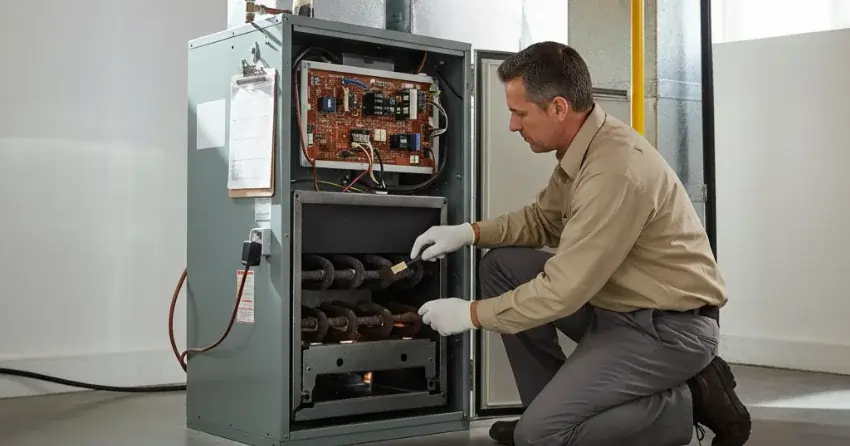
A proper tune-up is a checklist with judgment behind it. It starts with a question about how the system has behaved, then the technician runs it and listens. The filter comes out, the coils get a look and, where needed, a cleaning, and the drain gets flushed. Electrical parts are tested under load, because a capacitor can look fine and still be weak. On gas furnaces, the flame is watched, the safety switches are proven to trip and the venting is followed. On mini-splits, the indoor heads get special attention. The visit should end with the readings explained and wear flagged, without turning into a sales pitch.
How often does your furnace need a professional check?
Once a year per season of use is a sensible rhythm for most homes: the furnace in the fall, the air conditioner in the spring, and both visits for a heat pump or mini-split that runs all year. Booking early in each season avoids the rush that comes with the first heat wave or cold snap. Equipment in a dusty space, a home with several shedding pets or a system with a history of repairs may need closer attention. The goal is to see wear coming. A system that gets no attention until it fails tends to fail at the worst possible moment.
How should you prepare for an HVAC service visit?
Preparing for a visit mostly means clearing access and gathering information. Make a clear path to the furnace, air handler, outdoor unit or mini-split heads, and move stored items away from the equipment. Unlock gates, and note where the attic or crawlspace access is if equipment sits there. Write down what you have noticed, when it started and any error codes or sounds. Have the model information handy if you can find it on the unit’s label. Keep pets in another room, and tell the company about parking or building access rules ahead of time.
What should you do with the furnace when you go away in winter?
Leave it running at a lower setting rather than turning it off, so pipes do not freeze and the house does not take hours to recover. Change the filter before you go, make sure carbon monoxide and smoke alarms have fresh batteries and keep the area around the furnace clear. If you will be away for a while, ask someone to check the house or use a thermostat that sends temperature alerts to your phone. Booking “gas furnace service” before a long winter trip is a sensible way to catch a weak part before it fails while nobody is home.
Which jobs on your furnace are safe to do yourself?
Think of it as housekeeping versus repair. The housekeeping is yours: filters, vents, clearance around the equipment and an eye on anything unusual, such as water under the indoor unit or ice on the outdoor lines. Those simple habits head off a good share of service calls. Repair belongs to a technician, and the line is clear: anything behind a panel that says to disconnect power, anything connected to gas and anything involving the sealed copper lines. Capacitors can hold a dangerous charge even with the power off, and gas parts are not for tinkering. If opening it takes a screwdriver, call someone.
How do you compare quotes for gas furnace maintenance?
Compare HVAC quotes by what they include, not just the total. For repairs, check that each one names the same diagnosis and part. For installations, compare the equipment type and size, how the size was chosen, the scope of ductwork, electrical, venting or line set work, removal of old equipment, the thermostat and any extras. Ask how long the price is valid and how changes would be handled. A much lower figure often leaves something out, while a much higher one may include items you do not need. Written, itemized quotes make the comparison straightforward.
A photo can save a trip
If you can safely snap a picture of what worries you, mention it when you get in touch. It helps the technician bring the right tools and plan the visit. Reach out to Gas Fireplace Edmonton and we will tell you how to share it.
