

































If you smell gas right now, stop reading, leave the building and call your gas utility from outside. Everything else on this page can wait. For homeowners in Edmonton who searched for “gas leak detection” at a calmer moment, the answers below explain how leaks are found, how gas line leak testing is handled and what changes once the work is done. The aim is plain, careful information, because with gas the safe choice is always the conservative one.
Does propane have the same smell as natural gas?
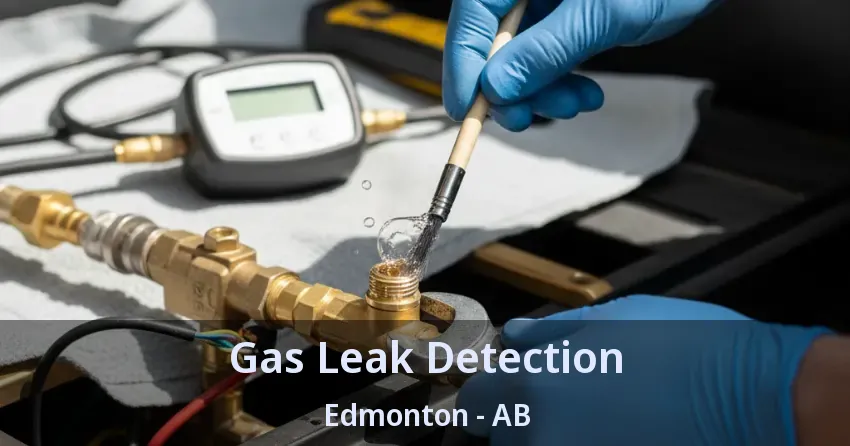
The smell is added on purpose, and from a technician’s point of view it is one of the most important safety features in the whole gas system. Methane and propane are close to odorless on their own, so a strong-smelling compound is blended in to make leaks easy to notice, and propane carries a very similar odor. It works well, but not perfectly: some people have a weaker sense of smell, a cold can dull it and in rare cases the odor fades, for example when gas passes through soil. That is why we take every reported smell seriously and why gas alarms are a useful backup.
How serious is a minor leak in your gas line?
Serious enough that we never grade a leak as too small to matter. What makes a leak dangerous is not only its size but where the gas goes. A tiny leak in an open, airy space may disperse; the same leak under a cabinet, in a closet or in a basement can accumulate until it reaches a level that will ignite. Leaks also tend to grow, especially at corroded fittings or connectors that keep getting flexed. Fixing a small leak is usually simpler than dealing with a larger one later, and it removes a risk nobody should live with.
What should you do if you smell gas in your home?
Get out first, then call: that order matters more than anything else. Every switch, plug and phone inside can make a tiny spark, so the safest home in that moment is one nobody touches. Once you are outside and a good distance away, phone the gas utility or 911, give the address and describe what you noticed. Wait somewhere safe and keep neighbors back if the smell is strong outdoors. When the utility has made the home safe, it will often leave the gas off to the leaking appliance or the whole house. That is when a qualified gas technician takes over to find and repair the leak.
Why does the kitchen smell of gas when a burner lights slowly?
A very brief whiff of gas as a burner ignites can happen when the igniter is slow or the flame catches late, and it clears within seconds. A smell that lingers, returns every time the stove is used or appears when nothing is on is different and should be treated as a leak. A healthy burner flame is mostly blue; one that turns yellow or orange, sputters or lifts off the burner suggests poor combustion and needs a technician. Never dismiss a repeated smell because the stove still works. Turn the burner off, and if the smell persists, leave and call the utility from a safe place.
What is a gas pressure test and why is it done?
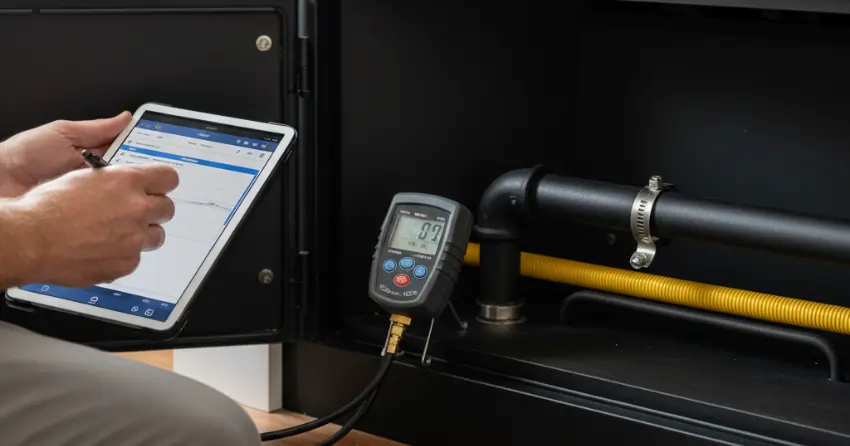
A gas pressure test checks whether piping can hold pressure without losing any. After repair or new work, the technician isolates the section, connects a gauge and raises the pressure with air or an inert gas such as nitrogen to a level set by the applicable rules. The system is then left for a set period while the gauge is watched. A falling needle signals a leak somewhere, and the search begins again. Passing the test, plus a final check of each joint with leak solution once gas is on, is what allows the supply to be restored. Required pressure and duration vary with the piping and local rules.
When is a good time to have home gas piping checked?
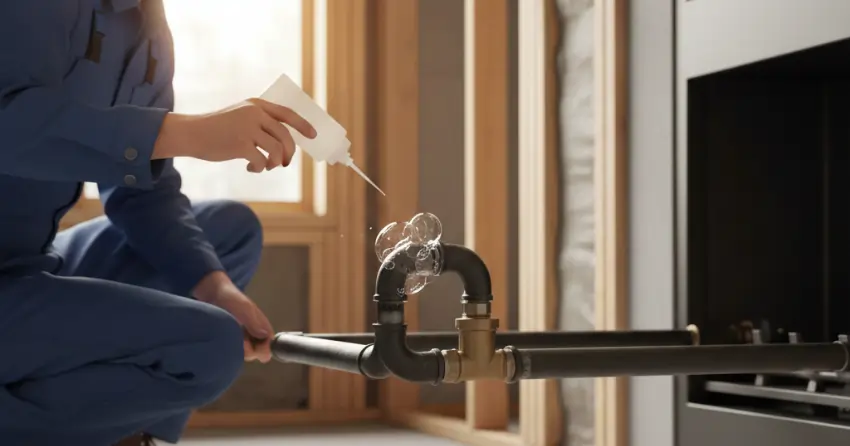
Once a year, during regular appliance service, covers most homes, since every appliance visit is a chance to check the gas piping we can see. Beyond that, we suggest a dedicated check whenever something has changed: a new range, a kitchen remodel, a move into an older house or a long period with the gas off. Connectors that have been moved and fittings near damp areas are where we look hardest. Keeping a simple record of what was checked and when helps the next technician know where to start.
Can a home gas alarm replace professional leak detection?
No, a home alarm is a useful warning device, not a substitute for a professional search. Plug-in or battery combustible gas alarms sound when gas reaches a certain level near the device, which can alert you to a leak in that area. They cannot tell you where the leak is, whether a small leak exists elsewhere or whether the piping holds pressure. Professional “gas leak detection” uses handheld detectors moved along each fitting, leak solution to confirm the spot and pressure tests for hidden lines. Keep your alarms tested as their maker directs, and if one sounds, leave the home and call the utility from outside.
Which gas jobs can a homeowner do, and which need a technician?
Gas piping is not a do-it-yourself job. Fittings must be made with the right material, sealed with gas-rated products and tested with proper equipment, and a joint that looks tight can still leak. Homeowners can reasonably handle the low-risk basics: keep the area around appliances and the meter clear, check that alarms work, replace their batteries and watch for signs of trouble. Cutting into pipe, moving an appliance, tightening fittings, putting tape or putty on a leak and restoring gas after a shutdown all belong to a qualified gas technician. In many places, permit rules apply as well.
Is a gas leak check worth arranging when you buy a home?
It often is, especially for older homes or properties with several gas appliances. A general home inspection may note visible issues but rarely tests every fitting. A dedicated check with a gas detector, a look at appliance connectors and, where there is any doubt, a pressure test gives you a clear picture before you move in. It also tells you which connectors or valves are old enough to replace. If the seller has records of recent gas work, ask for them. Arranging “gas leak detection” before closing, or soon after, is a small step that removes a lot of uncertainty.
Adding or moving a gas appliance?
A new range, dryer or fireplace often means changes to the gas line, and that work belongs with a qualified gas technician. Tell Gas Fireplace Edmonton about your project and we will plan the line work for your home in Edmonton. A gas smell always means leave and call from outside first.
