

































Gas safety is shared. In many areas the utility looks after the supply up to the meter, while the piping and appliances inside the home are the owner’s responsibility. Knowing where that line falls helps when something goes wrong. If you arrived here by searching for “gas leak fix”, the answers below explain gas leak repair for homes around Edmonton, including what happens after a leak call and how a repair is checked before gas flows again.
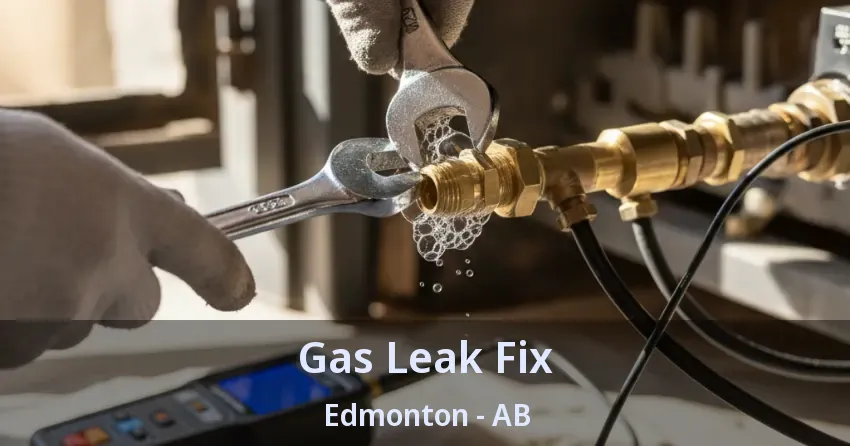
Can a slow gas leak become a fire or explosion risk?
Any gas leak, including one that seems small, should be treated as dangerous. Gas that escapes into a closed room, cabinet or basement can build up over time until a spark from a switch, an appliance or a pilot light ignites it. In high concentrations, gas also displaces the air you breathe. A slow leak may only show as a faint smell that comes and goes, which makes it easy to dismiss. The safe response is the same regardless of size: leave, call the gas utility from outside and have a qualified gas technician find and repair the leak before the gas is used again.
What are the signs of a leak in a buried gas line?
An outdoor or buried gas line leak often shows itself through the ground and plants above it. Look for a patch of dead or yellowing grass in an otherwise healthy lawn, bubbles rising in puddles or wet soil, dirt or dust being blown up from the ground and a hissing sound near the meter or along the route of the line. A rotten-egg smell outside, especially one that lingers in the same spot, is another clue. If you notice any of these, move away from the area, keep others back and call the gas utility from a safe distance. Do not dig, probe the ground or operate the meter valve.
Can you have a gas leak without smelling it?
Yes, and many homeowners are surprised to learn that their nose is not a reliable leak detector. A small leak in a basement may never reach the living area in a concentration anyone notices, and people who live with a faint odor for weeks often stop registering it. When we find a leak that nobody smelled, it is usually at an appliance connection in a space people rarely visit. For that reason we suggest combustible gas alarms in homes where smell may not be dependable, placed according to the maker’s instructions for the type of gas, along with working carbon monoxide alarms.
Which gas leaks can be fixed at the appliance rather than in the piping?
Many household leaks turn out to be at or near an appliance. A worn flexible connector, a loose flare nut, a failing appliance shutoff valve or a leaking fitting inside a range, dryer, water heater or fireplace can usually be repaired without touching the main piping. Those repairs tend to be quicker and less disruptive. Leaks in the house piping itself, such as a corroded section in a crawlspace or a joint inside a wall, take more work to reach. A technician determines which kind you have by testing along the line, starting at the appliance where the smell or reading was strongest.
What happens when the gas utility responds to a leak call?
The utility crew makes the property safe and may shut off gas, but it usually does not repair household piping, and knowing that avoids frustration afterward. Crews measure gas levels inside and out, find the general source and decide what needs to be shut off. A tag on an appliance or a locked meter is common when the problem is on the house side. That tag is not a fine or a judgment; it is a signal that a repair and a test are needed before gas returns. We often take over from that point, using the notes left by the crew to start our search in the right place.
Why do repair quotes for your gas line vary so much?
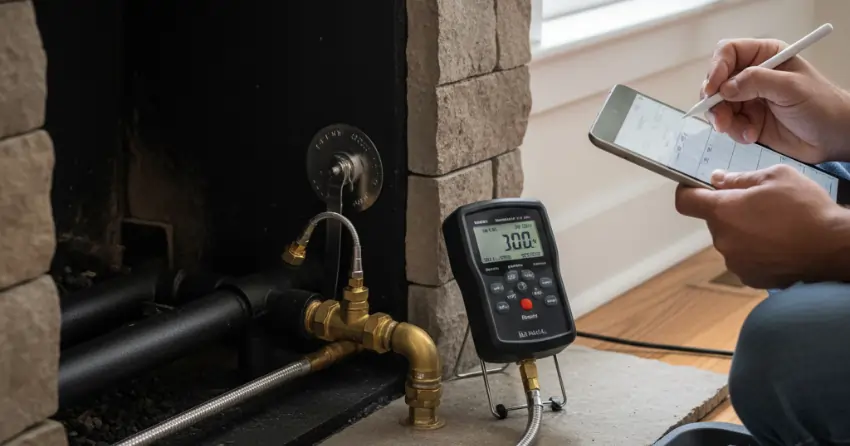
Access is the biggest driver of what a gas repair costs. If we can see the leak and reach it with a wrench, the repair is quick. When the leak sits behind drywall, under a slab or in a line running across the yard, most of the time goes into reaching it safely and restoring things afterward. Diagnosis adds to the bill when a leak is hard to pin down, because pressure testing and isolating sections takes time. We explain these steps before starting, so you know what is included and where the price could change.
Should you turn off the gas yourself if you smell gas?
Distance, not action, is the safest response to a gas smell, even though the instinct to close a valve is understandable. Meter valves can be stiff, they are not designed for frequent use, and fumbling with one while gas is escaping keeps you in the hazard zone. The utility will shut off supply where needed. Restoring gas is where we see the real risk from do-it-yourself steps: opening a valve with an appliance burner still on, or a pilot left unlit, can let gas flow into the home. Leave the turn-on to the utility or a technician who can relight everything properly.
Where should natural gas and carbon monoxide alarms be placed?
A carbon monoxide alarm does not detect leaking gas; it detects carbon monoxide, a different gas produced when fuel burns poorly. To sense leaking natural gas or propane, you need a combustible gas alarm, sometimes sold as an explosive gas detector or combined with other sensors. Many homes with gas appliances benefit from both: carbon monoxide alarms on every level and near bedrooms, and a gas alarm placed as its maker directs, typically high on a wall for natural gas and low for propane, since natural gas rises and propane sinks. Test them regularly and replace them by the date printed on them.
Is there a safe quick fix for a gas leak?
No. Tape, putty, sealant or a hose clamp over a leaking gas fitting is not a safe fix, even as a temporary measure, and it can hide a leak that keeps getting worse. The only safe immediate steps are leaving the area and calling the gas utility from outside, so the supply can be shut off. A real “gas leak fix” means isolating the gas, replacing or remaking the faulty fitting, connector or section of pipe with materials rated for gas, then proving the system is tight with a test before anything is relit. That work belongs to a qualified gas technician.
Planning a gas line check?
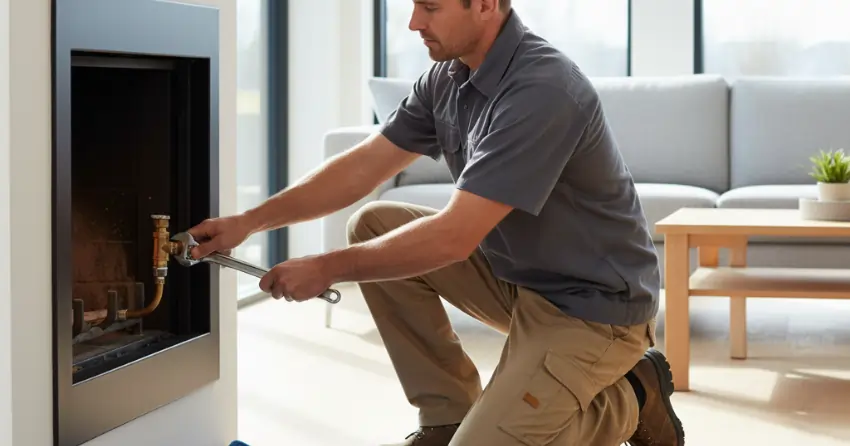
Buying a home, adding an appliance or wondering about an old connector are good reasons for a planned check. If you smell gas at any point, leave and call the utility from outside instead. Request a visit from Gas Fireplace Edmonton for routine gas work.
