

































Gas is one area of the home where guesswork has no place. A leak cannot be judged by eye, and tightening a fitting or wrapping tape around a pipe can make things worse. If you are looking into “gas line installer near me”, this page sets out what homeowners in Edmonton should know before, during and after gas line installation: the warning signs, the first steps to take and what a qualified gas technician does to find and fix the problem.
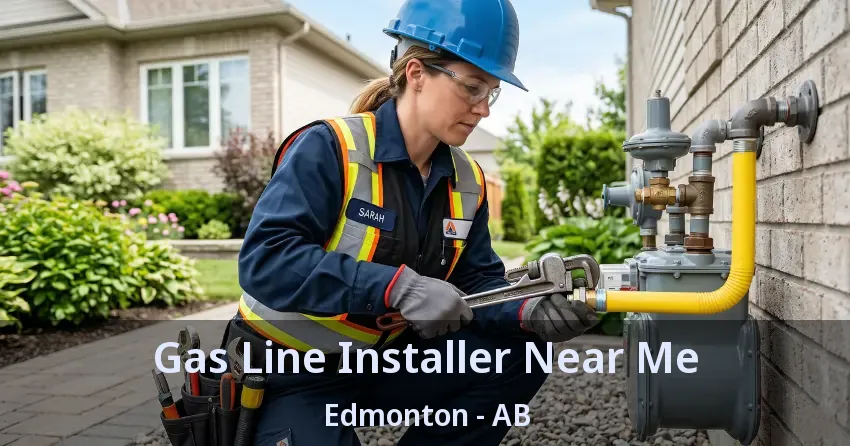
Where is the shut-off valve for each appliance on your gas line?
Knowing where the valves are is worth a few minutes, so we point them out on most visits. Every appliance should have its own shut-off within easy reach, normally a short stub of pipe with a quarter-turn handle beside or behind the unit. The main valve sits at the meter, indoors or out. Tag them if your technician agrees. What we do not recommend is exercising valves for fun: older ones can stick or weep when moved, and a valve that will not turn fully is a repair job, not a pliers job. If gas is actually escaping, distance still comes before any valve.
What does a gas line installer do?
A gas line installer plans, builds and proves new gas piping. That starts with a look at the appliance, the existing supply and the route, then a calculation of how much gas everything on the line will use. The installer chooses pipe and fittings that suit the fuel and the location, runs and supports the pipe, fits a shut-off valve near the appliance and tests the finished work before gas is turned on. Paperwork often falls to the installer too, from the permit to the inspection booking. A search for “gas line installer near me” is really a search for someone who handles all of those steps, not only the pipe.
When does a home need a new gas line?
It usually starts with a plan to add something: a gas range in a kitchen remodel, a dryer, a fireplace or an outdoor grill. Before we promise anything, we look at what the home already runs and how far the new appliance sits from the nearest pipe. Sometimes a short branch off an existing run is enough. Other times, a new appliance on top of a full-size furnace and water heater would starve the whole system, and the supply has to be upgraded first. Measuring the demand beforehand is far easier than discovering weak flames afterward.
Is a gas piping inspection the same as a leak test?
It is a walk-through with instruments. We begin at the meter, follow the pipe room by room and check every visible joint with a detector, then look at the end points: valves, connectors and the places where lines pass through floors and walls. We pay particular attention to work done by someone else at another time, such as lines extended with mismatched fittings or old ends left open. A leak test is part of an inspection but not the whole of it. The point is also to see what is aging, what is unsupported and what would not be accepted if it were installed today.
How is the size of a gas line decided?
Pipe size depends on how much gas the appliances need, how far the gas has to travel and which material is used. A technician adds up the demand of everything on the line, measures the length from the meter or regulator to the farthest appliance and checks sizing tables for the pipe type and gas pressure. Longer runs and bigger loads need wider pipe. An undersized line causes weak or yellow flames, appliances that shut off at busy times and ignition faults. Adding a fireplace, generator or pool heater to an old line is the classic moment for a fresh calculation.
Does a new gas line need a permit and an inspection?
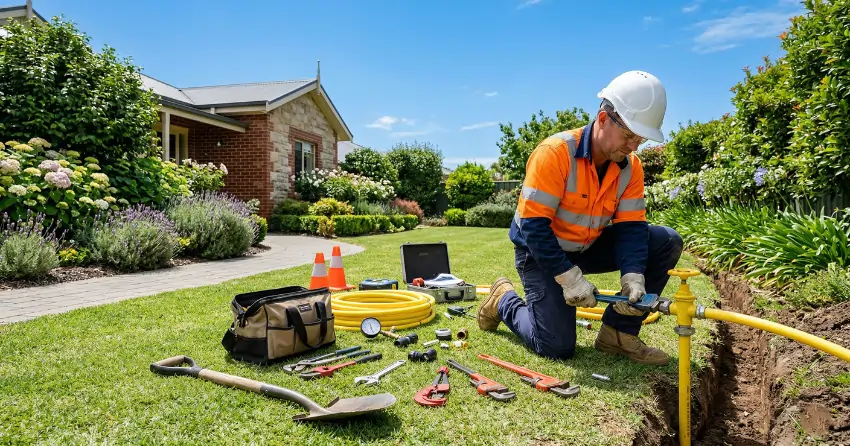
Rules vary, so we start by finding out what your municipality asks for. For most new gas lines that means a permit before work begins and an inspection when the pipe is complete but still visible, and sometimes a second visit after the appliance is connected. Inspectors look at materials, supports, valves, test results and how the work matches the plan. A company that says permits are not needed without checking is a red flag. We handle the application, book the inspection and give you a copy of the sign-off, so your records show who did what.
What should you have ready before calling a gas line installer?
A few details speed up the conversation and make a quote more accurate. Know whether your home uses natural gas or propane, where the meter or tank is and which appliance you want to connect, including its make, model and rated input if you have it. Estimate the distance from the nearest existing gas pipe. Photos of the meter, the planned location and the route help a lot. Mention the age of the house, any past gas work and your preferred timing. Writing these down also lets you compare quotes from different companies on equal terms.
Does a failed gas inspection mean the gas will be shut off?
A problem on the report is not a verdict on the house. We sort findings into three groups: fix now, fix soon and keep an eye on. A leak or a damaged connector goes in the first group, and we usually cannot leave it as it is. A rusted section or a pipe with no support goes in the second, along with a suggestion for how and when to repair it. Minor items, like a missing label or an old capped fitting, go in the third. After repairs we retest the affected part and update the report, which gives you something clear to hand to a buyer or the next technician.
Is it worth choosing a nearby company for gas line work?
Gas work follows rules set by your municipality and your gas supplier, and those rules differ from one town to the next. A nearby company is more likely to know which permits Edmonton asks for, how the local inspection office works and how to reach the utility when a meter has to be locked or unlocked. Local soil and weather matter outdoors, where frost, drainage and ground conditions affect how pipe is buried. Proximity can also make follow-up visits easier. Whoever you pick, ask how they handle permits, testing and the utility rather than assuming.
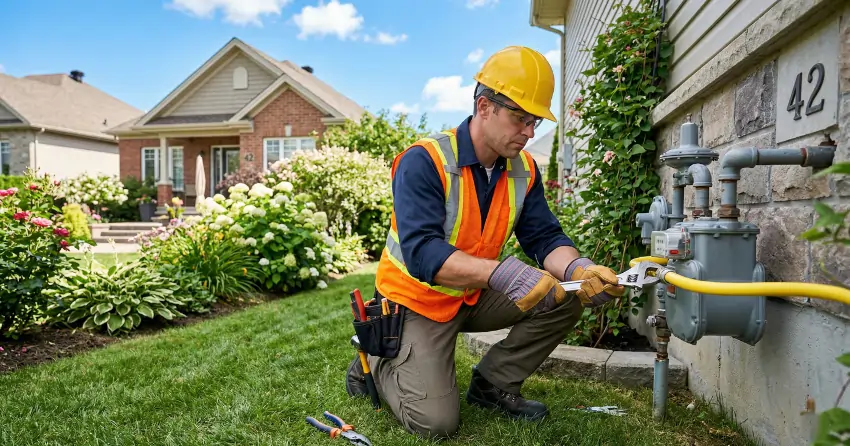
Questions about your gas lines?
If nothing smells wrong but you have questions about old fittings, a new appliance or work another trade did, we are glad to talk it through. Anything that smells like gas comes first: leave and call the utility from outside. Contact Gas Fireplace Edmonton for everything else.
