

































Many people find this page after the urgent part is over: the utility has been out, the gas is off at an appliance or the meter, and someone now has to make the repair. Others are simply reading ahead. Either way, a search for “gas line piping” deserves careful answers. Here, homeowners around Edmonton will find how leaks are located, what gas line piping work usually involves and how gas is safely restored, explained without jargon or alarm.
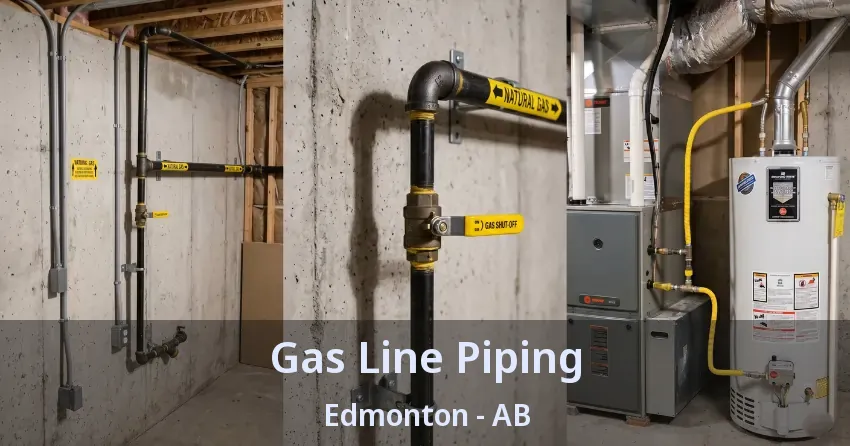
Do gas pipes need to be supported and protected inside a house?
Yes. Gas pipe must be held at regular intervals so it does not sag, rub or stress its joints, and the supports have to suit the material. It also needs protection where damage is likely, such as sleeves or guards where pipe passes through masonry, floors or framing, and clearance from sharp edges and hot surfaces. Pipe should not be used to hang other items, and it generally must not run through spaces where leaked gas could collect unseen. When reviewing “gas line piping”, a technician checks these details because loose or hidden pipe is often where trouble begins.
Why would a gas detector alarm when nobody smells gas?
Treat every gas alarm as real until someone qualified says otherwise. Alarms react to the gas itself, so they can sound before the smell becomes noticeable, and a faint odor is easy to miss. Leave the building with everyone, call the gas utility or 911 from outside and stay out until you are told it is safe. Once the utility has checked, a technician can look for a small leak near the alarm. Sometimes aerosol sprays, solvents or cleaning fumes set a sensor off, and an alarm past its replacement date can misbehave, but that conclusion comes after the check, never before it.
How can you tell that old gas piping needs to be replaced?
Gas pipe does not wear out on a schedule, but it can age in ways you can see. Signs worth reporting to a technician include rust or flaking on steel pipe, especially near joints, damp areas or the floor; a green or white crust on fittings; pipes that sag, rattle or hang without proper supports; mixed materials joined by improvised fittings; and repeated leaks at different spots. Paint can hide corrosion. A pressure test and a visual check show whether repairing or replacing a run makes sense. Do not scrape, wrap or paint over a pipe to cover a problem.
What does a technician look at when checking your gas piping?
A gas line inspection is a structured look at the piping, the connections and the equipment tied into them. It usually includes:
- tracing visible pipe for corrosion, damage and missing supports;
- checking valves, unions and flexible connectors at each appliance;
- testing joints with a gas detector or leak solution;
- confirming that the meter and shut-offs are accessible;
- noting capped lines, abandoned fittings and anything installed without a valve.
The technician then explains what is fine, what is worn and what should be corrected, ideally in writing.
Where does flexible tubing fit into your gas piping?
Neither is better in every case. Rigid pipe is simple and sturdy, and we like it where it can run in straight lines along joists and walls. Flexible tubing earns its place when we have to snake around ducts, finished ceilings or tight corners without opening everything up. It has to be installed exactly as its manufacturer specifies, with matching fittings, protection where it passes through framing and a grounding connection where required. Appliance connectors are a third category, short and meant to be replaced. When we recommend one over the other, we explain why, since the answer depends on the house.
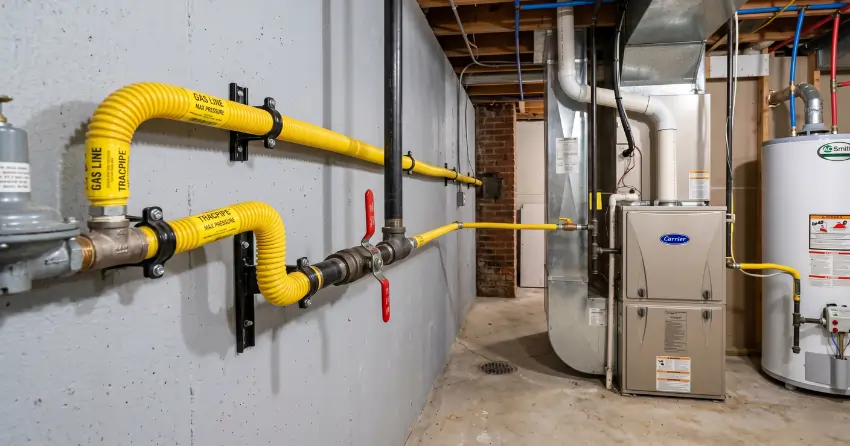
Is there a limit to how far a gas pipe can run from the meter?
There is no single distance, but there is a practical limit: the longer the run, the more pressure drops along it. A far-off appliance on pipe that is too narrow can end up starved whenever other equipment is running. Pipe size is chosen from tables that combine the length, the total load and the material, so a long run to a garage or outdoor kitchen is usually bigger than the pipe at the meter would suggest. Sometimes a second line or a regulator closer to the appliance solves the problem. A technician works out which.
Why do quotes for a new gas piping run vary so much?
Several things shape what a new gas line costs, and most come down to distance and access:
- how far the appliance is from the nearest suitable pipe;
- whether the route is open, through finished walls, under a slab or across a yard;
- the pipe material and size, which follow from the load;
- whether the meter or main supply needs an upgrade;
- permits, inspection and testing;
- repairs to drywall, flooring or landscaping afterward.
A written quote that lists these separately lets you compare offers fairly.
How should you prepare your home for gas line work?
A little preparation saves time on the day. Clear a path to the meter, the appliances involved and any basement or crawlspace where pipe runs. Move furniture, stored items and anything fragile away from walls where pipe may be exposed. Write down the make and model of each gas appliance from its rating plate. Know where the main valve and the electrical panel are. Plan for gas to be off for part of the visit, so a hot meal or shower may not be possible. Keep children and pets away from the work area, and for outdoor work, make sure the route is open.
Will a carbon monoxide alarm detect a gas leak?
A carbon monoxide alarm alone will not catch a gas leak, so homes with gas benefit from two kinds of alarm that answer different questions. A carbon monoxide alarm asks whether an appliance is burning badly or venting into the home. A combustible gas alarm asks whether unburned fuel is escaping. We recommend working carbon monoxide alarms in every home with gas, and we suggest gas alarms where people want an extra safeguard, such as homes with someone who cannot smell well or appliances in rarely used basements. Placement matters: natural gas is lighter than air and rises, while propane is heavier and collects low. Either alarm sounding is a reason to get outside and call for help.
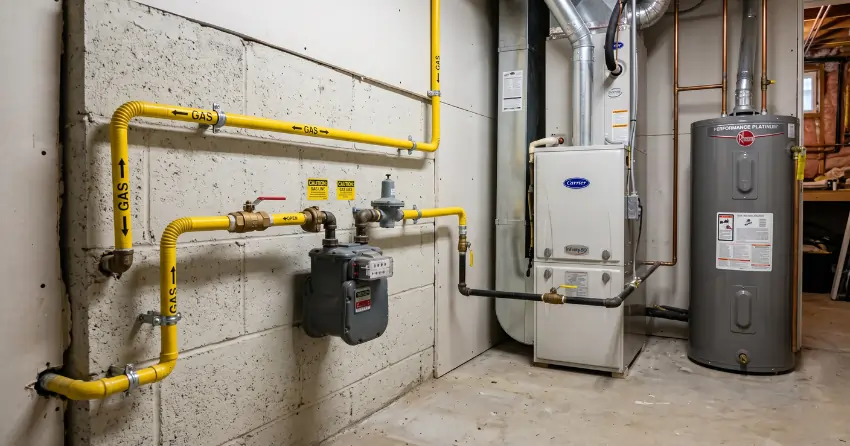
Book the repair once it is safe
When the immediate danger has been handled, a calm, planned repair visit is the next step. Tell us what the utility found and which appliances are involved, and Gas Fireplace Edmonton will explain what gas line piping work would include. Request a repair visit in Edmonton.
