

































Gas piping is easy to forget. It runs behind walls, under floors and through the yard, feeding the furnace, water heater, range and fireplace without a sound. When a sulfur smell or a hiss shows up, the right first move is to leave and call the utility from outside; the questions come afterward. People in Edmonton who look up “gas line repair” usually want to know what is serious, what happens next and what gas piping repair involves. This page answers those questions with safety first.
Does the gas company fix leaks inside the house?
It depends on where the leak is, and the meter is usually the dividing point. Utilities typically own and maintain the line from the street to the meter, so a leak there is theirs to fix. Downstream, the pipes running through walls, crawlspaces and the yard to your appliances are normally the owner’s responsibility. In practice, the utility arrives first, finds the general area of the leak, shuts off or tags what is unsafe and leaves a note. We come in after that to locate the exact point, repair it, test the system and coordinate getting gas restored.
How can you tell if an outdoor gas line is leaking?
Buried leaks usually show up as a strip of browned lawn, bubbling after rain or a hiss near the meter, because the soil hides the gas and partly absorbs the smell. The browned strip often runs in a straight line between the meter and a detached garage, pool heater or outdoor grill. Corrosion on older steel lines, damage from digging and shifting soil are the common causes. Locating the leak takes the utility or a technician with proper detection equipment, so the right move is to keep clear, keep children and pets away and make the call from a distance.
What should you do if you damage a gas line while digging?
If you hit or nick a gas line while digging, stop immediately, leave the shovel or machine where it is and move everyone away from the area. Do not try to cover, tape or bend the pipe, and do not start engines or use anything that could spark nearby. Call the gas utility or 911 from a safe distance, even if you do not smell gas, since damage can lead to leaks later. To avoid this, contact the utility locate service for your area before any digging so buried lines can be marked. Any “gas line repair” job after damage should end with a test before gas is restored.
What gas line work is needed when adding or moving an appliance?
Adding or moving a gas appliance usually means extending or rerouting the piping, fitting a shutoff valve near the new location and connecting the appliance with a new flexible connector of the right size. The technician also checks that the existing line can supply enough gas for everything that may run at once, since an undersized line can starve appliances. Capped lines left from old appliances should be checked and properly sealed. A permit may be required depending on where you live. The work finishes with a leak test and relighting of every affected appliance.
What does repairing your gas line involve?
A leaking gas line is repaired by shutting off the gas, replacing or remaking the faulty section and then testing the whole system before gas is restored. Depending on the cause, that might mean replacing a worn appliance connector, remaking a threaded joint with a sealant rated for gas, swapping a failing valve or cutting out a corroded length of pipe. Buried or hidden lines may need access through a wall or a trench. Tape alone, putty or a clamp is never an acceptable fix. Once the repair is done, the system is pressure-tested, appliances are relit and the connections are checked again for leaks.
What affects the cost of gas leak repair?
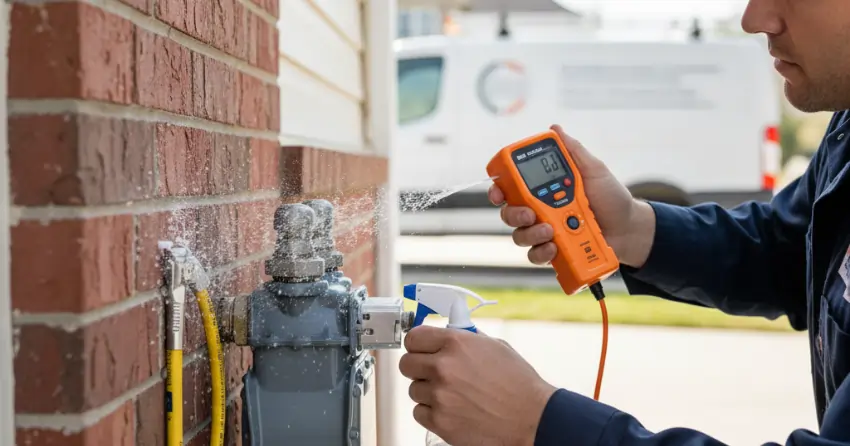
The cost of gas leak repair depends mostly on where the leak is and how much work it takes to reach and fix it. A leak at an exposed appliance connector or valve is usually a small job. A leak inside a finished wall, under a floor or in a buried yard line takes more time and may involve opening and restoring surfaces. The type and amount of pipe replaced, the pressure test, any permit or inspection your area requires and relighting appliances also affect the total. Ask for a written quote that separates locating the leak from repairing it.
How do you get ready for gas piping repair at home?
Give us a clear path and a clear story, and the visit goes faster. A clear path means we can reach the meter, follow the piping and get to each appliance without moving boxes or furniture. A clear story means telling us what you smelled or heard, where, and what the utility crew said or wrote on its tag. If the gas is off, plan for no hot water or heat for a while. A company that explains these steps when you book, rather than at your door, is usually organized about the rest of the visit too.
What should you watch for once gas service is restored?
Once a gas line has been repaired, the system is pressure-tested or leak-checked, gas is turned back on and each appliance is relit and checked for proper operation. The technician should explain what failed, what was replaced and where. In the days that follow, watch for any return of the smell, hissing or appliance trouble, and keep your carbon monoxide alarms working. Some utilities or local rules require an inspection before gas is fully restored. Keep the paperwork with your home records, since it helps future technicians and buyers understand the work that was done.
Which qualities matter in a company handling gas piping repair?
Hire a qualified gas technician who works on gas piping regularly, not a general handyman. Ask whether they handle your type of piping and fuel, how they locate leaks, whether they pressure-test after the repair and whether they will coordinate with the utility to get gas restored. They should also know whether your area requires a permit or inspection for the work. A clear written quote, a plain explanation of the cause and a willingness to show you the failed part are good signs. Be cautious of anyone who suggests a quick patch or skips the final test.
Questions about your gas lines?
If nothing smells wrong but you have questions about old fittings, a new appliance or work another trade did, we are glad to talk it through. Anything that smells like gas comes first: leave and call the utility from outside. Contact Gas Fireplace Edmonton for everything else.
