

































Opening day and closing day are the two moments in the year when a pool heater most deserves attention. Start-up reveals what the off season did to it, and shutdown protects it from the cold. Pool owners in Edmonton who searched for “gas pool heater repair” will find useful answers on gas pool heater repair that follow the calendar, including what to look for in spring, how to protect the unit in winter and what to do when something seems off in between.
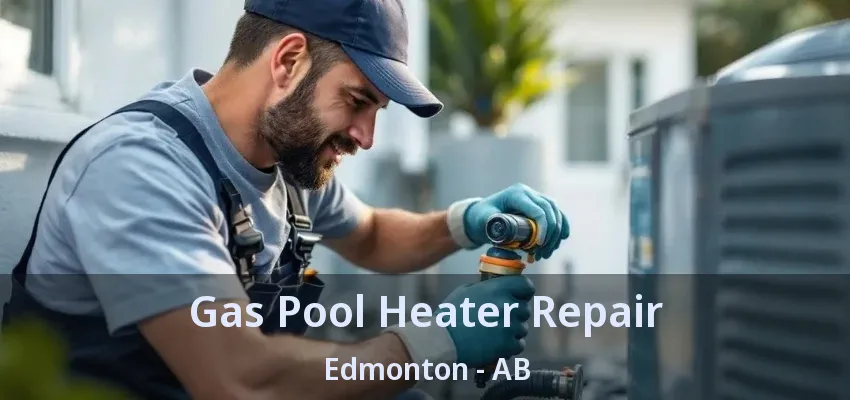
Are pool heaters safe to run?
Most safety trouble comes from shortcuts, not from the heaters themselves. Jumpering a pressure switch, blocking the vent with a cover, storing paint or fuel near the cabinet or stacking boxes against a heat pump all create real hazards. Wiring and bonding matter too, because electricity and water share the same space. If you ever smell gas, leave the area and call your gas utility from a safe distance. Keeping the surroundings clear, scheduling regular service and acting early on warning signs go a long way toward keeping everything uneventful.
Why does a gas pool heater try to light and then shut down?
We listen and watch the sequence. A fan starts, an igniter glows or sparks, and the gas valve should click open. If we hear sparking but see no flame, we suspect gas delivery or the burner. If the igniter never heats, the igniter or its power is at fault. If a flame appears for a second and then drops, the flame sensor or its grounding is the usual suspect. Because each result leads to different repairs, guessing at parts rarely works. Meanwhile, you can confirm that a propane tank has fuel in it, which costs nothing to check.
What stops a gas pool heater from starting?
Most no-start calls come down to one of three things: no power, no flow or a safety circuit that has tripped. We look at the display first. A dead screen suggests power, a fuse or a board; a code points us to the circuit that opened. Then we confirm water is moving through the heater at a proper rate, since a dirty filter or half-closed valve will quietly keep a pressure switch open. Only then do we test ignition components. A short wait of a few minutes after power-up is also normal on many models.
What usually stops a gas pool heater from heating?
A gas pool heater needs three things at once: water moving through it, fuel reaching the burner and a flame that the controls can prove. Take away any one and it shuts down. Weak flow from a dirty filter or a closed valve trips the pressure switch. A dirty igniter or flame sensor interrupts the flame check. Blocked burner openings, a failed gas valve, a faulty temperature sensor and a tired control board round out the usual list. Which one applies shows up in the fault message and in what the heater does just before it quits, so write both down when you search for “gas pool heater repair” help.
What does a pool heater flame sensor do?
A flame sensor is a thin metal rod that sits in the burner flame and tells the control board that combustion is happening. The flame carries a tiny electrical signal, and if that signal disappears the board closes the gas valve within seconds. Over time the rod collects a film of residue or corrosion, which weakens the signal, so the burner may light and then shut off almost immediately. Cleaning or replacing the sensor, along with checking its wire and grounding, usually resolves it. This is work for a technician, because it happens inside the gas section.
What happens during a gas pool heater repair visit?
A visit normally starts with questions, then a look at the heater itself. The technician reads any fault message, confirms the pump and filter are giving enough flow, then watches the heater go through its start sequence to see exactly where it stalls. Gas supply, ignition parts, the pressure switch, wiring and the vent get tested in turn, and the burner area and heat exchanger are inspected for soot, rust or water. You will hear what failed and what it takes to fix it, and repairs that need a part usually end with a second visit once the part arrives.
How is scale removed from a pool heater heat exchanger?
Scale is a slow problem with a quick give-away: the heater gets noisy and pool temperatures rise more slowly than before. We confirm it by checking the temperature rise, the pressure drop across the unit and, when the headers are off, the look of the tube interior. Cleaning is done with a proper descaling solution circulated in a controlled way, followed by a thorough rinse, because ordinary household acids can harm the metal. Afterward the pool’s calcium hardness, alkalinity and pH deserve testing, or the crust will simply rebuild over the next season.
Should I check my pool heater after lightning or flooding?
After a storm or power cut, inspect the equipment area before restarting anything. Look for water or debris around the heater, damaged wiring, fallen branches and signs of flooding. If the equipment was under water, or you see scorch marks or smell burning, leave it off and call a technician. Power surges and lightning can damage control boards and sensors even when the unit looks fine. Once power returns, wait a few minutes before restarting so the system can settle, then watch the first cycle for codes or unusual behavior.
Should I repair or replace my pool heater?
The decision rests on a few questions. How old is the heater, and how often has it needed repairs? What failed: an inexpensive part, or the heat exchanger or compressor that makes up much of the unit’s value? Are parts still available? Is it efficient and sized correctly for your pool? A single modest repair on a heater that otherwise runs well is usually sensible. Repeated failures, a leaking exchanger, heavy corrosion or a repair that approaches the cost of a new unit all point toward replacement.
Seen something you want us to look at?
Whether it is a sound, a stain or something you spotted while cleaning, mention it when you contact us so the technician knows where to start. Describe what you noticed and Gas Fireplace Edmonton will follow up about gas pool heater repair for your home.
