




























Every pool heater does the same basic job, whatever fuel it uses: water leaves the pool, passes the pump and filter, picks up heat and returns a little warmer. When anything in that loop misbehaves, the heater stalls, locks out or never starts. If “Hayward electric pool heater repair” is what brought you here, the answers below explain electric pool heater repair for pools around Edmonton in everyday language, including the checks homeowners can make safely and the jobs that belong to a trained technician.
What kinds of pool heater count as electric?
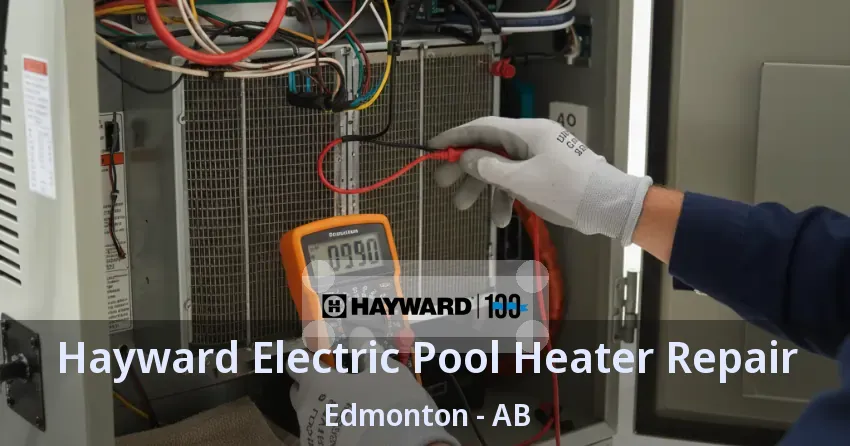
Two very different machines get called electric pool heaters. An electric resistance heater passes water over heating elements, much like a large water heater, and it draws a lot of power for the heat it makes, so it usually appears on spas and small pools. An electric heat pump uses power to run a fan and a compressor that pull warmth out of the outdoor air and pass it into the pool water, which is why it suits larger pools in mild weather. The type decides which parts fail and what a repair involves, so check the label before you describe the problem when you call about “Hayward electric pool heater repair”.
What does a loud pool heater sound mean?
Start by noticing when the sound happens. At start-up only, think ignition or contactor. While running, think fan, compressor or flow. Only at shutdown, think expansion of metal or a check valve slamming. Water noises such as gurgling suggest air in the system, which can happen after the pool has been opened or the filter cleaned. Kettle-like rumbling is a classic scale warning. We trace the sound with the cabinet open and the unit running safely, because a noise that is only a nuisance today can become a failed part next month.
Why is my heat pump pool heater not warming the pool?
First, we check the basics a homeowner can confirm. Is the pool covered at night? Is the coil clean and clear of leaves? Is the fan spinning, and is the air coming off the unit noticeably cooler than the air entering? If so, the heat is being collected, and the question becomes whether the pool is losing it just as fast. If the discharge air feels the same as the intake, the refrigerant circuit is not working, and that diagnosis requires gauges, not guesswork. Slow warm-up in colder weather is normal for this type of heater.
Why is my pool heater running but the water stays cold?
If the heater is running yet the water barely warms, look at the conditions before the equipment. An uncovered pool in wind loses heat as fast as the heater adds it, and a thermostat set too low simply never calls for heat. Then consider the machine: a scaled heat exchanger, a bypass valve opened too far so most water skips the heater, or a heat pump with a blocked coil can all reduce output. Gas units may also be firing at reduced capacity from dirty burners. A technician can measure the temperature rise across the heater to see what it is really delivering.
What will a technician do when servicing a pool heater?
Think of it as a physical for your heater. We inspect, clean, measure and test, and then we tell you what we found. Typical steps are removing the access panels, checking connections for heat damage, clearing debris and insect nests, verifying water pressure and temperature rise, and watching the start-up sequence from beginning to end. If a part is close to failing, we point it out with the reason, so you can decide whether to replace it now or monitor it. A thorough visit leaves you knowing the heater’s condition, not just that it is running.
How do technicians diagnose a pool heater problem?
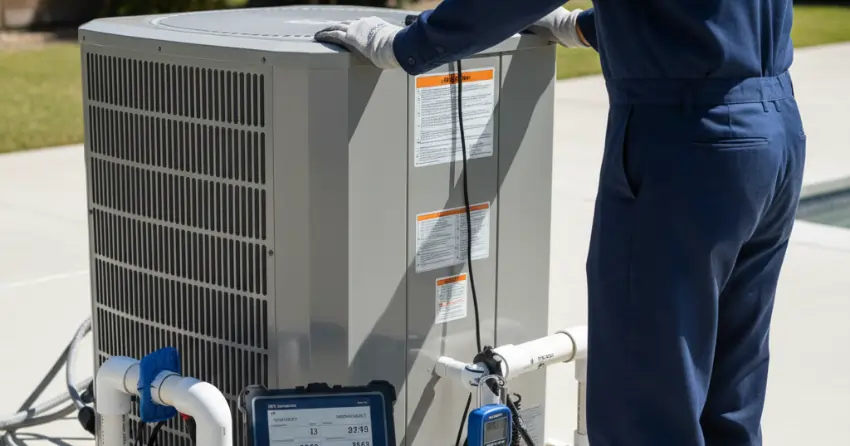
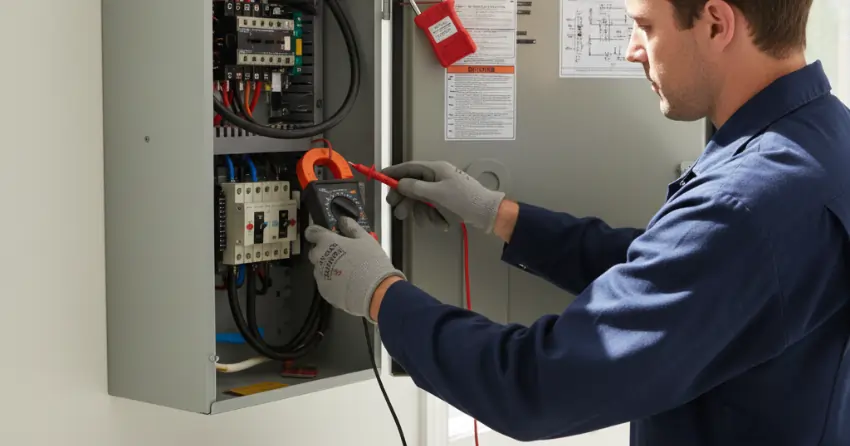
Diagnosis follows the same path the heater follows when it starts. First comes power, then the control display and any stored codes. Next the technician confirms water flow and pressure, since those unlock the heat source. After that, the heat source itself is tested: igniter, flame signal and gas valve operation on gas units; compressor, fan and refrigerant side readings on heat pumps; element resistance and contactor operation on electric ones. Using a meter and the manufacturer’s sequence avoids the trap of swapping parts until something works.
What does a pool heater heat exchanger leak mean?
Confirming the exchanger is the source takes care, because many drips are only fittings or headers. We isolate the heater, pressurize the water side and watch where moisture appears, then open the combustion area and inspect the tubes. If the exchanger is breached, the decision is financial and practical: is a replacement exchanger available for this model, how does its price compare with a new heater, and what shortened its life in the first place? Fixing that cause, usually water balance or freeze protection, is what keeps a second failure from following.
Which parts of an electric pool heat pump fail most often?
A heat pump has fewer moving parts than a gas heater, but several of them wear out. The fan motor and its capacitor are frequent culprits, since they work in heat, rain and dust. The compressor depends on a start capacitor and a contactor, and either can fail while the compressor itself is healthy. The air coil clogs with leaves, cottonwood and lawn clippings, and the water-side heat exchanger can scale over time. A flow switch, a temperature sensor or a control board can stop everything while the big parts are fine. A technician tests these in turn, which is why repair quotes vary so much from one fault to the next.
Should I check my pool heater after lightning or flooding?
After a storm or power cut, inspect the equipment area before restarting anything. Look for water or debris around the heater, damaged wiring, fallen branches and signs of flooding. If the equipment was under water, or you see scorch marks or smell burning, leave it off and call a technician. Power surges and lightning can damage control boards and sensors even when the unit looks fine. Once power returns, wait a few minutes before restarting so the system can settle, then watch the first cycle for codes or unusual behavior.
What to have ready when you contact us
A few details help us plan the right visit:
- the type and age of your home;
- what you have noticed and when it started;
- any recent renovations or repairs.
Send us your details and we will reply with next steps for electric pool heater repair in Edmonton.
