




























Whether you are fixing the heater you have or planning a new one, the same sensible questions come up: what type fits the pool, what the work involves and what the unit will demand from your property. Households in Edmonton looking up “Hayward pool heater ignition failure” can use this page to get ahead of those questions. It explains pool heater ignition repair step by step, from sizing and connections to start-up, without assuming any trade knowledge.
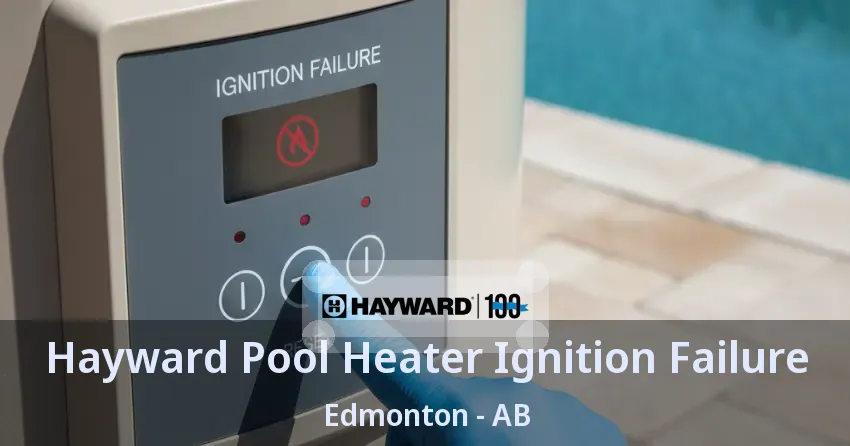
Is soot on a pool heater a sign of a problem?
Treat soot as a message about combustion. Gas should burn cleanly with steady, mostly blue flames. Black deposits on the exchanger or around the vent opening mean fuel is burning without enough air, which can also produce carbon monoxide, a gas you cannot smell. Heaters are installed outdoors partly for this reason, yet a blocked flue or a tilted unit can send fumes toward a nearby window. When we see soot, we clean the exchanger, clear the burner and flue, check the gas pressure and confirm clearances before the heater is trusted again.
Is it normal for a pool heater to cycle on and off?
Timing tells the story. A heater that runs a few minutes and stops every time is being shut off by a safety, usually flow, temperature or flame proving. One that runs longer, rests and repeats is probably just maintaining temperature, especially with a small gap between its on and off points. We also look at the pool control system, because automation sometimes switches the pump or heater off on its own schedule. Fixing the real cause protects the ignition parts, because starts are what wear them out.
Why is my pool heater not turning on?
Most no-start calls come down to one of three things: no power, no flow or a safety circuit that has tripped. We look at the display first. A dead screen suggests power, a fuse or a board; a code points us to the circuit that opened. Then we confirm water is moving through the heater at a proper rate, since a dirty filter or half-closed valve will quietly keep a pressure switch open. Only then do we test ignition components. A short wait of a few minutes after power-up is also normal on many models.
What does a pool heater flame sensor do?
When a heater lights for a second and drops out, the flame sensor is one of our first suspects. The board is designed to distrust any flame it cannot confirm, which keeps a faulty burner from running unattended. We measure the sensor’s signal while the burner runs and compare it with the manufacturer’s minimum. A low reading can come from residue on the rod, a loose connector, poor grounding of the burner or a flame that is not touching the rod properly. Cleaning, replacing or correcting the flame pattern restores the signal, and the heater should then complete its cycle normally.
Do propane and natural gas pool heaters fail to light for different reasons?
Most causes are shared, but the fuel adds its own possibilities. A propane heater can fail to light because the tank is empty or nearly so, a regulator has failed, or the tank valve was left shut after a delivery. A natural gas heater depends on service to the house, so a meter or utility problem, or a shutoff left closed after other work, can starve it. Either way, the igniter, flame sensor and flow checks still apply. Checking a tank gauge is a fair first step for propane owners; anything involving gas fittings or regulators belongs to a qualified technician. If you smell gas, leave and call from outside.
Why does a pool heater try to light several times and then stop?
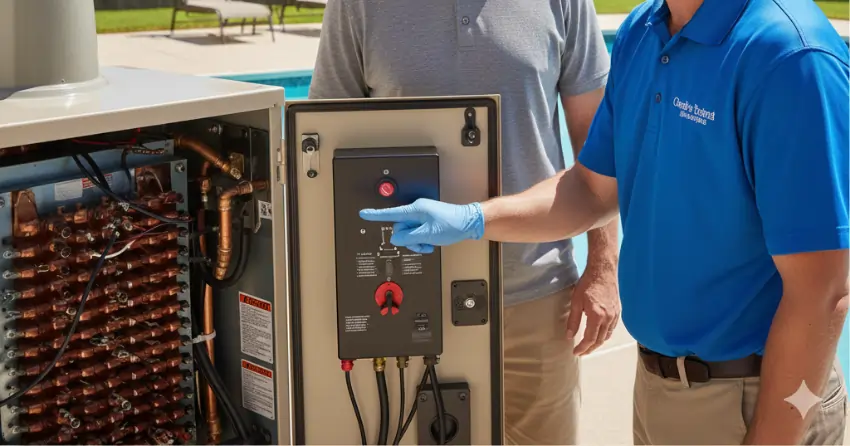
That repeating pattern is the heater’s normal reaction to a failed start. Most gas heaters allow a few ignition attempts, pausing between them to clear the burner area, and when none produces a proven flame they lock out and wait for a reset. The lockout is a protection so that raw gas does not keep flowing into the burner. Resetting it works only if the reason was temporary. If the heater locks out again, something specific is failing, and the number of attempts and the length of each pause are clues to share with the technician when you describe the sequence.
What should I tell the technician when I call about my pool heater?
The most helpful information is what you saw and heard, not your theory about the cause. Say whether the heater is gas, electric or a heat pump, the brand and model if you can find them, and whether the pump was running at the time. Describe the symptom precisely: no display, a code, clicking, a flame that drops, water around the cabinet or slow heating. Mention when it last worked normally and anything that changed. If you smelled gas or saw smoke or sparks, say so immediately so the call is handled accordingly.
How does pool water chemistry affect the heater?
Water chemistry is the biggest influence on how long a heater lasts. Water that is acidic or low in alkalinity eats away at the metal of the exchanger and the fittings, leaving blue-green stains and eventually pinholes. Water that is too hard or high in pH leaves scale that reduces heat transfer and damages the unit from the inside. Test your pool regularly, keep pH, alkalinity, calcium hardness and sanitizer within the ranges your heater’s manual gives, and correct drifts promptly. Add chemicals according to label directions with the pump running, never directly into the heater.
What should be kept clear around your pool heater?
It is easy to forget the heater when planning landscaping, fences or storage sheds, yet those additions often cause problems later. A hedge that has grown against a heat pump chokes its airflow. A fence built close to a gas heater can trap exhaust. Chemical containers stored on the pad release fumes that corrode metal. We walk around the unit when we visit and note anything that crowds it. If you are building a deck, wall or shed nearby, check the clearances first.
Seen something you want us to look at?
Whether it is a sound, a stain or something you spotted while cleaning, mention it when you contact us so the technician knows where to start. Describe what you noticed and Gas Fireplace Edmonton will follow up about pool heater ignition repair for your home.
