




























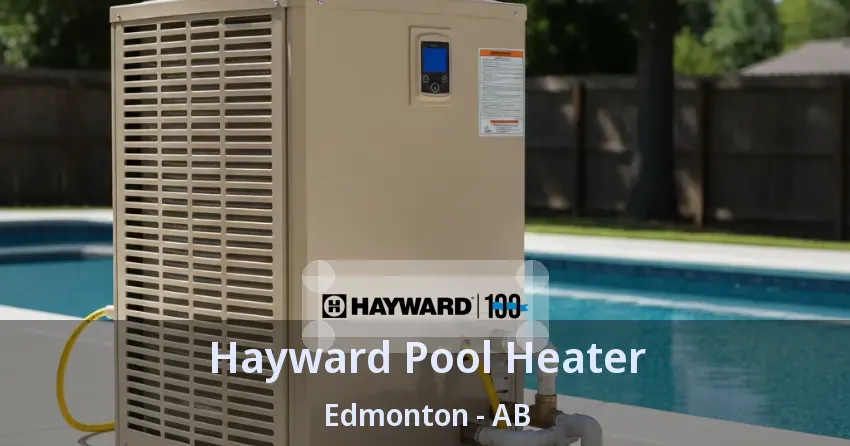
A closed valve, a full skimmer basket or a tripped breaker can make a healthy heater look broken, while a genuine fault sometimes hides behind a harmless-looking symptom. Sorting one from the other is half the battle. People in Edmonton who look up “Hayward pool heater” will find straightforward guidance on pool heater service and repair here, including simple checks to try first and the signs that tell you to put the tools down and bring in a professional.
What power and fuel does each kind of pool heater need?
Each type draws on different resources. Gas heaters burn natural gas or propane, but they also need a small electrical supply for the control board, igniter, sensors and sometimes a blower, so a power outage stops them. Heat pumps run on electricity and usually need their own circuit, with a fan and a compressor working whenever they heat. Electric resistance heaters use elements that draw large amounts of power. Solar systems use sunshine and only need the pool pump to move water through the panels. Knowing which one you have makes it easier to describe the problem when you search for “Hayward pool heater” help, and tells you which utility to check first.
How is a pool heater sized for your pool?
Heater size is measured in BTU output for gas and electric models, and in a similar capacity rating for heat pumps. The right number depends on pool surface area, how many degrees you want to raise the water, how much wind the pool sees and whether a cover is used. A pool heated only for weekends needs more capacity than one kept warm all season. An undersized heater runs constantly and still struggles, while an oversized one costs more up front and may cycle often. The rating plates and sizing charts supplied by manufacturers guide the choice, and a technician can apply them to your site.
Can a dirty filter make a pool heater stop working?
Think of the pump and filter as the heater’s support crew. When the filter is overdue for cleaning, pressure builds and flow falls, and the first thing to notice may be a heater that refuses to fire. Variable-speed pumps add another twist: at low speed they may not move enough water to satisfy the heater’s switch, so the schedule needs a minimum heating speed. Pool owners can help by cleaning baskets, backwashing or cleaning cartridges on schedule and telling us about any gauge readings that look different from normal.
How is a new pool heater installed step by step?
The work breaks into four parts: placement, connections, commissioning and handover. Placement covers where the unit sits, how far it is from walls and overhangs, and whether exhaust and airflow are free. Connections cover plumbing, gas or power, and any controls wiring to your pool automation. Commissioning means purging air, testing for leaks, measuring pressures and temperature rise and verifying every safety. Handover is where we show you the display, the settings and the shut-off points, and leave you with the paperwork. Most delays happen in the permit or in a gas or electrical upgrade, so those are raised early.
Why is my pool slow to heat up?
Think in degrees per day rather than hours. Water is slow to change temperature, so even a strong heater needs time to lift a full pool, and a cool, windy night can undo part of the day’s progress. We usually advise starting early, using a cover whenever the pool is idle and expecting heat pumps to need patience at the start of the season. If your pool seems slower than it used to be, the heater may be scaled, restricted or partially bypassed, and we can measure its output to find out.
How long do pool heaters last?
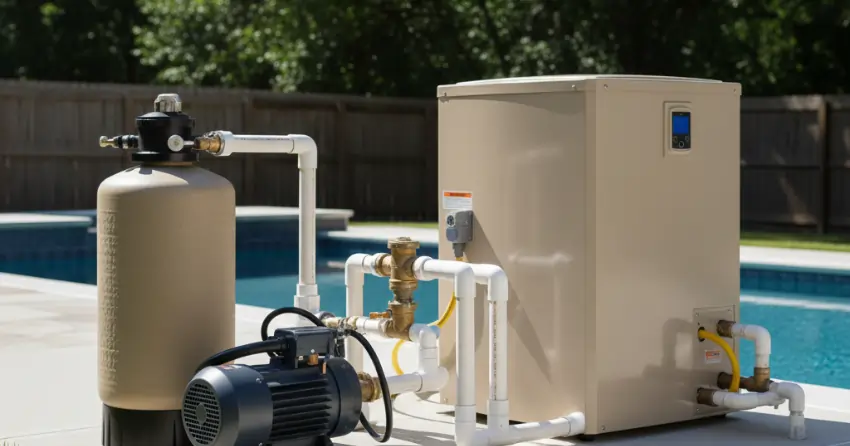
A pool heater can last many seasons when it is installed correctly and cared for, but there is no fixed lifespan. Water chemistry is the biggest factor: balanced water protects the exchanger, while acidic or hard water attacks it. Usage, climate, how well the unit is shielded from weather and pests, regular servicing, freeze protection and the quality of the original installation all play a part. Gas, electric and heat pump models wear differently. When repair needs begin to pile up, comparing repair cost with the value of a new unit is a sensible next step.
How often should a pool heater be serviced?
Once a year is the usual recommendation, and the ideal moment is before the swimming season, when any problem can be fixed before you need the heat. Heavily used heaters, those near trees, dust or salt air, and units in humid indoor rooms may benefit from a mid-season check as well. Between visits, keep the area clear and watch for changes in how the heater behaves, such as slower heating, new noises or codes. Your manual may specify its own interval, so it is worth following.
Does a saltwater system change how a pool heater is cared for?
Yes, many heaters are designed to work with salt pools, but the model has to be made for it. Salt water is more corrosive than fresh, so the exchanger materials matter. Heat pumps often use titanium for that reason, and gas heaters offer corrosion-resistant exchangers and headers. Check the manual for the salt levels the manufacturer allows. Keep the salt cell downstream of the heater, keep the water balanced and rinse away salt spray around the unit. Salt systems are not harmful to a well-matched heater, but they are unforgiving of neglect.
How should you set the thermostat on a pool heater?
Set it to the temperature you want to swim in, not higher. A higher setting does not make the heater warm the water faster; it only keeps the burner or compressor running for longer. Many heaters read the water as it enters the heater, so the pump must be running for the reading to be accurate. Make small, planned changes rather than big swings, and lower the setting or switch the heater off when nobody will swim for several days. Some models have separate pool and spa settings. Give the water time to rise before deciding something is wrong, since larger pools change temperature slowly.
Want a straight answer about your pool heater?
Sometimes the most useful thing is simply knowing whether there is a problem at all. A visit from Gas Fireplace Edmonton gives you that answer, along with practical advice for keeping things in order. Call (587) 853-6668 to set one up.
