




























Your HVAC equipment keeps the house comfortable year after year, but it also deserves respect, especially where gas, electricity and moving parts are all involved. The answers on this page cover what homeowners in Edmonton usually want to know after searching for “HVAC tune up”: how the work is done, which simple checks are safe to do yourself and which jobs belong to a trained technician.
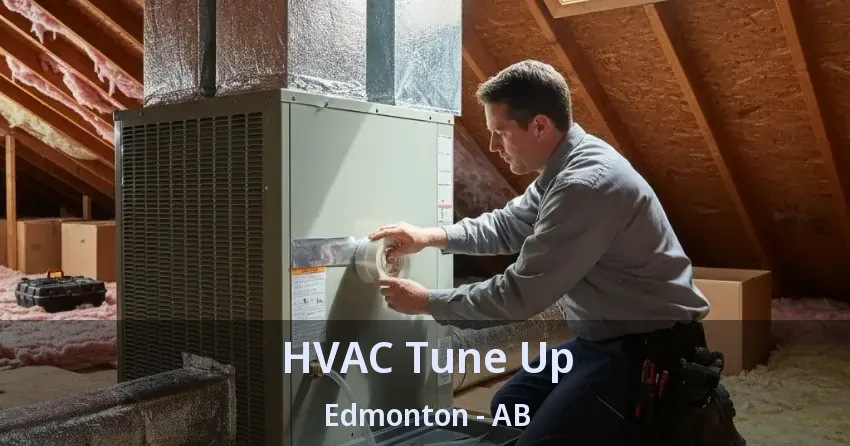
Why is routine care worth it for your heating and cooling system?
Regular maintenance matters because small problems in HVAC equipment, such as a clogged filter, a dirty coil, a loose wire or a weakening part, are easier and less costly to fix before they cause a breakdown. A routine visit cleans and checks the parts that wear, confirms the equipment starts and runs as it should and catches safety issues on gas appliances. Well-kept systems tend to run more smoothly, keep rooms more even and last longer. Many homeowners schedule care before the heating season and again before the cooling season, so the equipment is ready when it is needed most.
Why does the furnace or AC start and stop every few minutes?
An HVAC system that keeps turning on and off, often called short cycling, is usually reacting to overheating, a control problem or equipment that is too large for the home. Common causes include a clogged filter, a thermostat placed near a heat source or a draft, a dirty flame sensor on a furnace, a frozen coil on an air conditioner and safety switches tripping because airflow is blocked. Start by replacing the filter and making sure supply and return vents are open. If the cycling continues, have a technician find the cause, because constant starts wear out parts quickly.
Can a bad thermostat cause HVAC problems?
Rule it out first, because a thermostat problem can look exactly like a failed system and is far simpler to fix. A surprising number of no-heat and no-cooling calls end at the thermostat: a blank screen, a schedule that reset itself, a setting stuck on fan only or a new smart thermostat wired to the wrong terminals. Location causes quieter trouble, with a unit near a sunny window or a supply vent cycling the system at odd times. When we test, we often bypass the thermostat at the equipment; if the system starts, the problem is upstream. Wiring work belongs to a technician, but the settings and batteries are fair game.
What does a furnace inspection include?
We look at a furnace as a sequence: power, ignition, flame, venting and airflow. The burners and flame get a close look, since a lazy or lifting flame says something is off. The heat exchanger is inspected as far as the design allows, and the vent pipe is followed to make sure it is sealed, sloped correctly and clear at its exit. Safety switches get tested rather than assumed, and the blower is checked for dust and wear. Where the equipment allows, the air around the furnace is tested for carbon monoxide. Anything worrying is explained in plain terms, along with what it means for using the furnace.
How often does the filter in your heating and cooling system need changing or cleaning?
Many standard disposable filters are changed every one to three months, but the right interval depends on the filter type, the season and the home. Thin fiberglass filters clog quickly, while thicker pleated or media filters last longer. Homes with pets, smokers or renovation dust may need more frequent changes. Ductless mini-splits have washable filters in each indoor unit that are typically rinsed every few weeks during heavy use. Check the filter monthly at first and note how quickly it gets dirty. Always match the size printed on the old filter and point the airflow arrow the right way.
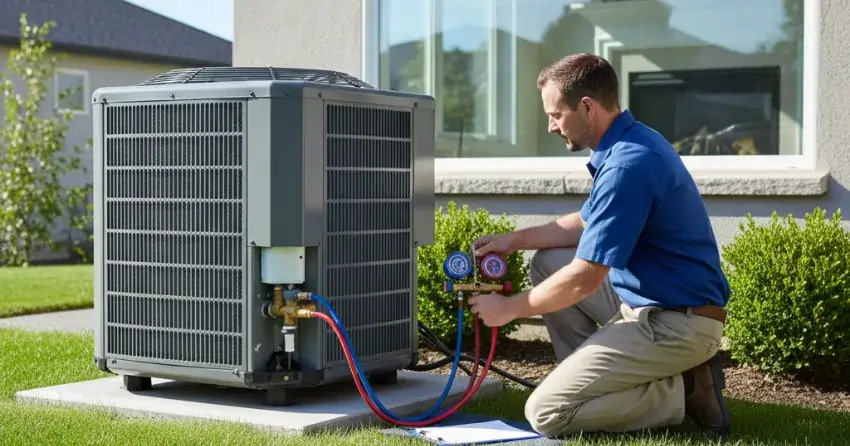
How long does an HVAC tune-up take?
A tune-up on a single furnace or air conditioner usually takes about an hour, and a furnace and air conditioner checked together take longer. Mini-split systems vary with the number of indoor heads. Extra time is needed if the coils need a deep cleaning, the drain is blocked or the technician finds a problem worth testing further. Equipment in attics or crawlspaces adds setup time. Plan to be home for the visit and for a few minutes at the end, when the technician explains the readings and anything that needs attention after the HVAC tune-up.
What helps the outdoor part of your heating and cooling system run well?
Keep the outdoor unit clear: a couple of feet of open space on every side, nothing stacked on top and the fins free of leaves, grass clippings and cottonwood. Trim shrubs back, point mower discharge away from it and remove debris by hand. Make sure it sits level on its pad and that water drains away from it. Do not cover it tightly while it might run, and leave cleaning inside the cabinet, straightening bent fins and anything electrical to a technician. Glance at it on a hot afternoon: the fan should spin steadily, and the air blowing out of the top should feel warm.
What should you do if a tune-up finds a problem?
Ask the technician to explain it plainly: what part is affected, how it was tested, whether it is a safety issue and how urgent it is. Photos or readings help. A weak capacitor or worn igniter can often be replaced on the spot, while bigger findings may deserve a written quote and some time to think. Ask what happens if you wait until the end of the season. For safety findings on gas equipment, follow the technician’s advice about not running the furnace. A good visit booked after an “HVAC tune up” search should leave you informed, not pressured.
How do you compare quotes for HVAC tune-up?
Lay the quotes side by side and line up the pieces, because that is where the real differences hide. One installer may include new ductwork transitions, a pad, a thermostat and haul-away; another may list only the equipment. One may have measured the house while another simply matched the old unit. For repairs, a second opinion should land on the same failed part; if it does not, ask both to explain. Price matters, but clarity matters more. The company that answers your follow-up questions patiently is usually the one that will pick up the phone after the job.
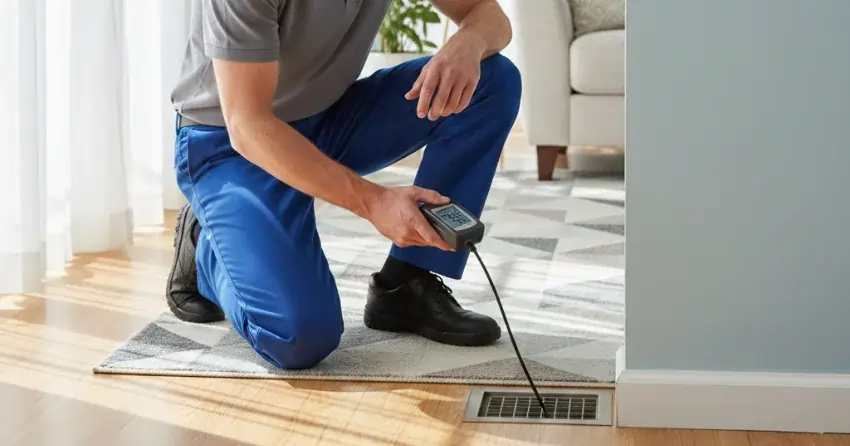
Living in an older home in Edmonton?
Older homes often hide earlier repairs, odd layouts and materials that need a careful approach. Our technicians take the time to see how earlier work on your heating and cooling system was done before recommending anything. Call (587) 853-6668 to talk about your home.
