

































Fire or electric current, flowing water and hot metal all meet inside a pool heater, so safety is built into how the work is done. That is worth remembering whenever you search for something like “indoor pool heater repair”. The answers below, written for owners around Edmonton, explain indoor pool heater repair and mark clearly where a homeowner can help, such as checking settings and keeping the area clear, and where a technician needs to take over.
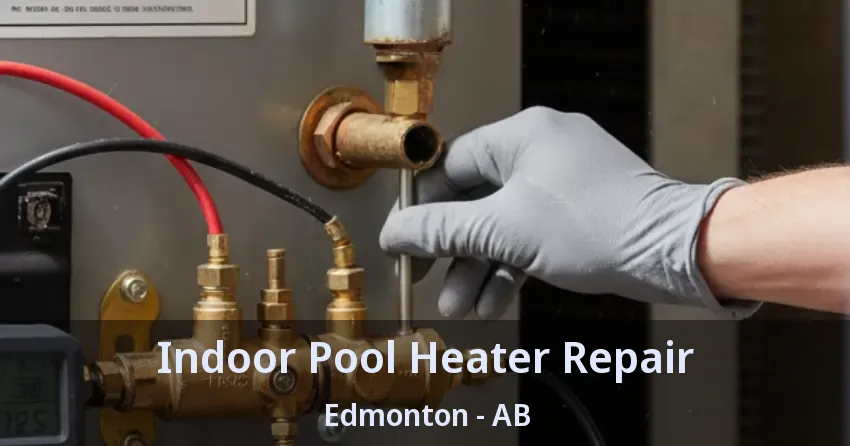
How is an indoor pool heater different from an outdoor one?
The heater itself may be similar, but the surroundings are not. Indoors, exhaust has to be piped out of the building through an approved vent, and fresh air for combustion must come into the equipment room. Moist, chlorine-laden air in a pool hall also attacks metal faster than open air does, so corrosion on the cabinet, flue and fittings shows up sooner. Many manufacturers sell indoor-specific models or conversion kits, and the manual spells out which one your location needs. Those differences are why repairs behind a search for “indoor pool heater repair” focus as much on air and venting as on the heater parts.
What does corrosion on an indoor pool heater mean?
Rust, white crust and flaking paint on an indoor heater usually point to moisture and chemical vapors in the room. Pool halls are humid, and fumes from chlorine or acid, especially if chemicals are stored nearby, accelerate corrosion on the cabinet, vent and burner parts. Surface rust can be cleaned and sealed, but corroded vent pipe, rusted burner components or heavy buildup on the exchanger need prompt attention. Improve ventilation and dehumidification, keep chemicals out of the equipment room and ask a technician to inspect the vent and combustion air path.
What makes a pool heater cycle on and off repeatedly?
Some cycling is normal, particularly when the water is close to the set temperature, since the heater pauses once it is reached and restarts as it drifts lower. Rapid cycling every few minutes is different. Weak flow from a dirty filter or partly closed valve, a failing pressure switch, an oversized unit, a thermostat sensor that reads incorrectly or an overheating exchanger can each shut the heater down early. Heat pumps may also stop because of high refrigerant pressure or defrost. Note how long it runs and the code, if any, before calling.
What signs point to a venting or air supply problem indoors?
Watch for soot staining around the heater or vent, a carbon monoxide alarm that sounds or is replaced often, a heater that starts and then shuts down, unusual smells and moisture or rust at the flue joints. Flames that look lazy, yellow or ragged can also signal poor air. Do not run the heater to see whether the problem repeats. If an alarm sounds, get everyone out of the building and call for help from outside. For lesser signs, switch the heater off and have a qualified technician examine the vent run, the combustion air path and the heater together.
Why does the pool heater pressure switch stop it from firing?
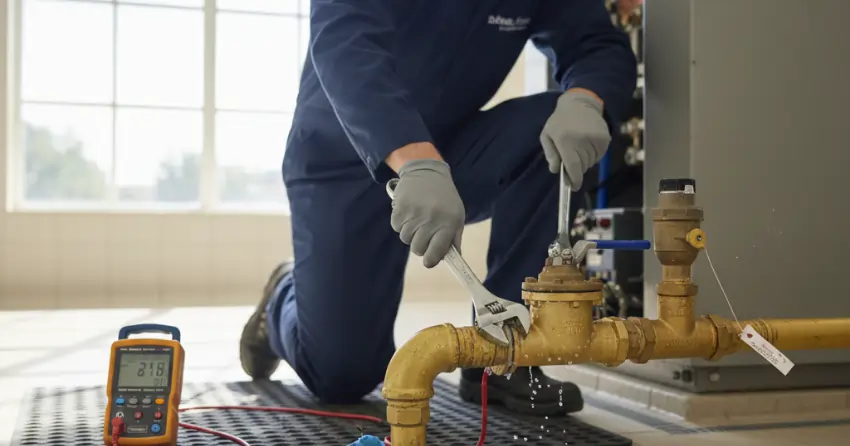
The pressure switch, sometimes called a water pressure or flow switch, confirms that enough water is moving through the heater before heating is allowed. If the flow is too low, the switch stays open and the heater will not fire, or it shuts off partway through a cycle. Causes include a clogged filter, full baskets, a closed valve, a pump with trapped air or a worn impeller, and a heater whose bypass is set wrongly. Occasionally the switch itself fails or its small connection clogs with scale. Never jumper it, because it protects the exchanger from overheating.
How does scale damage a pool heater?
Scale is a hard mineral crust, mostly calcium, that forms on hot metal surfaces when pool water is too hard or too alkaline. Inside a heater it coats the exchanger, insulates it from the water and forces the unit to run hotter and longer for the same result. Signs include popping or banging sounds, reduced heating, rising flow resistance and an overheat shutdown. Left alone, scale can crack the exchanger or choke the flow completely. A technician can remove it with a controlled descaling, and the real cure is keeping the water balanced as the manufacturer’s manual advises.
What details help when you call about a pool heater problem?
Specific details save a trip. A sentence such as it clicks three times, then shows a code and shuts off tells us far more than the heater is broken. We also like to know the age of the unit, whether it has had work done before, how the pool is plumbed and how often the filter is cleaned. Photos of the display, the rating plate and any wet or damaged areas are very welcome. With that, we can bring likely parts and give you a realistic idea of what the visit will involve.
Can a power surge or outage damage a pool heater?
Electrical events are hard on pool equipment. A surge can silently weaken a control board that fails weeks later, and moisture from a storm can corrode connections over time. After an event, we suggest switching the heater off at its breaker until you have looked it over, then restarting and observing. If the display shows a code or the heater behaves differently, mention the storm when you call, because it points us toward the board, sensors and wiring. For gas units, any smell of gas or damage to the supply line means leaving the area and calling the utility.
Can plants or storage be placed near a pool heater?
It is easy to forget the heater when planning landscaping, fences or storage sheds, yet those additions often cause problems later. A hedge that has grown against a heat pump chokes its airflow. A fence built close to a gas heater can trap exhaust. Chemical containers stored on the pad release fumes that corrode metal. We walk around the unit when we visit and note anything that crowds it. If you are building a deck, wall or shed nearby, check the clearances first.
A quick form, a clear answer
The quote form takes a minute or two. Add your address in Edmonton, a line about what you need and how you would like us to reach you. Fill in the form and we will get back to you with a price and the next available times for indoor pool heater repair.
