




























A pool heater never works alone. It depends on the pump, the filter, the valves and the pipes around it, and it reacts badly to water that is out of balance. That wider view is why a thorough diagnosis rarely stops at the heater cabinet. For readers in Edmonton searching for “Jandy pool heater service near me”, the answers below explain pool heater service in that bigger context, so you know what a careful visit really covers.
Which kind of pool heater suits a home pool?
The right type usually depends on how you use the pool. Families who swim a lot in cool months and like quick results often lean toward gas. Owners who keep the water at a steady temperature all season, in a mild climate, often prefer a heat pump. Electric resistance suits spas and small plunge pools where fuel or space is limited. Solar helps almost everyone as a supplement. Gas availability, electrical capacity, equipment pad space and local rules all narrow the choice further, so an on-site look from a technician settles questions that a brochure cannot.
What does a pool heater heat exchanger do?
Water goes in one end of the exchanger and out the other, picking up heat from the surface of the tubes. Anything that coats those tubes, such as mineral scale, makes the heater work harder and run hotter, while acidic water slowly eats the metal from the inside. Headers at each end connect the exchanger to your plumbing, and their gaskets or seals are a common place for seepage. When a technician says the exchanger has failed, it usually means a leak or severe blockage, and the repair depends on the model and the extent of the damage.
How do the pump and filter affect a pool heater?
Think of the pump and filter as the heater’s support crew. When the filter is overdue for cleaning, pressure builds and flow falls, and the first thing to notice may be a heater that refuses to fire. Variable-speed pumps add another twist: at low speed they may not move enough water to satisfy the heater’s switch, so the schedule needs a minimum heating speed. Pool owners can help by cleaning baskets, backwashing or cleaning cartridges on schedule and telling us about any gauge readings that look different from normal.
What shortens the life of a pool heater?
It helps to think of a heater as a collection of parts with different lives. Igniters, sensors, switches and boards may be replaced several times, while the exchanger tends to decide whether the whole unit is worth keeping. Owners who test their water and winterize properly often get more seasons out of the same heater than neighbors who do not. A unit parked in a damp, chemical-laden or leaf-filled spot ages faster. If yours is showing rust, repeated leaks or scale and parts are hard to find, it is time for a conversation about replacement.
How long does a pool heater repair take?
The honest answer is that diagnosis takes as long as it takes, and the repair itself is usually the shorter part. We arrive with common igniters, sensors, switches and gaskets, so straightforward faults are often finished before we leave. When the failed item is a control board, an exchanger or a model-specific part, we place the order and schedule a return once it arrives, and we tell you how long we expect to wait. Rushing a repair rarely helps, since a missed cause means a callback. A complete test at the end is part of the job, not an extra.
What does a pool heater inspection tell a home buyer?
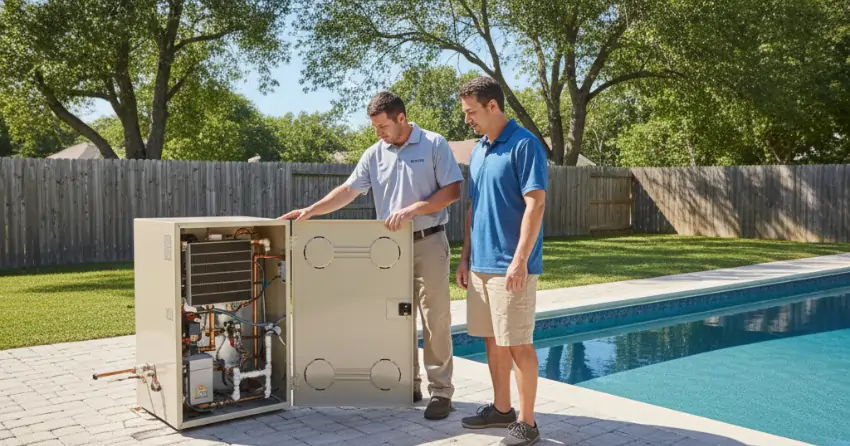
If a home comes with a pool, the heater deserves its own look during the purchase. A general home inspection often notes only that the equipment is present, so a pool technician can add real detail. A pool heater inspection covers its type, age, model, visible leaks, corrosion, venting, clearances and how it starts, runs and shuts off. Ask the seller for service records, the manual and any repair history. The findings help you judge remaining life, budget for repairs and negotiate sensibly before the sale closes.
What should you ask nearby companies about the type of heater?
Heaters differ more than people expect, so check that the company is comfortable with yours. State whether it burns natural gas or propane, uses electric resistance or is a heat pump, and give the brand and rough age. Ask whether the technician has worked on that type recently and can source parts. Gas, electric and heat pump units fail in different ways, and a person who mainly maintains pool pumps may not be set up to test a burner or compressor. If a company declines to help with your equipment, that honesty is useful, and you can move on to the next call. Clear answers now make your pool heater service booking smoother.
How does local weather change when a heater visit makes sense?
Weather sets what a heater is asked to do. Where nights turn cold early, owners start heating sooner, and a heat pump has to work harder in cool air, so a visit before the weather turns pays off. Where hot, humid or salty air is common, rust and insect trouble build faster and the cabinet deserves more attention. Heavy storms call for a check afterward. Think about the weeks you actually plan to swim and book the visit a little ahead of them, so any part that needs ordering arrives in time. A company you reach through “Jandy pool heater service near me” will know the local patterns and can suggest timing.
How do you choose between a gas and a heat pump pool heater?
Gas heaters excel at speed. They warm a pool quickly in any weather, suit occasional use and spas, and cost less up front, though fuel is the main running expense. Heat pumps cost more to buy but use less energy for the heat they produce, do their finest work in mild weather and suit pools kept at a steady temperature all season. Gas needs a supply line or tank and venting space, while heat pumps need good airflow and electrical capacity. Your climate, swim habits, utility prices and equipment pad all affect which one comes out ahead.
Booking pool heater service for the first time?
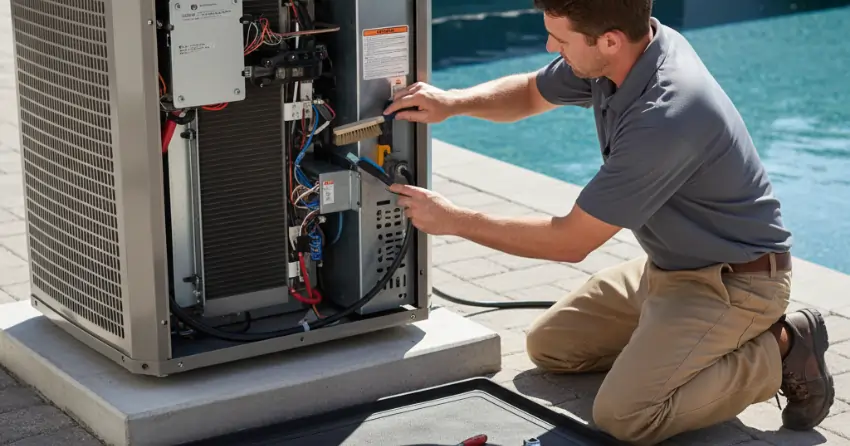
If you have never had this done before, it helps to know what to expect. We walk you through the visit, how long it usually takes and what you will see when we finish. Start with a quote and ask us anything along the way.
