




























A reliable heater stretches the swimming season at both ends, which is why a failure feels so out of proportion to the size of the box. You may be dealing with a heater that will not fire, a puddle underneath or a gauge that looks wrong. For households in Edmonton typing “Lochinvar pool heater” into a search bar, this page gathers practical answers on pool heater service and repair, written the way a technician would explain them while standing beside your equipment pad.
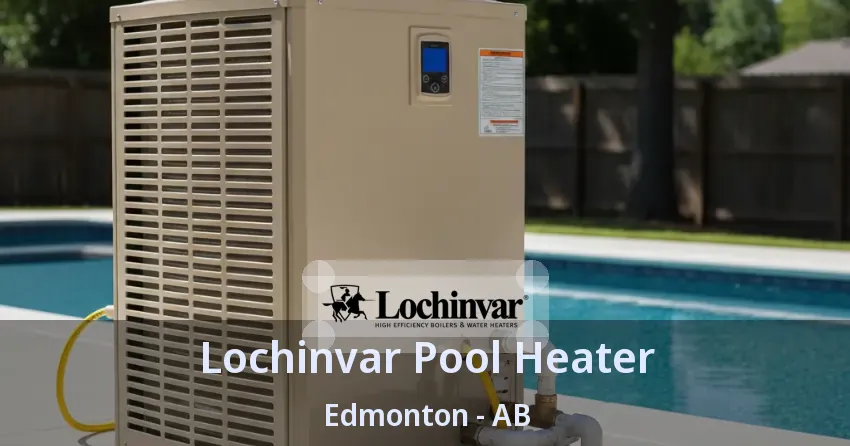
What does a pool heater heat exchanger do?
Water goes in one end of the exchanger and out the other, picking up heat from the surface of the tubes. Anything that coats those tubes, such as mineral scale, makes the heater work harder and run hotter, while acidic water slowly eats the metal from the inside. Headers at each end connect the exchanger to your plumbing, and their gaskets or seals are a common place for seepage. When a technician says the exchanger has failed, it usually means a leak or severe blockage, and the repair depends on the model and the extent of the damage.
What power and fuel does each kind of pool heater need?
Each type draws on different resources. Gas heaters burn natural gas or propane, but they also need a small electrical supply for the control board, igniter, sensors and sometimes a blower, so a power outage stops them. Heat pumps run on electricity and usually need their own circuit, with a fan and a compressor working whenever they heat. Electric resistance heaters use elements that draw large amounts of power. Solar systems use sunshine and only need the pool pump to move water through the panels. Knowing which one you have makes it easier to describe the problem when you search for “Lochinvar pool heater” help, and tells you which utility to check first.
What happens inside a pool heater when it heats the water?
A pool heater warms water as it circulates. The pump pulls water from the pool through the filter and pushes it into the heater, where it passes over or around a heat source before returning to the pool. In a gas model, a burner heats a metal exchanger. In an electric model, elements do the job. A heat pump moves warmth from outdoor air into the water using refrigerant. A thermostat sensor compares water temperature with your setting, and a flow or pressure switch makes sure water is moving before anything is allowed to heat.
Is it safe to run a pool heater that has a fault?
It depends on the symptom. A heater that simply heats slowly or shows an occasional code can usually wait for a scheduled visit, as long as it keeps shutting itself off properly. Stop using it right away when you notice a gas smell, soot, scorch marks, sparks, water running from the cabinet, a tripped breaker that returns on reset or any damage to the venting. The pool itself remains fine to swim in while the heater is off. Switching the heater off at the control and the breaker keeps a small fault from becoming a larger one.
Why is my pool heater not turning on?
When a heater will not start, begin with the simple causes before suspecting a broken part. Confirm the circulation pump is actually moving water, because the heater waits for flow before it does anything. Turn the temperature dial above where the pool sits now, and look at the pool and spa selector, if your model has one. Then look at the breaker or disconnect that feeds the heater, and empty the skimmer and pump baskets. A blank display usually points to a power or control board problem, and anything involving gas or internal wiring belongs with a technician.
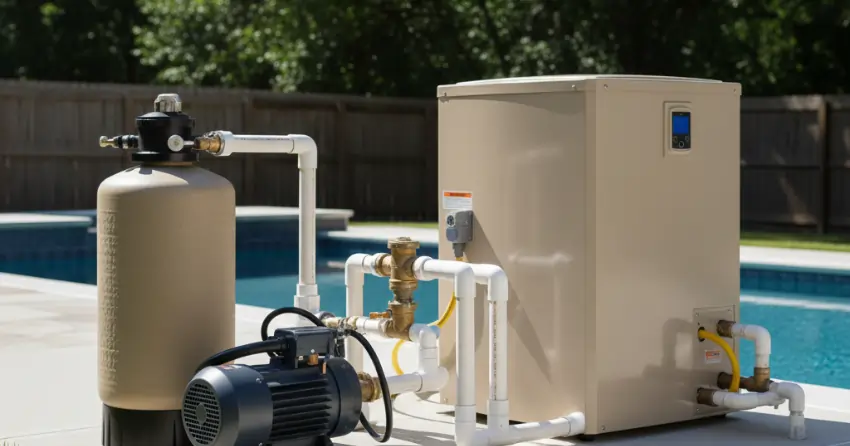
How do the pump and filter affect a pool heater?
A heater is only as dependable as the water it receives. The pump supplies the flow that the pressure switch and sensors expect, and the filter keeps debris from entering the exchanger. A clogged filter or a pump losing prime reduces flow and can stop the heater entirely, while a dirty basket starves it quietly. At the other extreme, a very strong pump can overpower the exchanger. That is why technicians check pressure gauges, baskets, valves and pump operation before blaming the heater itself.
What upkeep schedule suits a pool heater?
We like to give owners a calendar they can actually follow. Before opening, a service visit. Each month in use, a quick walk around the unit looking for leaks, debris, rust and codes, plus a water test. At closing, a final check and winterizing where it applies. Each item takes minutes, yet together they prevent most surprise breakdowns. Write the dates in your phone and add a note about anything that seems different. A small habit like this also gives us a helpful history when something does go wrong.
How should you set the thermostat on a pool heater?
Set it to the temperature you want to swim in, not higher. A higher setting does not make the heater warm the water faster; it only keeps the burner or compressor running for longer. Many heaters read the water as it enters the heater, so the pump must be running for the reading to be accurate. Make small, planned changes rather than big swings, and lower the setting or switch the heater off when nobody will swim for several days. Some models have separate pool and spa settings. Give the water time to rise before deciding something is wrong, since larger pools change temperature slowly.
Can I use a pool heater with a saltwater pool?
Yes, many heaters are designed to work with salt pools, but the model has to be made for it. Salt water is more corrosive than fresh, so the exchanger materials matter. Heat pumps often use titanium for that reason, and gas heaters offer corrosion-resistant exchangers and headers. Check the manual for the salt levels the manufacturer allows. Keep the salt cell downstream of the heater, keep the water balanced and rinse away salt spray around the unit. Salt systems are not harmful to a well-matched heater, but they are unforgiving of neglect.
Built around busy households
Kids, pets and work schedules all matter when someone visits your home. Let us know what to work around and we will plan the appointment to match. Choose a time for pool heater service and repair anywhere in Edmonton.
