




























Pool heater trouble comes with plenty of guesswork, and an unhelpful answer can waste a good swimming weekend. The aim of this page is the opposite: direct, plain replies to what homeowners around Edmonton most often ask after looking up “Lochinvar pool heater”. Each answer on pool heater service and repair stands alone, so skim the headings, read what matters to you and come back whenever another question pops up.
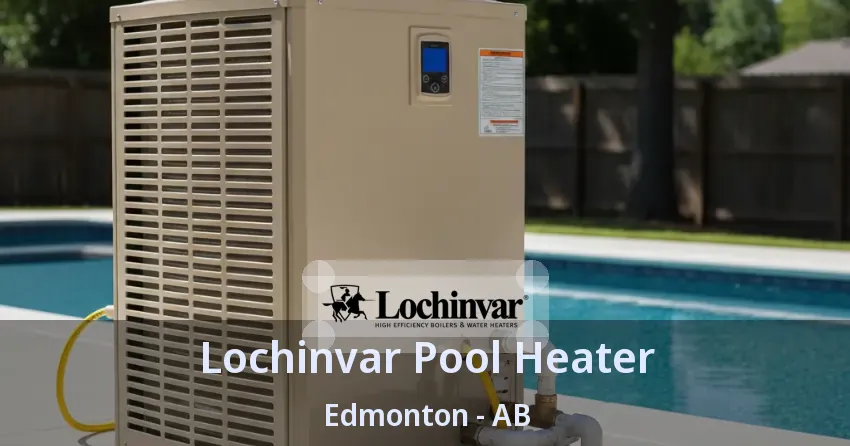
How does your pool heater warm the water as it flows through?
Think of the heater as a heat exchanger with a safety system wrapped around it. Water comes in cool, gets warmed as it travels through tubes or chambers, and leaves a few degrees higher, so a pool changes temperature slowly as the same water makes many trips. Controls watch three things: whether water is flowing, how warm it is and whether the heat source is behaving. If any reading falls out of range, the unit pauses or locks out. That is why a heater can look dead when the real trouble is a clogged filter or a pump that is not moving water.
What power and fuel does each kind of pool heater need?
Each type draws on different resources. Gas heaters burn natural gas or propane, but they also need a small electrical supply for the control board, igniter, sensors and sometimes a blower, so a power outage stops them. Heat pumps run on electricity and usually need their own circuit, with a fan and a compressor working whenever they heat. Electric resistance heaters use elements that draw large amounts of power. Solar systems use sunshine and only need the pool pump to move water through the panels. Knowing which one you have makes it easier to describe the problem when you search for “Lochinvar pool heater” help, and tells you which utility to check first.
How is a pool heater sized for your pool?
Heater size is measured in BTU output for gas and electric models, and in a similar capacity rating for heat pumps. The right number depends on pool surface area, how many degrees you want to raise the water, how much wind the pool sees and whether a cover is used. A pool heated only for weekends needs more capacity than one kept warm all season. An undersized heater runs constantly and still struggles, while an oversized one costs more up front and may cycle often. The rating plates and sizing charts supplied by manufacturers guide the choice, and a technician can apply them to your site.
What does a pool heater service visit include?
Each visit opens with a discussion of the symptoms you have seen, followed by a look at the heater’s display, history and surroundings. The technician then checks power and water flow, inspects the cabinet for leaks, scale, corrosion and pests, and tests the controls and safety switches. On gas models that includes cleaning the burner area, testing ignition and flame signals and examining the venting. Heat pumps get coil, fan and electrical checks. The visit ends with a full heating cycle to confirm the unit lights, runs and stops as intended, and you receive a summary of findings.
What steps are involved in installing a pool heater?
A heater installation begins with choosing the location and checking clearances, the pad, the gas or electrical capacity and the plumbing route. The crew then sets the heater level on a pad, connects pipework with unions and a bypass or check valve as required, and brings in the fuel or power. Gas lines, electrical circuits and vents are installed by qualified trades to the local code, often with a permit and inspection. The final stage is start-up: priming the pump, checking for leaks, setting the thermostat, observing the first heating cycle and explaining the controls to you.
Why does water balance matter for a pool heater?
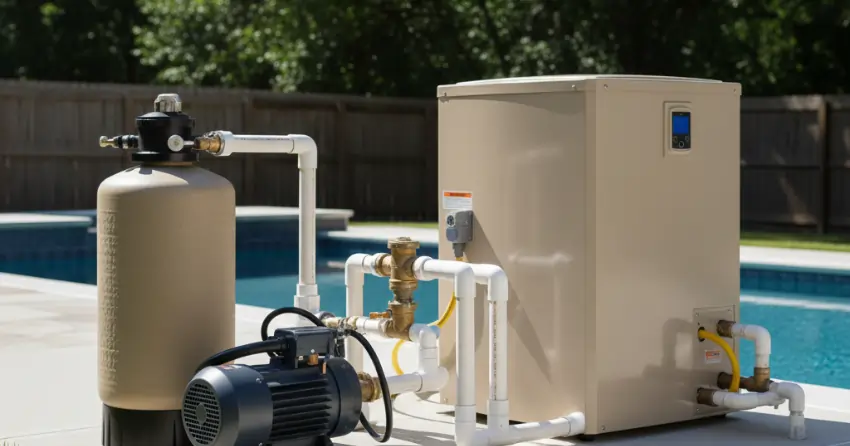
Water chemistry is the biggest influence on how long a heater lasts. Water that is acidic or low in alkalinity eats away at the metal of the exchanger and the fittings, leaving blue-green stains and eventually pinholes. Water that is too hard or high in pH leaves scale that reduces heat transfer and damages the unit from the inside. Test your pool regularly, keep pH, alkalinity, calcium hardness and sanitizer within the ranges your heater’s manual gives, and correct drifts promptly. Add chemicals according to label directions with the pump running, never directly into the heater.
How should you set the thermostat on a pool heater?
Set it to the temperature you want to swim in, not higher. A higher setting does not make the heater warm the water faster; it only keeps the burner or compressor running for longer. Many heaters read the water as it enters the heater, so the pump must be running for the reading to be accurate. Make small, planned changes rather than big swings, and lower the setting or switch the heater off when nobody will swim for several days. Some models have separate pool and spa settings. Give the water time to rise before deciding something is wrong, since larger pools change temperature slowly.
What should pool heater owners do each season?
A simple yearly routine covers most of what a heater needs. In spring, inspect the unit, restore the drain plugs, balance the water and have the heater serviced before heavy use. During the season, keep the area clear, test the water often, clean baskets and the filter on schedule and note any changes in performance or noise. In autumn, clean the area, address problems while they are fresh and winterize if freezing is possible. Keep the manual, service records and a photo of the rating plate in one place so they are easy to find.
What questions should you ask a pool heater repair company?
Look for a company that works on your type of heater and is willing to explain its process. Ask whether the technicians handle gas, electrical and plumbing aspects or involve other trades, how diagnosis is charged and whether estimates are given in writing before work begins. A good technician asks questions about symptoms, wants to see the model number and explains findings in plain terms. Be cautious about anyone who recommends replacement without testing, will not put the scope in writing or pressures you to decide on the spot.
Plain answers about your pool heater
We would rather explain one thing clearly than list ten things you do not need. Ask us what matters for your home in Edmonton and we will give you a straight reply. Get in touch with Gas Fireplace Edmonton whenever you are ready.
