




























Convenience is the reason most people choose gas: no logs to carry, no ashes to scoop and warmth at the touch of a switch. That convenience still depends on a valve, an ignition system, a vent and a handful of small parts that need occasional care. Homeowners in Edmonton who look up “Napoleon gas fireplace repair” usually want to know what is normal, what is not and when to call for help. The answers below cover gas fireplace troubleshooting and repair in practical terms, with safety notes wherever they matter.
Is a dusty smell from a gas fireplace normal after months off?
Most odors we are asked about at the start of the season come from dust cooking off hot surfaces. Over the warmer months, fine particles settle on the logs, the burner and the heat exchanger, and the first few fires bake them away. What we want homeowners to tell apart is the type of smell. Dust smells like a hot iron or a space heater switched on for the first time in a while. Gas smells like rotten eggs or sulfur. The first is a nuisance that fades within a few uses; the second means getting out of the house and phoning the utility from a safe spot outdoors.
Why does a fireplace remote suddenly stop responding?
A gas fireplace remote usually stops working because of weak batteries, a receiver that has lost its pairing or a receiver switch left in the wrong position. Replace the batteries in the handheld first, then in the receiver if your system has a battery-powered one. Many receivers sit behind the lower panel and have a small switch with on, off and remote settings; it needs to be on remote for the handheld to work. If the remote display lights up but the fireplace ignores it, the two may need pairing again using the steps in the manual. Wiring and valve problems are a job for a technician.
What should the flames in a gas fireplace look like?
Good flames rise evenly from the burner ports, dance a little and stay clear of the glass, and we judge them by shape and steadiness as much as by color. When flames roll toward one corner, the vent may be drawing unevenly or a gasket may be letting air in. Flames that are short and pale often mean the burner is not getting full gas pressure, while tall, dirty-orange flames that leave soot suggest too little air. Comparing what we see with the description in the owner’s manual tells us whether the fire is behaving as intended or needs correction.
Why won’t my gas fireplace light?
A fireplace that will not light has a break somewhere in the chain of signal, spark, pilot and main burner, so we check those links in that order. A surprising number of no-start calls end with fresh batteries in a receiver hidden behind the lower panel. Next we watch for a spark or a glowing igniter; clicking with no flame often points to a dirty or misaligned igniter, or to gas not reaching the pilot. If the pilot lights but the burner never follows, the sensor or the valve may be at fault. Every step after the remote, the wall switch and the batteries involves gas components, so that part of the checking should be left to a technician.
Why is there a delay between pressing the button and the fire lighting?
A short delay is normal on many fireplaces with electronic ignition, because the system first proves the pilot before opening the main burner valve. That sequence often takes a few seconds and may include clicking. A delay that grows longer over time, many clicks before lighting or a soft whoomp when the burner catches suggests a problem: weak batteries, a dirty igniter or pilot, or a flame sensor that is slow to confirm the flame. On some remote systems, a weak handheld signal adds a pause too. Note how long the delay lasts and whether it has changed, and share that when you book a visit.
How should gas fireplace logs be arranged?
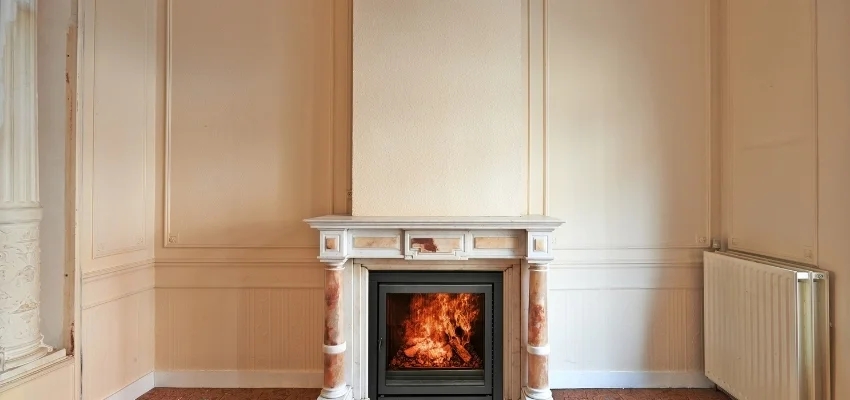
Logs should go back exactly where the diagram puts them, because from our side placement is part of how the burner works, not decoration. The flame has to rise through gaps between the logs; if a log blocks that path, combustion suffers and soot follows within days. We often find logs that were shifted during cleaning, bumped when the glass came off or rearranged for a fuller look. Resetting them to the diagram usually fixes the flame on the spot. Ember material, glass beads and stones follow the same idea: they belong only where the manual says. When logs have cracked or started shedding fibers, we replace them with parts intended for that model.
Do gas fireplace repairs need parts from the original manufacturer?
For gas control parts, the safest approach is to use the part the manufacturer specifies for that model. Valves, pilot assemblies, burners, glass and gaskets are matched to the design and fuel of the fireplace, and substitutes can affect safety and combustion. Some components, such as universal remotes on simple systems, can be suitable, but a technician should decide where that is acceptable. Older or discontinued models sometimes have approved replacement parts from the maker. Ask any company quoting your “Napoleon gas fireplace repair” which parts it plans to use and why.
Should you keep using your gas fireplace until the technician arrives?
Our advice is simple: if the problem involves flame, gas, glass or exhaust, the fireplace stays off. Those symptoms can mean incomplete combustion, a leak or a breach in the sealed firebox, and none of them are worth the risk. If the issue is purely about convenience, such as a remote that needs a second press or a blower that rattles, careful use until the visit is generally reasonable. Either way, keep children and pets away from the glass, test your carbon monoxide alarms and note what you observe, because those details help us pin down the cause.
How do you choose a company to service a gas fireplace?
Pick a company whose technicians work on gas fireplaces regularly and can describe the visit before they start. Ask whether they service your fireplace type and fuel, whether they work on your brand and what a standard visit covers. Expect a written quote, an arrival window that is respected, floors protected and a test burn with you before they leave. Recent reviews that mention clear explanations and tidy work tell you more than a polished advert. Be wary of anyone who skips the leak check, pushes a replacement without showing you the problem or cannot answer basic safety questions.

Find a time that fits
Tell us the days and hours that suit you and we will look for an opening that matches. We confirm the arrival window ahead of time so you can plan your day in Edmonton. Request a time for gas fireplace troubleshooting and repair.
