




























A gas fireplace is supposed to be the easy kind of fire: press a button, enjoy the flame, switch it off. When it hesitates, sputters or refuses to start, the questions pile up quickly. If you searched for “Pacific Energy gas fireplace repair”, this page gathers the answers homeowners around Edmonton ask most often, written in plain language. You will find how these units work, what a technician looks at on a typical gas fireplace troubleshooting and repair visit and which simple checks you can make without touching any gas parts.

Can a gas fireplace leak carbon monoxide into the room?
It can, and that possibility is why we treat venting and flame quality as safety checks rather than cosmetic ones. A sealed direct-vent unit draws its air from outdoors and pushes exhaust back out, so room air stays separate as long as the glass seal and vent joints are sound. Trouble starts when a vent cap is blocked, a pipe joint separates or the flame is disturbed enough to burn poorly, which often shows up as soot. During service we inspect those points and watch how the fire burns. We also remind every household to keep carbon monoxide alarms working, because they catch what nobody can see.
Can a gas fireplace run on either propane or natural gas?
The two fuels run at different pressures through different-sized parts, so a fireplace set up for one can use the other only after a proper conversion. Propane needs the higher pressure and smaller burner orifices, and not every model has a conversion kit. On the job, we look for the label stating which fuel the unit is set for and confirm it matches the supply. With propane, we also ask about the tank, the regulator and whether the supply has ever run empty, since air in the line can make relighting stubborn. Most repairs, such as cleaning a pilot or replacing a sensor, look much the same for both fuels.
Why is there a delay between pressing the button and the fire lighting?
A short delay is normal on many fireplaces with electronic ignition, because the system first proves the pilot before opening the main burner valve. That sequence often takes a few seconds and may include clicking. A delay that grows longer over time, many clicks before lighting or a soft whoomp when the burner catches suggests a problem: weak batteries, a dirty igniter or pilot, or a flame sensor that is slow to confirm the flame. On some remote systems, a weak handheld signal adds a pause too. Note how long the delay lasts and whether it has changed, and share that when you book a visit.
What can stop a remote from controlling your gas fireplace?
A gas fireplace remote usually stops working because of weak batteries, a receiver that has lost its pairing or a receiver switch left in the wrong position. Replace the batteries in the handheld first, then in the receiver if your system has a battery-powered one. Many receivers sit behind the lower panel and have a small switch with on, off and remote settings; it needs to be on remote for the handheld to work. If the remote display lights up but the fireplace ignores it, the two may need pairing again using the steps in the manual. Wiring and valve problems are a job for a technician.
Is it normal for your gas fireplace to smell at the start of the season?
A gas fireplace often smells for a short time when it is first turned on after months of rest, because dust, pet hair and household particles on the burner and logs burn off. A brand-new fireplace may also give off a paint or oil smell while protective coatings cure during the first hours of use. That kind of odor is warm and dusty and fades quickly. A rotten-egg or sulfur smell is a different matter and should never be ignored: leave the home and call the gas utility from outside. If a burning smell lingers beyond the first few fires, or the room feels stuffy, have the unit checked.
Why does gas fireplace glass crack, and can it be replaced?
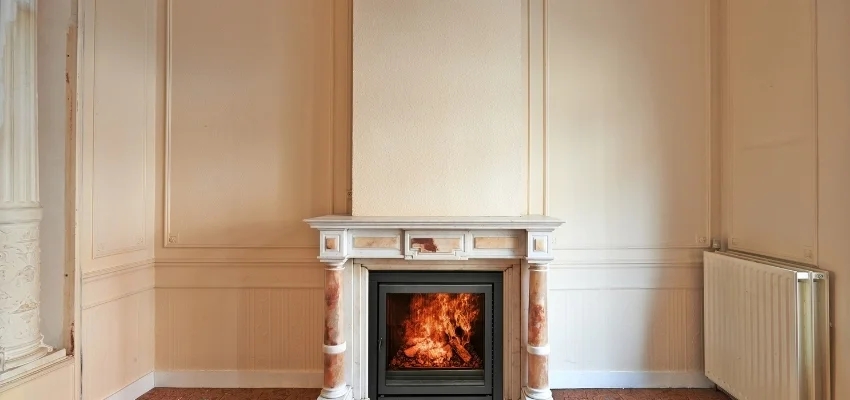
Fireplace glass usually cracks from heat stress, an impact or a problem with how it was mounted. A cold drink spilled on hot glass, a toy thrown against it, a frame that was overtightened or flames striking the glass from misplaced logs can all do it. Cracked glass should not be used, since the firebox is no longer sealed and the panel could fail further while hot. Replacement glass must be the heat-rated assembly specified for your fireplace, never ordinary window glass, and it needs a proper gasket seal. A “Pacific Energy gas fireplace repair” visit can confirm the right part and install it safely.
How is the white film cleaned off the glass of your gas fireplace?
We use a dedicated fireplace glass cleaner and some patience to lift the haze of minerals and combustion byproducts that bakes onto the inner surface over a season. Scrapers and abrasive pads stay in the truck, since they scratch. Our bigger concern is what happens when the glass goes back on. The frame has to latch properly and the gasket has to seal all the way around, or the fireplace can draw in room air and burn poorly. We also check the panel for chips or cracks while it is out, since damaged glass should be replaced before the next fire. That refit is why we treat the inside of the glass as technician work.
Can the logs in your gas fireplace be moved or replaced?
Logs should go back exactly where the diagram puts them, because from our side placement is part of how the burner works, not decoration. The flame has to rise through gaps between the logs; if a log blocks that path, combustion suffers and soot follows within days. We often find logs that were shifted during cleaning, bumped when the glass came off or rearranged for a fuller look. Resetting them to the diagram usually fixes the flame on the spot. Ember material, glass beads and stones follow the same idea: they belong only where the manual says. When logs have cracked or started shedding fibers, we replace them with parts intended for that model.
What should you do with a faulty gas fireplace while you wait for service?
It depends on the symptom, but when in doubt, leave the fireplace off until it has been checked. Stop using it right away if there is a gas smell, black soot, a carbon monoxide alarm, cracked glass, flames escaping the firebox or a pilot that keeps going out. For a gas smell, leave the home and call the utility from outside. Lesser issues, such as a remote that responds slowly or a noisy fan, are usually fine to live with for a short time. Do not open panels or attempt fixes on gas parts while you wait; simply keep the area clear and your carbon monoxide alarms working.
Expecting guests this season?
If your home will be busy with visitors, it helps to know everything is in order beforehand. Book gas fireplace troubleshooting and repair a little ahead and enjoy the season without second thoughts. Reserve a time with Gas Fireplace Edmonton in Edmonton.
