




























Fire or electric current, flowing water and hot metal all meet inside a pool heater, so safety is built into how the work is done. That is worth remembering whenever you search for something like “Pentair pool heater repair”. The answers below, written for owners around Edmonton, explain pool heater repair and mark clearly where a homeowner can help, such as checking settings and keeping the area clear, and where a technician needs to take over.
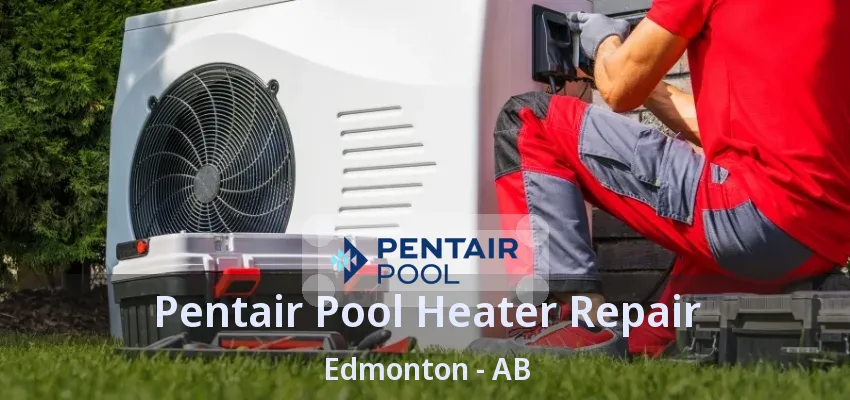
Why does a pool heater depend on its heat exchanger?
Water goes in one end of the exchanger and out the other, picking up heat from the surface of the tubes. Anything that coats those tubes, such as mineral scale, makes the heater work harder and run hotter, while acidic water slowly eats the metal from the inside. Headers at each end connect the exchanger to your plumbing, and their gaskets or seals are a common place for seepage. When a technician says the exchanger has failed, it usually means a leak or severe blockage, and the repair depends on the model and the extent of the damage.
Could the fuel supply be the problem instead of the heater?
Sometimes, yes. A gas heater cannot run without fuel reaching the burner, so a closed shutoff valve, an interrupted supply or a nearly empty propane tank can look exactly like a broken heater. If you use propane, check the tank gauge. Confirm that other gas appliances at your home work normally; if they do not, the issue sits with the supply, and your gas utility or propane provider can help. Do not open the heater cabinet, loosen fittings or try to adjust valves, and if you smell gas, leave the area and call from a safe distance. A technician can test supply pressure and settings once you have ruled out the simple causes.
When should you stop using a pool heater and call for service?
It depends on the symptom. A heater that simply heats slowly or shows an occasional code can usually wait for a scheduled visit, as long as it keeps shutting itself off properly. Stop using it right away when you notice a gas smell, soot, scorch marks, sparks, water running from the cabinet, a tripped breaker that returns on reset or any damage to the venting. The pool itself remains fine to swim in while the heater is off. Switching the heater off at the control and the breaker keeps a small fault from becoming a larger one.
What causes a pool heater ignition failure?
We listen and watch the sequence. A fan starts, an igniter glows or sparks, and the gas valve should click open. If we hear sparking but see no flame, we suspect gas delivery or the burner. If the igniter never heats, the igniter or its power is at fault. If a flame appears for a second and then drops, the flame sensor or its grounding is the usual suspect. Because each result leads to different repairs, guessing at parts rarely works. Meanwhile, you can confirm that a propane tank has fuel in it, which costs nothing to check.
How much time should you allow for pool heater repair?
Many pool heater repairs are finished in a single visit, particularly when the cause is something like a dirty flame sensor, a clogged flow path, a worn igniter or a tripped safety. Others depend on a part that has to be ordered, which stretches the job across two visits. Diagnosis itself takes time, because the technician needs to watch the heater run through its sequence and test each stage. Older or less common models may need extra searching for parts. Ask for an honest estimate of the visit itself and of any waiting for parts.
What affects the cost of running a pool heater?
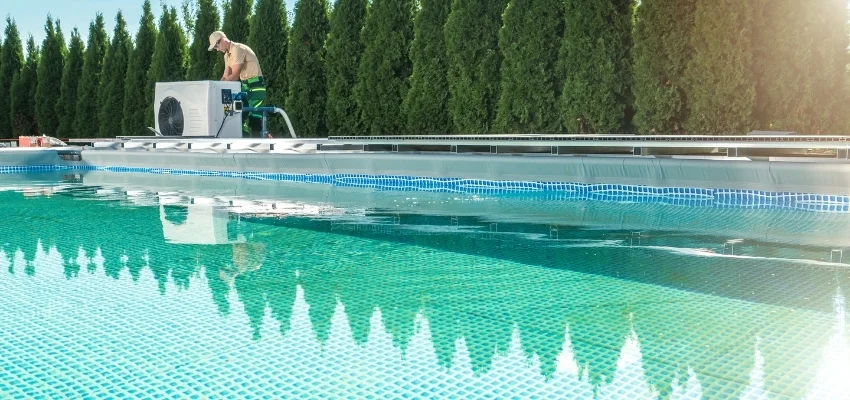
The biggest savings rarely come from the heater at all. A cover that keeps heat in overnight, a windbreak, a sensible set point and a schedule that heats when you actually swim reduce the run time more than any equipment upgrade. After that, efficiency depends on proper sizing and good maintenance. We often explain that a gas heater tends to cost less to buy and works fast, whereas a heat pump costs more up front and less to operate in mild weather. Which one comes out ahead depends on your usage and local energy prices.
What if the technician finds more than one problem?
It happens often, because a worn heater rarely fails in only one place. Ask the technician to rank the findings. Anything involving gas leaks, carbon monoxide, electrical faults or flames in the wrong place comes first. Next come failures that will damage other parts if left alone, such as a flow problem that overheats the exchanger. Performance issues, like slow heating, can follow. Request an itemized quote so you can approve the urgent items now and schedule the rest, and ask what happens if a lower-priority item is left. A candid conversation during pool heater repair helps you spend where it matters.
How much space does a pool heater need around it?
It is easy to forget the heater when planning landscaping, fences or storage sheds, yet those additions often cause problems later. A hedge that has grown against a heat pump chokes its airflow. A fence built close to a gas heater can trap exhaust. Chemical containers stored on the pad release fumes that corrode metal. We walk around the unit when we visit and note anything that crowds it. If you are building a deck, wall or shed nearby, check the clearances first.
When is it time to replace a pool heater instead of repairing it?
The decision rests on a few questions. How old is the heater, and how often has it needed repairs? What failed: an inexpensive part, or the heat exchanger or compressor that makes up much of the unit’s value? Are parts still available? Is it efficient and sized correctly for your pool? A single modest repair on a heater that otherwise runs well is usually sensible. Repeated failures, a leaking exchanger, heavy corrosion or a repair that approaches the cost of a new unit all point toward replacement.
Questions are always welcome
You do not need to know the right terms before you call. Describe the problem in your own words and we will translate it into a plan for your pool heater. Reach us at (587) 853-6668 or ask for a quote online, whichever is easier for you.
