




























Buying a home with a pool often means inheriting a heater that nobody has explained: no manual, no service record and a control panel full of unlabeled lights. Plenty of people around Edmonton begin exactly there. Whatever led you to search for “Pentair pool heater”, the answers on this page about pool heater service and repair follow the questions owners ask most, and they tell you what is normal, what deserves a closer look and who should handle each task.
What does a pool heater heat exchanger do?
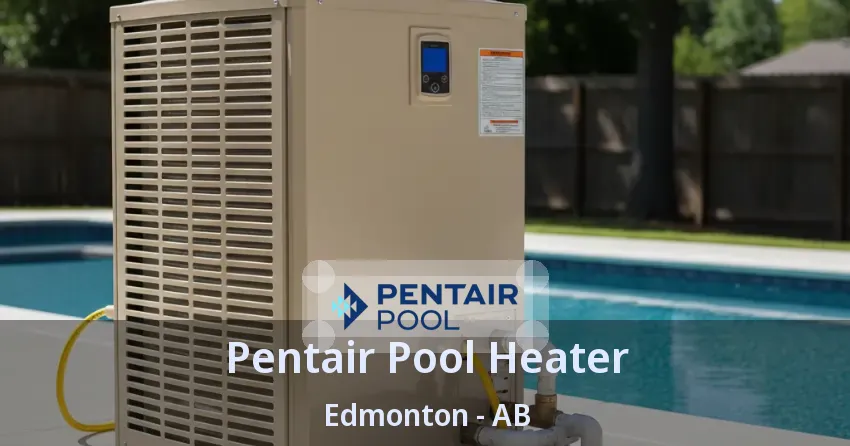
Water goes in one end of the exchanger and out the other, picking up heat from the surface of the tubes. Anything that coats those tubes, such as mineral scale, makes the heater work harder and run hotter, while acidic water slowly eats the metal from the inside. Headers at each end connect the exchanger to your plumbing, and their gaskets or seals are a common place for seepage. When a technician says the exchanger has failed, it usually means a leak or severe blockage, and the repair depends on the model and the extent of the damage.
What power and fuel does each kind of pool heater need?
Each type draws on different resources. Gas heaters burn natural gas or propane, but they also need a small electrical supply for the control board, igniter, sensors and sometimes a blower, so a power outage stops them. Heat pumps run on electricity and usually need their own circuit, with a fan and a compressor working whenever they heat. Electric resistance heaters use elements that draw large amounts of power. Solar systems use sunshine and only need the pool pump to move water through the panels. Knowing which one you have makes it easier to describe the problem when you search for “Pentair pool heater” help, and tells you which utility to check first.
How do you pick the right heater capacity for a pool?
Heater size is measured in BTU output for gas and electric models, and in a similar capacity rating for heat pumps. The right number depends on pool surface area, how many degrees you want to raise the water, how much wind the pool sees and whether a cover is used. A pool heated only for weekends needs more capacity than one kept warm all season. An undersized heater runs constantly and still struggles, while an oversized one costs more up front and may cycle often. The rating plates and sizing charts supplied by manufacturers guide the choice, and a technician can apply them to your site.
Can I keep using a pool heater that is acting up?
Our rule is simple: if it involves fuel, fire, power or water in the wrong place, shut it down. If it is only about comfort, such as a pool that heats slowly, the heater can often keep running until we arrive. The danger in carrying on is that safety devices can mask a worsening problem. A heater that restarts after each reset is still reporting trouble, and ignoring it may damage the exchanger or board. When in doubt, turn it off, note what you saw and call us with the details.
Why does a pool heater depend on the pump and filter?
Think of the pump and filter as the heater’s support crew. When the filter is overdue for cleaning, pressure builds and flow falls, and the first thing to notice may be a heater that refuses to fire. Variable-speed pumps add another twist: at low speed they may not move enough water to satisfy the heater’s switch, so the schedule needs a minimum heating speed. Pool owners can help by cleaning baskets, backwashing or cleaning cartridges on schedule and telling us about any gauge readings that look different from normal.
What affects the cost of running a pool heater?
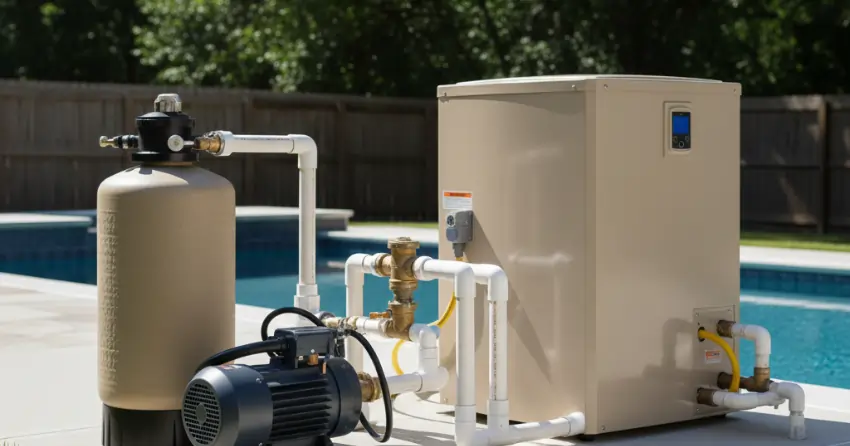
Running cost comes down to how much energy the heater uses and how long it runs. Fuel type and local rates set the baseline, with gas, propane and electricity each priced differently. Heat pumps use less power for the heat they deliver, but their efficiency falls when the air is cold. Pool size, desired temperature, wind, shade, cover use and the length of the heating season set the demand. Heater condition matters as well, since a scaled exchanger or dirty burners waste energy. Your utility bills compared before and after heater use give the most real-world measure.
How does pool water chemistry affect the heater?
Water chemistry is the biggest influence on how long a heater lasts. Water that is acidic or low in alkalinity eats away at the metal of the exchanger and the fittings, leaving blue-green stains and eventually pinholes. Water that is too hard or high in pH leaves scale that reduces heat transfer and damages the unit from the inside. Test your pool regularly, keep pH, alkalinity, calcium hardness and sanitizer within the ranges your heater’s manual gives, and correct drifts promptly. Add chemicals according to label directions with the pump running, never directly into the heater.
How should you set the thermostat on a pool heater?
Set it to the temperature you want to swim in, not higher. A higher setting does not make the heater warm the water faster; it only keeps the burner or compressor running for longer. Many heaters read the water as it enters the heater, so the pump must be running for the reading to be accurate. Make small, planned changes rather than big swings, and lower the setting or switch the heater off when nobody will swim for several days. Some models have separate pool and spa settings. Give the water time to rise before deciding something is wrong, since larger pools change temperature slowly.
What yearly routine keeps a pool heater in good shape?
A simple yearly routine covers most of what a heater needs. In spring, inspect the unit, restore the drain plugs, balance the water and have the heater serviced before heavy use. During the season, keep the area clear, test the water often, clean baskets and the filter on schedule and note any changes in performance or noise. In autumn, clean the area, address problems while they are fresh and winterize if freezing is possible. Keep the manual, service records and a photo of the rating plate in one place so they are easy to find.
Find a time that fits
Tell us the days and hours that suit you and we will look for an opening that matches. We confirm the arrival window ahead of time so you can plan your day in Edmonton. Request a time for pool heater service and repair.
