
































Swimming in comfortably warm water is the whole point of a heater, and getting there without wasting fuel or power is the second goal. Both depend on a unit that is sized, set and maintained properly. If “pool heater ignition failure” is what you searched for from Edmonton, these answers on pool heater ignition repair cover how the heater behaves, what affects its running time and the care that keeps it efficient and safe.
Which ignition systems do pool heaters use?
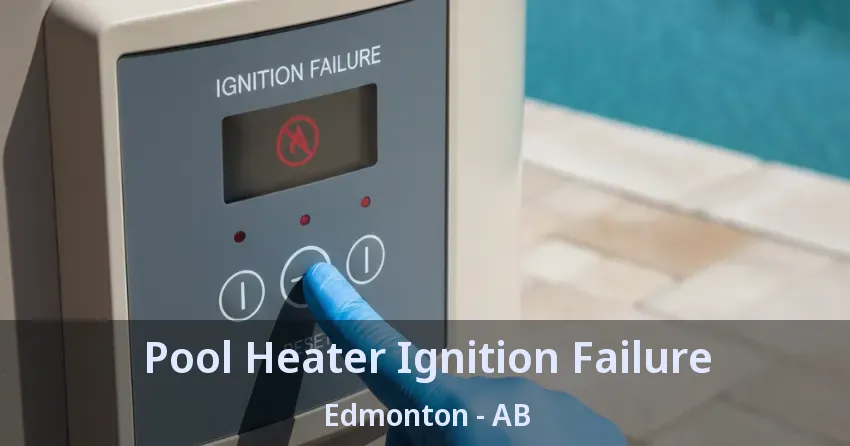
Pool heaters have used a few designs. Older units keep a standing pilot burning all the time. Many later ones use an intermittent pilot, where a spark lights a small pilot flame that then lights the burner. Direct spark systems skip the pilot and light the main burner with an electrode, and hot surface igniters use a ceramic element that glows until the gas ignites. Each fails differently: standing pilots blow out in wind, electrodes foul or drift out of position, and ceramic elements crack or stop glowing. All of them rely on a sensor to confirm the flame. The rating plate or manual shows which system your model uses, which helps when you search for “pool heater ignition failure” help.
What safety features does a pool heater have?
Pool heaters are built with layers of protection, and when they are installed correctly and kept in good condition they run safely for many seasons. Typical safeties include a flow or pressure switch that blocks heating without water movement, a high-limit sensor that shuts the unit down if temperatures climb, and on gas models a flame sensor that closes the gas valve if no fire is detected. Gas heaters belong outdoors or in rooms approved for them, with clear space around the cabinet. Never bypass a safety device. A heater that keeps tripping one is telling you something needs attention.
Should you reset a pool heater that shows a fault code?
A reset is fine once. If the heater runs normally afterward, the cause may have been a passing event such as air in the line, a power flicker or a momentary flow dip. If the same code returns, clear it no more than a couple of times and then stop, because repeated attempts can hide the pattern and, on gas units, stress the ignition parts. Take a photo of the display, note the date and call. We can read stored history on some boards, and the sequence of codes often tells more than any single message.
Is a banging or humming pool heater a problem?
Different noises point to different problems. A rumble or roar at ignition can come from dirty burners or a flame that lights late. Banging or popping from inside often means scale on the exchanger boiling off tiny pockets of water. A whistle may come from high flow or a restricted valve. On heat pumps, a rattling fan, a loud hum from the compressor or a buzzing contactor deserve a look. Loose panels also vibrate. Noises that are new, getting louder or accompanied by a code are worth a service call.
Why does a pool heater try to light several times and then stop?
That repeating pattern is the heater’s normal reaction to a failed start. Most gas heaters allow a few ignition attempts, pausing between them to clear the burner area, and when none produces a proven flame they lock out and wait for a reset. The lockout is a protection so that raw gas does not keep flowing into the burner. Resetting it works only if the reason was temporary. If the heater locks out again, something specific is failing, and the number of attempts and the length of each pause are clues to share with the technician when you describe the sequence.
What causes scale inside a pool heater?
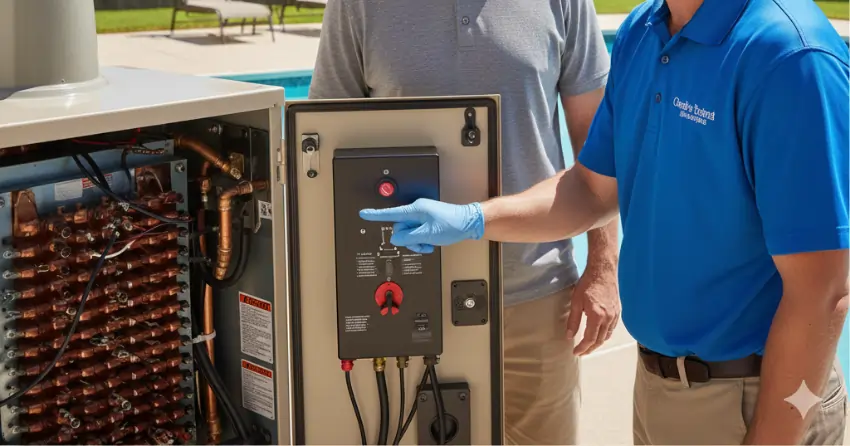
Scale is a hard mineral crust, mostly calcium, that forms on hot metal surfaces when pool water is too hard or too alkaline. Inside a heater it coats the exchanger, insulates it from the water and forces the unit to run hotter and longer for the same result. Signs include popping or banging sounds, reduced heating, rising flow resistance and an overheat shutdown. Left alone, scale can crack the exchanger or choke the flow completely. A technician can remove it with a controlled descaling, and the real cure is keeping the water balanced as the manufacturer’s manual advises.
What should I do with my pool heater after a storm or power outage?
After a storm or power cut, inspect the equipment area before restarting anything. Look for water or debris around the heater, damaged wiring, fallen branches and signs of flooding. If the equipment was under water, or you see scorch marks or smell burning, leave it off and call a technician. Power surges and lightning can damage control boards and sensors even when the unit looks fine. Once power returns, wait a few minutes before restarting so the system can settle, then watch the first cycle for codes or unusual behavior.
What should you never do yourself on a gas pool heater?
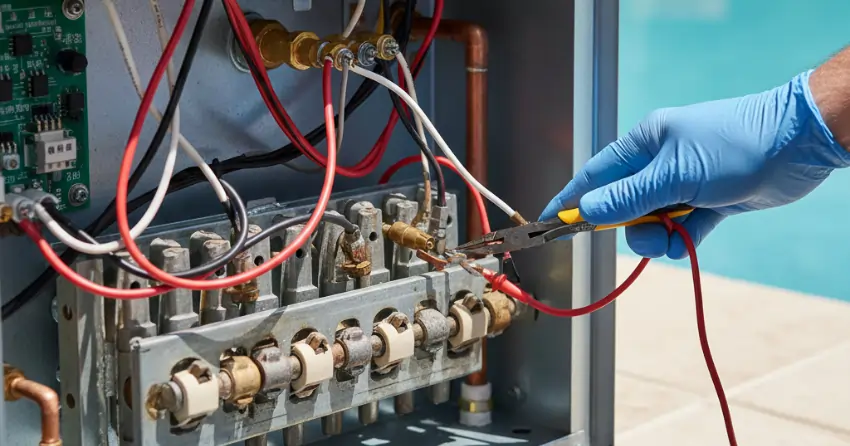
Gas appliances leave no room for improvisation. Work on gas valves, burners, orifices, regulators, ignition parts and venting needs training, proper test equipment and knowledge of local rules, because a small mistake can lead to a gas leak, a flash fire or dangerous exhaust. Never bypass a safety switch, bend or file ignition parts, try to light a burner manually or use tape on a gas fitting. Homeowners can safely change batteries where the model uses them, clear leaves from around the unit and report what they see. Anything beyond that belongs to a qualified technician.
When is it time to replace a pool heater instead of repairing it?
We try to give owners an honest comparison rather than a push in either direction. First we price the repair and describe how likely it is to hold. Then we outline the replacement, including any extras such as a new pad, bypass valve or fuel line. If a new unit would use less fuel or better match your pool, that counts too. Sometimes the answer is to repair now and plan replacement for the off season. Seeing both options on paper, with the reasoning behind each, makes the decision far easier.
Start with a question, not a commitment
You can contact us just to ask whether a visit makes sense. If the answer is no, we will say so. If it is yes, we will explain why. Reach Gas Fireplace Edmonton at (587) 853-6668 for an honest opinion about your pool heater.
