

































Pool heater trouble comes with plenty of guesswork, and an unhelpful answer can waste a good swimming weekend. The aim of this page is the opposite: direct, plain replies to what homeowners around Edmonton most often ask after looking up “pool heater installation”. Each answer on pool heater installation stands alone, so skim the headings, read what matters to you and come back whenever another question pops up.
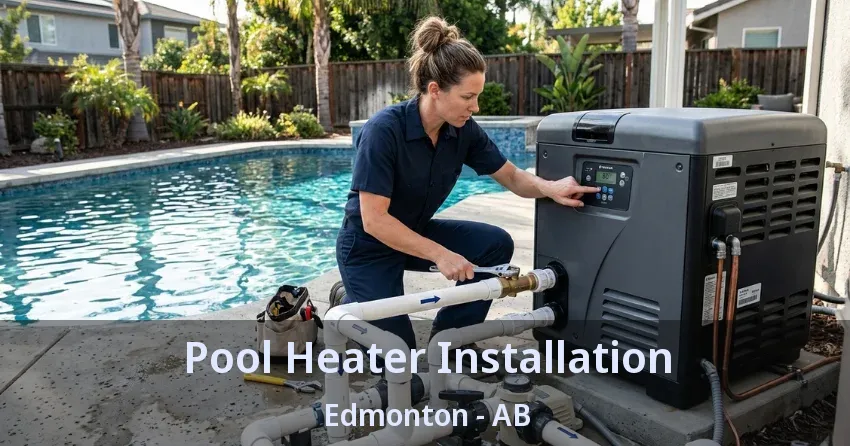
How do you pick the right heater capacity for a pool?
Heater size is measured in BTU output for gas and electric models, and in a similar capacity rating for heat pumps. The right number depends on pool surface area, how many degrees you want to raise the water, how much wind the pool sees and whether a cover is used. A pool heated only for weekends needs more capacity than one kept warm all season. An undersized heater runs constantly and still struggles, while an oversized one costs more up front and may cycle often. The rating plates and sizing charts supplied by manufacturers guide the choice, and a technician can apply them to your site.
Why does a pool heater depend on the pump and filter?
Think of the pump and filter as the heater’s support crew. When the filter is overdue for cleaning, pressure builds and flow falls, and the first thing to notice may be a heater that refuses to fire. Variable-speed pumps add another twist: at low speed they may not move enough water to satisfy the heater’s switch, so the schedule needs a minimum heating speed. Pool owners can help by cleaning baskets, backwashing or cleaning cartridges on schedule and telling us about any gauge readings that look different from normal.
Which parts of installing a pool heater need a qualified gas technician?
Anything involving the fuel. A qualified gas technician sizes the gas line to carry enough supply, connects the heater, fits the shutoff and any regulator, leak-tests every joint and checks the vent run and combustion air. Electrical connections and bonding are handled by a qualified electrician, and local rules may require permits and an inspection for each trade. The plumber or pool installer adds valves, unions and a bypass on the water side. Homeowners should not attempt to connect, adjust or test gas themselves. Ask who is responsible for each step, and who arranges the permits.
What decides how much a pool heater costs to run?
Running cost comes down to how much energy the heater uses and how long it runs. Fuel type and local rates set the baseline, with gas, propane and electricity each priced differently. Heat pumps use less power for the heat they deliver, but their efficiency falls when the air is cold. Pool size, desired temperature, wind, shade, cover use and the length of the heating season set the demand. Heater condition matters as well, since a scaled exchanger or dirty burners waste energy. Your utility bills compared before and after heater use give the most real-world measure.
Why do pool heater installations often need inspections?
Local requirements differ, and some areas also demand inspection of the final connections, the bonding of metal parts and the electrical disconnect. We handle the paperwork for jobs we install and tell you what to expect. As the owner, you may be asked to sign the application and be present for the inspection. Gas and electrical work must be performed by qualified trades, which is part of why the permit exists. If you are replacing a heater with the same type in the same place, check anyway, since rules about like-for-like swaps are not uniform.
What do you need to arrange before a pool heater is installed?
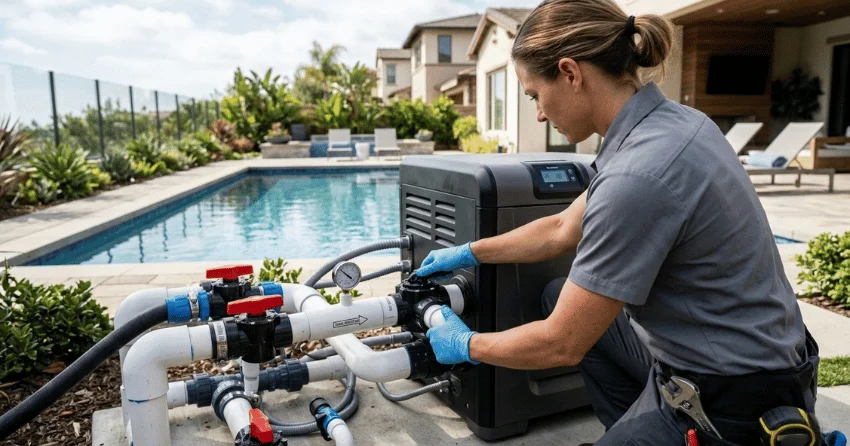
Before the crew arrives, walk the route with us. We look at the distance from the gas meter or tank, the position of the electrical panel, the equipment pad and the plumbing runs, and we mark where each connection will go. You can help by trimming plants, moving furniture and keeping gates open on the day. If an old heater is coming out, tell us what is connected to it. Thinking early about noise, view and where exhaust will go avoids awkward conversations once the unit is in place.
How much space does a pool heater need around it?
A pool heater needs open space on all sides for airflow, venting and service access, and the required distances are listed on its rating plate and in the manual. Keep shrubs trimmed back, avoid stacking boxes or covers against the cabinet and never store fuels, paints or pool chemicals nearby. Gas heaters need a clear path above the flue and heat pumps need unobstructed air in and out. Leaves and grass clippings should be swept away regularly. Crowding the unit causes poor combustion, overheating and a shorter life.
What should a startup after installation include?
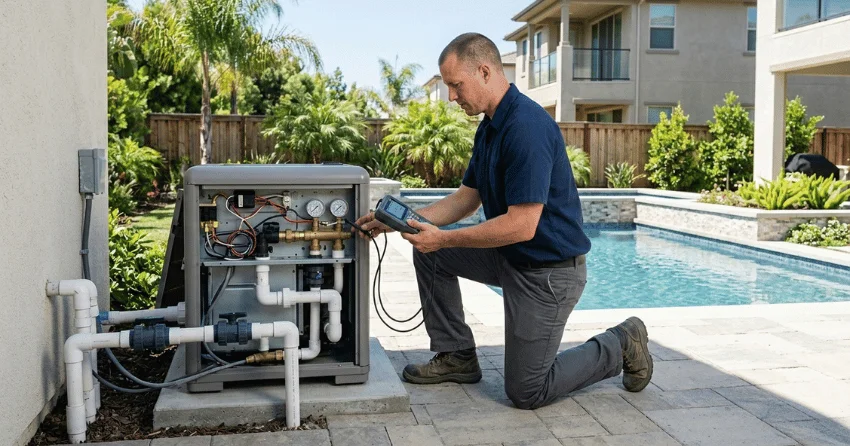
The first start is the final test, not a formality. The installer should confirm water flows through the heater at the right rate, check connections for drips, then fire the burner and watch it light, settle and shut off at the set temperature. Combustion and vent performance get checked, safety controls are tested and any bypass is adjusted. You should be shown the controls, the display messages and the isolation valves, and left with the manual and the model and serial numbers. If anything is unclear, ask before the installer leaves. Keep that paperwork with your pool records for later service visits.
How is a commercial pool heater different from a residential one?
With a larger pool, small problems become big ones because the heater seldom rests. Apartment complexes, clubs and hotels usually benefit from a maintenance schedule with documented visits, so that wear is caught before it closes the pool. We also look at how several heaters share the load, how bypass and flow are managed and whether controls tie into building systems. Spare parts for the most likely failures, a clear contact for the site and agreed procedures for winter shutdown all keep surprises to a minimum.
Talk to Gas Fireplace Edmonton about pool heater installation
We are glad to explain the process, the likely timing and what affects the price before you decide anything. Most people find that a few minutes of conversation answers the questions this page could not. Send us a message and we will reply with clear next steps.
