

































Treat this page as a reference you can return to. It covers the pool heater topics that cause the most confusion, from lockouts and leaks to sizing, plumbing and routine care, and it spells out where your part ends and the technician’s begins. If “pool heater plumbing” is how you arrived from Edmonton, you will find careful, practical detail about pool heater plumbing and no obligation to book anything.
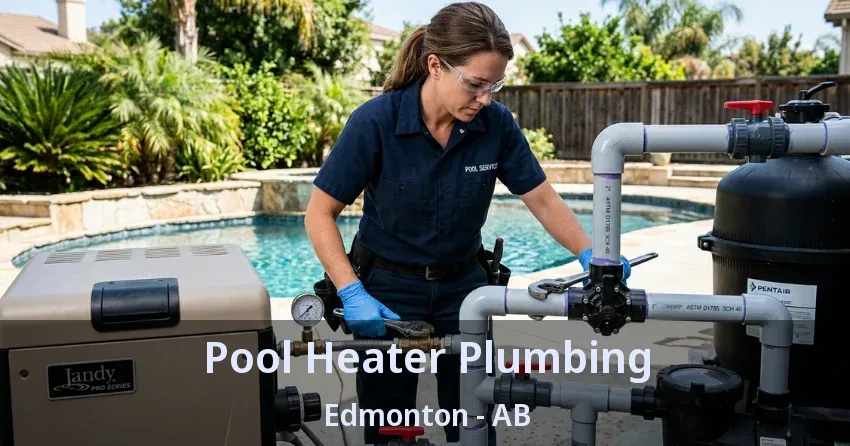
What pipes and valves surround a pool heater?
A heater is one stop in the circulation loop, so water enters one side and returns to the pool from the other, with fittings on both sides. Most installations include unions that let the heater be disconnected without cutting pipe, a bypass or three-way valve that routes part of the flow around the unit, and a check valve that stops chemicals and hot water from flowing backward. Pressure gauges and a temperature sensor may also tap into the lines. The pipe nearest the outlet is often a heat-tolerant material rather than ordinary PVC. Knowing where these parts sit helps you describe a problem clearly when you call about pool heater plumbing.
What size pool heater do I need?
We start with the surface of the water, not its volume, because heat is lost mostly at the top. Then we ask how the pool is used. If you want quick warm-ups on cool evenings, you need more output than someone who maintains one temperature all summer. Wind exposure, shade, a solar cover and even the temperature of the nights count too. Plumbing, gas line or electric supply must also handle the larger unit, so sizing up is not always as simple as ordering the bigger model. A short site visit gives a clearer answer than any chart.
How do the pump and filter affect a pool heater?
A heater is only as dependable as the water it receives. The pump supplies the flow that the pressure switch and sensors expect, and the filter keeps debris from entering the exchanger. A clogged filter or a pump losing prime reduces flow and can stop the heater entirely, while a dirty basket starves it quietly. At the other extreme, a very strong pump can overpower the exchanger. That is why technicians check pressure gauges, baskets, valves and pump operation before blaming the heater itself.
Can a leaking pool heater heat exchanger be repaired?
A leaking heat exchanger means water is escaping from the tubes themselves, usually through a pinhole, a crack or a failed joint. Common causes are corrosion from low pH or aggressive water, long-term scale that overheats the metal, freeze damage after a missed winterizing and ordinary fatigue. Signs include water inside the combustion chamber, rust-colored stains, steam at start-up and a heater that keeps losing efficiency. Patching tubes is rarely a lasting repair. Most exchangers are replaced as a unit, and your technician can tell you whether that makes sense for the age and model.
What affects the cost of pool heater installation?
Installation pricing depends on the heater itself and the work around it. The type and size of the unit come first, then the site: distance from the gas meter or tank, the state of the electrical panel, the plumbing route and whether a pad, bypass valve or check valve must be added. Permits, inspections, vent work for indoor units and the removal of an old heater add further items. Hard-to-reach equipment pads or fences can add labor. A detailed written quote that lists each of these keeps comparisons fair.
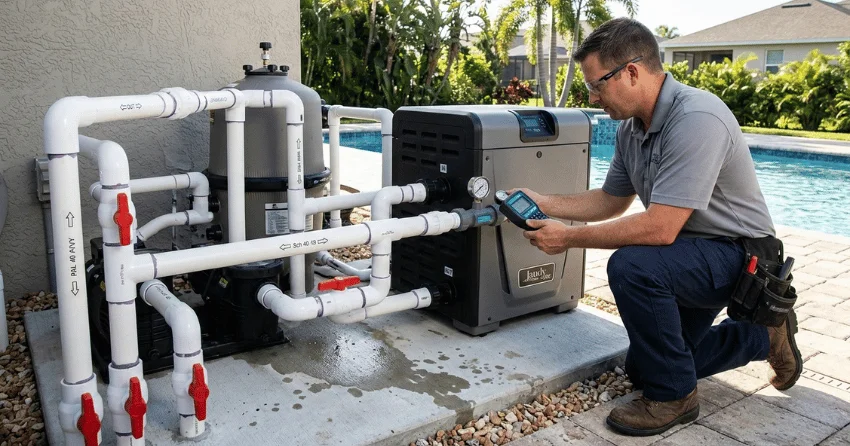
How big a job is changing the pipework around a heater?
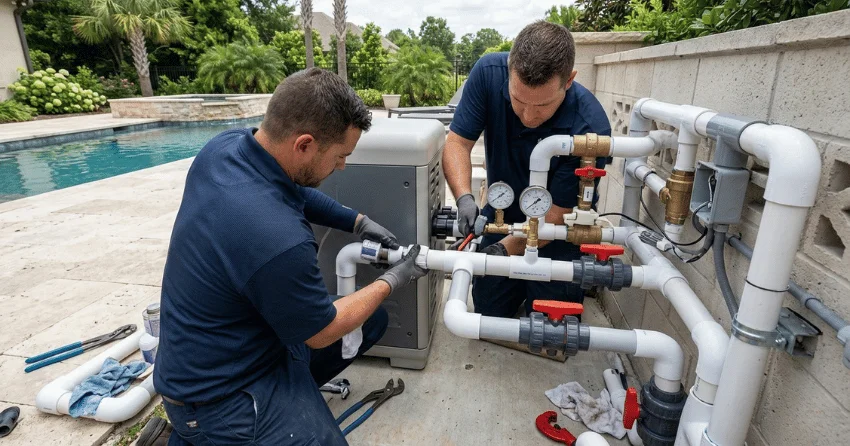
It depends on how much room the existing equipment pad allows. Swapping a heater for a similar model in the same spot may need only the unions reconnected and a few fittings replaced. Moving the heater, changing pipe sizes or adding a bypass and check valve means cutting, fitting and letting the glue cure before the pool can circulate again. The pool does not need to be drained, but water lines are isolated and some water is lost. Allow extra time when the pad is crowded or the old pipes are brittle. A site visit lets the technician quote the real scope for “pool heater plumbing” instead of guessing from a description.
How can you get ready for a pool heater service call?
Good preparation is a short list of facts for the technician. Have these ready:
- What the heater did and did not do, and when it began.
- Any code or light pattern shown on the display.
- Recent changes, such as a new pump, a power outage or work on the pool.
- The latest water test results, if you have them.
- Anything you have already tried, so we do not repeat it.
Clear the way to the equipment pad and secure any pets, and we will take it from there.
Does a saltwater system change how a pool heater is cared for?
With salt pools, we look hardest at corrosion. Salt crystals on fittings, green-blue stains near the headers or flaking around the cabinet suggest salt water and humidity are attacking the metal. A heater rated for salt, installed with the cell after it in the plumbing and kept clear of splash and spray, can run for many seasons. If you are converting a pool to salt, tell your technician beforehand so they can confirm the heater suits it. With the power off, rinse the exterior with fresh water occasionally and keep the pad drained.
What changes when a pool heater serves many swimmers?
Commercial and shared pools use larger heaters with higher capacity and often multiple units working together. Demand is steady and heavy, so reliability matters more, and downtime affects many people. Venting, gas supply and electrical service must be sized for the bigger load, and local rules for public pools can add requirements on temperature control, records and inspections. Water chemistry is generally harder to keep steady. Regular scheduled maintenance, log keeping and a plan for replacement parts help avoid interruptions. Ask any company you consider whether it works on that scale of equipment.
Prefer to talk to a person?
Some questions are easier to answer in a quick call than in a form. Phone (587) 853-6668 and tell us about your pool heater. We will explain the options, give you a sense of timing and book a visit in Edmonton if you decide to go ahead.
