

































A closed valve, a full skimmer basket or a tripped breaker can make a healthy heater look broken, while a genuine fault sometimes hides behind a harmless-looking symptom. Sorting one from the other is half the battle. People in Edmonton who look up “pool heater repair” will find straightforward guidance on pool heater repair here, including simple checks to try first and the signs that tell you to put the tools down and bring in a professional.
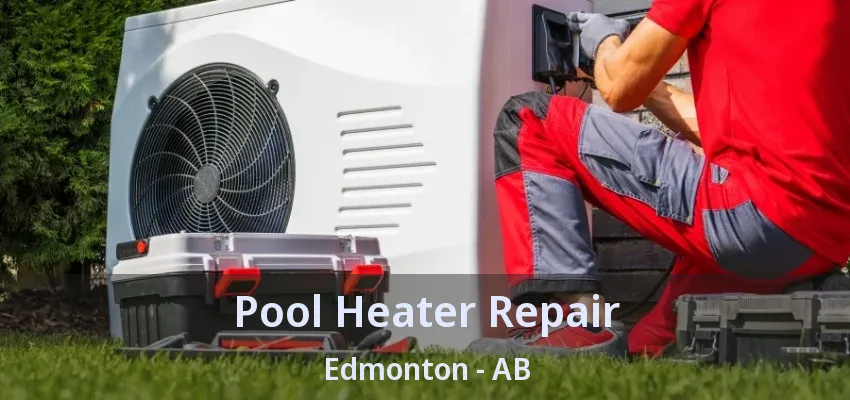
How does your pool heater warm the water as it flows through?
A pool heater warms water as it circulates. The pump pulls water from the pool through the filter and pushes it into the heater, where it passes over or around a heat source before returning to the pool. In a gas model, a burner heats a metal exchanger. In an electric model, elements do the job. A heat pump moves warmth from outdoor air into the water using refrigerant. A thermostat sensor compares water temperature with your setting, and a flow or pressure switch makes sure water is moving before anything is allowed to heat.
How can you tell condensation from a real leak?
Some dripping is perfectly normal. A gas heater sweats when cool pool water first passes through a hot exchanger, and the moisture burns off as the unit warms. A heat pump pulls water out of the air as it cools it, just as an air conditioner does, so a steady trickle from its base while it runs is expected. Condensation is plain water, appears mostly at start-up or in humid air, and stops when the heater shuts down. A leak continues while the pump runs, may leave mineral stains or a green tint and tends to get worse over time.
Why does the heater show a different temperature than the pool?
The heater and your hand are not measuring the same thing. Most heaters read the temperature of water entering the unit, which can differ from the water at the far end of the pool, especially while the pump is off or the sun is warming the surface. A sensor that has drifted, been fouled by scale or been installed in the wrong spot can also give misleading numbers. Compare the display with a floating or handheld thermometer after the pump has run for a while. A steady gap of several degrees is worth reporting to the technician, because a wrong reading makes the heater stop early or run too long.
Is it normal for a pool heater to cycle on and off?
Some cycling is normal, particularly when the water is close to the set temperature, since the heater pauses once it is reached and restarts as it drifts lower. Rapid cycling every few minutes is different. Weak flow from a dirty filter or partly closed valve, a failing pressure switch, an oversized unit, a thermostat sensor that reads incorrectly or an overheating exchanger can each shut the heater down early. Heat pumps may also stop because of high refrigerant pressure or defrost. Note how long it runs and the code, if any, before calling.
What should you do when water is dripping from a pool heater?
Water around a heater has several possible sources, and not all are serious. Normal condensation is common, so start by noting when the water appears. A true leak shows up while the pump runs, grows with time and may leave mineral stains. The usual culprits are loose or cracked unions, a worn header gasket, a failed drain plug seal, a cracked header, a corroded or frozen heat exchanger or a leaking pressure switch fitting. Turn the heater off, shut off the pump if the flow is steady and call a technician. Running a leaking heater can damage the control board and base.
What tests are used to find a pool heater fault?
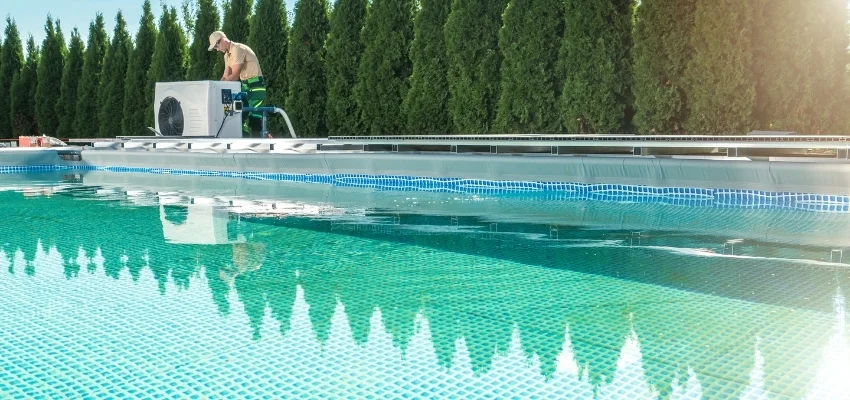
Good diagnosis is mostly elimination. We ask when the problem began, what changed and what the heater does or does not do. Then we measure rather than assume: voltage at the board, continuity through safety switches, water pressure on both sides of the unit, temperature rise across it. The reading that falls outside its expected range points to the faulty link. Replacing a part without a measurement behind it can cost you twice, once for the part and once for the repeat visit when the problem returns.
What does a pool heater flame sensor do?
A flame sensor is a thin metal rod that sits in the burner flame and tells the control board that combustion is happening. The flame carries a tiny electrical signal, and if that signal disappears the board closes the gas valve within seconds. Over time the rod collects a film of residue or corrosion, which weakens the signal, so the burner may light and then shut off almost immediately. Cleaning or replacing the sensor, along with checking its wire and grounding, usually resolves it. This is work for a technician, because it happens inside the gas section.
What is a pool heater header, and why does it leak?
The headers are the end chambers that connect the heat exchanger tubes to your pipes, and they bring water in and distribute it. They are sealed with gaskets or O-rings and held with bolts or clips. Over time, heat cycles and chemistry harden the gaskets, and a thin film of water begins to weep, often leaving a crust or stain at the front or back of the unit. A header can also crack from freezing or from over-tightening. Reporting a weeping header early matters, because water that keeps escaping can corrode the parts around it.
What if the technician finds more than one problem?
It happens often, because a worn heater rarely fails in only one place. Ask the technician to rank the findings. Anything involving gas leaks, carbon monoxide, electrical faults or flames in the wrong place comes first. Next come failures that will damage other parts if left alone, such as a flow problem that overheats the exchanger. Performance issues, like slow heating, can follow. Request an itemized quote so you can approve the urgent items now and schedule the rest, and ask what happens if a lower-priority item is left. A candid conversation during pool heater repair helps you spend where it matters.
Had a rough stretch of weather?
A storm, a heat wave or a long cold snap is a good moment to make sure everything at home still works the way it should. If anything about your pool heater has changed since the weather turned, a quick check is a sensible next step. Arrange a visit in Edmonton with Gas Fireplace Edmonton.
