

































Whether you are fixing the heater you have or planning a new one, the same sensible questions come up: what type fits the pool, what the work involves and what the unit will demand from your property. Households in Edmonton looking up “pool heater technician” can use this page to get ahead of those questions. It explains pool heater diagnosis and repair step by step, from sizing and connections to start-up, without assuming any trade knowledge.
Why does a pool heater depend on its heat exchanger?
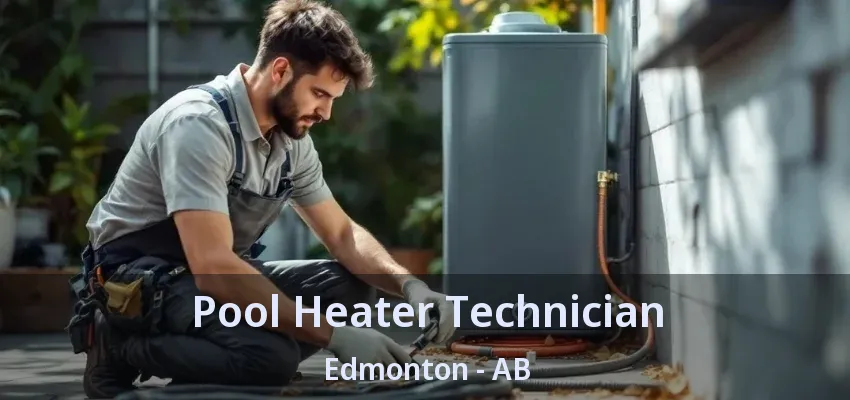
The heat exchanger is the part that transfers heat into the pool water, and it is the heart of every heater. In gas units it is a set of finned tubes sitting above the burners. In heat pumps it is a corrosion-resistant coil or tube bundle that the hot refrigerant gas passes around. In electric heaters the elements play the same role. Because pool water, chemicals and heat all meet here, it is the component most affected by poor water balance. Scale, corrosion and freezing can each damage it, so a heater often lives only as long as its exchanger does.
What should you check when a pool heater has no power or display?
Most no-start calls come down to one of three things: no power, no flow or a safety circuit that has tripped. We look at the display first. A dead screen suggests power, a fuse or a board; a code points us to the circuit that opened. Then we confirm water is moving through the heater at a proper rate, since a dirty filter or half-closed valve will quietly keep a pressure switch open. Only then do we test ignition components. A short wait of a few minutes after power-up is also normal on many models.
What happens at the end of a pool heater repair visit?
We do not leave until the heater has proven itself. For us that means letting it run long enough to reach a stable output, checking that it shuts down properly when the set point is reached and then restarting it to be sure the start sequence works again. On gas models we confirm the flame is steady and leak-test the connections we touched. On heat pumps and electric heaters we confirm the amp draw is normal. Before we go, we show you the old part, if you want to see it, and suggest what to monitor.
What is checked during gas pool heater maintenance?
A good gas service blends cleaning with measurement. We look at the flame color and shape, since steady blue flames sit evenly across the burners and lazy yellow ones do not. We measure inlet gas pressure and check that the manifold is regulated as the manufacturer specifies. The pressure switch, high-limit and rollout controls are tested rather than assumed. We also review the pad, the clearance to walls and shrubs, and the condition of the vent. Anything that needs a gas fitting repair is done by a technician qualified for it, and the heater is checked for leaks before we leave.
What tools does a pool heater technician bring to a visit?
Expect a mix of hand tools and meters. A multimeter checks voltage, continuity and amperage on controls, igniters and motors. A manometer or gauge measures gas pressure, and thermometers compare water entering and leaving the heater. Technicians often carry a flashlight, mirror and brushes for inspecting burners and the exchanger, along with common replacement parts such as igniters, sensors and switches. For heat pumps they may also use refrigerant gauges. The tools matter less than how they are used, so a technician who explains each reading and what it means for your heater is worth listening to.
How much time should you allow for pool heater repair?
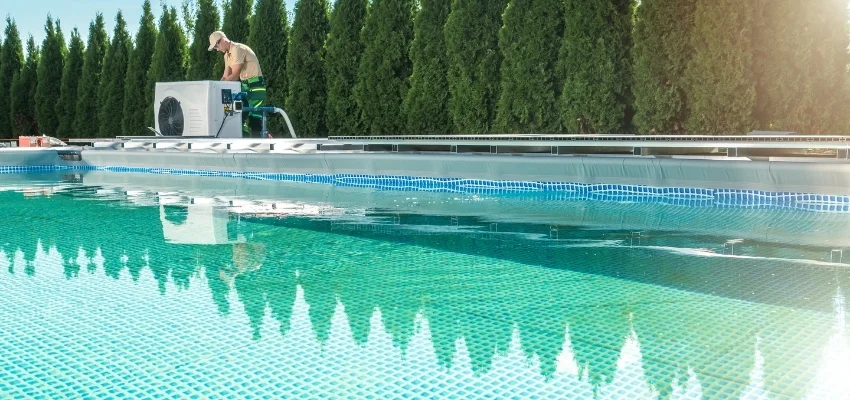
Many pool heater repairs are finished in a single visit, particularly when the cause is something like a dirty flame sensor, a clogged flow path, a worn igniter or a tripped safety. Others depend on a part that has to be ordered, which stretches the job across two visits. Diagnosis itself takes time, because the technician needs to watch the heater run through its sequence and test each stage. Older or less common models may need extra searching for parts. Ask for an honest estimate of the visit itself and of any waiting for parts.
Do you need to know where the gas shutoff and breaker are?
Yes, find them before the visit rather than during it. A technician will usually switch off the electrical supply to the heater and sometimes the gas, but you should know where the heater’s disconnect or breaker, the gas shutoff valve near the heater and the pump switch are located. Label them with tape or a tag. If you ever smell gas, get everyone away from the area and call from a safe distance instead of flipping switches. Share the locations when you book “pool heater technician”, and point them out on arrival. Only a qualified technician should open or adjust gas connections; your part is simply knowing where the controls are.
How can you tell if a pool heater company covers Edmonton?
Service areas are worth confirming before you book. Check the company’s website or call and ask whether it regularly works in your neighborhood, since a technician who travels far for a small job may have less time left for the job itself. Ask which types of heaters and brands are covered and whether the same person returns for follow-up visits. A company that lists the towns it serves and answers location questions plainly is usually organized about scheduling. If your property is outside its usual area, ask whether it can still help or can suggest an alternative.
How do you choose between a gas and a heat pump pool heater?
Gas heaters excel at speed. They warm a pool quickly in any weather, suit occasional use and spas, and cost less up front, though fuel is the main running expense. Heat pumps cost more to buy but use less energy for the heat they produce, do their finest work in mild weather and suit pools kept at a steady temperature all season. Gas needs a supply line or tank and venting space, while heat pumps need good airflow and electrical capacity. Your climate, swim habits, utility prices and equipment pad all affect which one comes out ahead.

Not sure what to do about your pool heater?
That is a common place to start. A short conversation usually sorts out what kind of visit makes sense, from a focused check to a full service. Reach Gas Fireplace Edmonton at (587) 853-6668 and we will give you a straight answer for your home in Edmonton.
