

































Cool evenings and shoulder-season mornings are when a pool heater earns its place, and when weak spots tend to show. A flame that will not catch, a pump that struggles or a heat pump that seems to give up can end the swim before it starts. If “pool heater” matches what you are going through in Edmonton, these answers on pool heater service and repair offer a calm place to start, with safety guidance included.
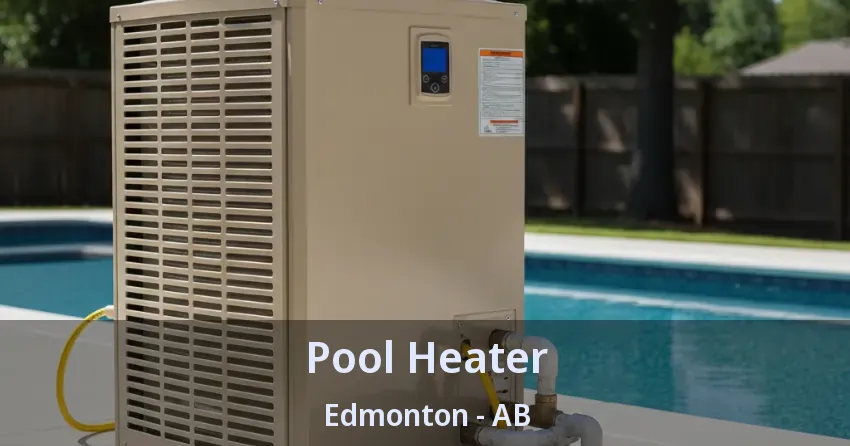
How does a pool heat pump work?
A pool heat pump does not create heat. It moves it. A fan pulls outdoor air across a coil that holds refrigerant, and the refrigerant absorbs warmth even from fairly cool air. A compressor concentrates that warmth, and a second heat exchanger, usually made of titanium, hands it to the pool water passing through. Because it uses electricity to relocate heat instead of making it, a heat pump can deliver more heat than the electricity it consumes. The trade-off is speed and climate: output drops as the air turns cold and damp, so it warms water gradually.
How does a gas pool heater work?
A gas pool heater lights a burner under a bundle of finned tubes, and the pool water flowing through those tubes absorbs the heat. When the thermostat calls, the control board checks the water switches, starts a fan or draft, energizes an igniter and opens the gas valve only after everything is ready. A flame sensor then confirms the fire is burning. Exhaust leaves through a stack on top of the unit. Natural gas arrives by utility line, while propane comes from a tank, and the gas connection and venting are always work for a qualified gas technician.
How does an electric pool heater work?
An electric resistance heater passes current through heating elements immersed in a chamber, and the water flowing past picks up the heat. There is no flame, no flue and no gas line, which simplifies the installation and keeps the unit compact. The catch is power: heating a pool this way draws a large electrical load on a dedicated circuit, so running costs climb fast on big pools. For that reason these heaters are most often found on spas, small pools and plunge pools, or where fuel is not available. A flow switch and high-limit control protect the elements.
What power and fuel does each kind of pool heater need?
Each type draws on different resources. Gas heaters burn natural gas or propane, but they also need a small electrical supply for the control board, igniter, sensors and sometimes a blower, so a power outage stops them. Heat pumps run on electricity and usually need their own circuit, with a fan and a compressor working whenever they heat. Electric resistance heaters use elements that draw large amounts of power. Solar systems use sunshine and only need the pool pump to move water through the panels. Knowing which one you have makes it easier to describe the problem when you search for “pool heater” help, and tells you which utility to check first.
What is a bypass valve on a pool heater?
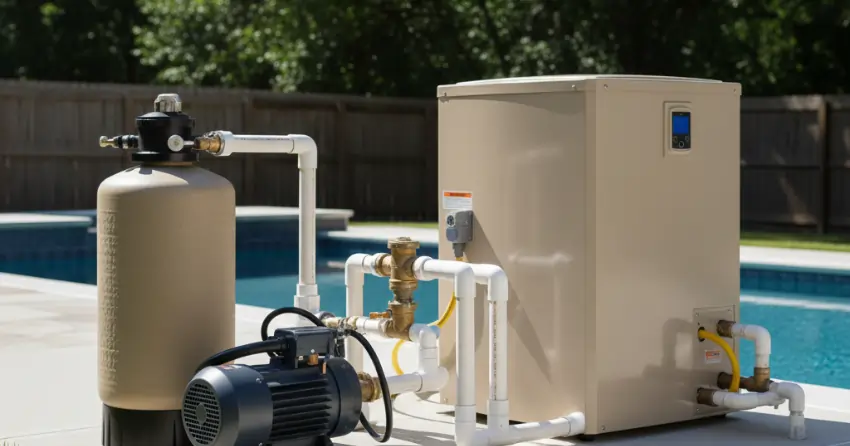
A bypass valve lets part of the pool’s water skip the heater so the unit receives the flow it was designed for. Modern pumps and filters can move more water than a heater can accept, and too much flow wears the exchanger and can rattle internal parts. Some heaters include an internal bypass, while others rely on a valve added to the plumbing. The setting should follow the manufacturer’s flow range, not a guess. Too much bypass starves the heater of water and slows heating, while too little pushes flow beyond its limit.
Is frost on a pool heat pump coil normal?
Ice tells us about airflow and refrigerant. We check that the coil is clean, the fan spins freely and nothing blocks the space around the cabinet. We then verify that the defrost sensor reads correctly, because a bad sensor can leave the unit icing or defrosting at the wrong time. If those are sound and ice persists, the refrigerant charge may be low. Testing pressures and finding any leak requires gauges and a technician with the right tools and training, and topping up refrigerant without finding the leak is not a fix. Most heat pumps simply rest in very cold weather.
How much does a heater extend the swimming season?
A heater lets you choose the water temperature instead of waiting for the sun, which can stretch the swimming season at both ends. How far depends on the local climate, the pool’s size and exposure, the type of heater and whether you use a cover. Gas heaters can bring the water up for an evening swim, while heat pumps and solar tend to hold temperature over a longer stretch. A heater cannot overcome cold air and wind alone, since the pool loses heat constantly, so the cover and shelter shape the results. Think about when you want to swim before choosing equipment.
Which questions help when planning a new pool heater installation?
Good questions lead to good installations. Ask which heater type and size the company recommends and why, what site work is needed and who handles gas, electrical and plumbing portions. Find out whether permits and inspections are included, what happens to the old unit, how long the work will take and what start-up and demonstration you will receive. Request model details so you can read the manufacturer’s specifications. A written proposal that covers equipment, labor, permits, valves, venting and cleanup lets you compare fairly.
How do you choose between a gas and a heat pump pool heater?
Start with how you use the pool. If you swim on warm weekends and want fast results on demand, gas fits. If you keep the pool comfortable for months and the climate is mild, a heat pump saves energy. Cold regions often pair the two: the heat pump handles the bulk of the season, and the gas unit takes over when air temperatures drop or for quick boosts. We look at supply availability, pad space, noise, budget and your preferences before suggesting anything, because the right choice depends on the property and the household.
Get a clear quote for your pool heater
A quote is easier to trust when it is based on your actual home. Share the basics, such as the type of home and what prompted the call, and we will explain what pool heater service and repair would involve. Ask for your quote here, with no obligation to book.
