

































Advice about pool heaters tends to arrive secondhand, from a neighbor with a different model, a forum thread about another climate or a video that skips the safety steps. That is a poor basis for decisions about gas, power and plumbing. This page sticks to what applies to most residential heaters, for owners in Edmonton who searched for “pool heaters repaire”, and it explains pool heater repair clearly enough that you can judge any advice you get.
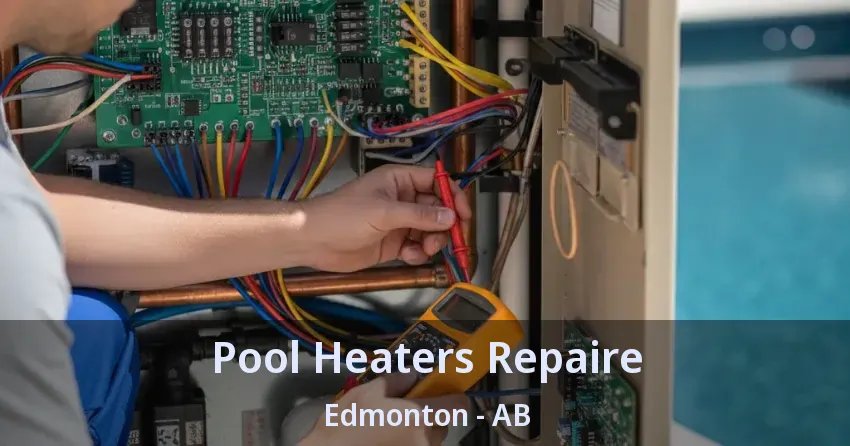
Why does my electric pool heater trip the breaker?
A breaker that trips when the heater starts is protecting the wiring from too much current or from a fault to ground. Common causes include a failed heating element that leaks current, moisture that has reached terminals, a worn contactor, loose or heat-damaged connections and a breaker that has weakened with age. On an electric resistance heater, scale on the elements can accelerate failure. Do not keep resetting the breaker, and do not open the electrical compartment yourself. Switch the heater off and have it tested by a qualified technician or electrician.
How can you tell whether the heater or something else is at fault?
A cool pool does not always mean a broken heater. If the pump is running weakly, the filter is dirty or a valve is closed, the heater may be shutting itself off for lack of flow. If a pool automation panel or timer controls the heater, a wrong schedule or disabled setting can make it look dead. Check that the pump primes well, the filter gauge reads normally, the thermostat is set above the pool temperature and the control panel shows the heater as enabled. If all of that is in order and the heater still stays off or runs without warming, the problem likely sits in the heater itself.
What do soot or yellow flames mean on a gas pool heater?
Treat soot as a message about combustion. Gas should burn cleanly with steady, mostly blue flames. Black deposits on the exchanger or around the vent opening mean fuel is burning without enough air, which can also produce carbon monoxide, a gas you cannot smell. Heaters are installed outdoors partly for this reason, yet a blocked flue or a tilted unit can send fumes toward a nearby window. When we see soot, we clean the exchanger, clear the burner and flue, check the gas pressure and confirm clearances before the heater is trusted again.
When should you stop using a pool heater and call for service?
It depends on the symptom. A heater that simply heats slowly or shows an occasional code can usually wait for a scheduled visit, as long as it keeps shutting itself off properly. Stop using it right away when you notice a gas smell, soot, scorch marks, sparks, water running from the cabinet, a tripped breaker that returns on reset or any damage to the venting. The pool itself remains fine to swim in while the heater is off. Switching the heater off at the control and the breaker keeps a small fault from becoming a larger one.
How do you know if a pool heater element has failed?
In an electric heater, three groups of parts do almost everything: the elements, the contactor that switches them and the sensors that tell the board when to heat. We test them in that order. A meter shows an open element, a grounded element or a contactor that is pitted and no longer closing properly. We also look for blackened terminals, because poor connections create heat. Once the failed part is replaced, we clean any scale from the chamber and verify the flow switch, so the same condition does not return and burn out the new part.
Does the pool need to be drained for a heater to be repaired?
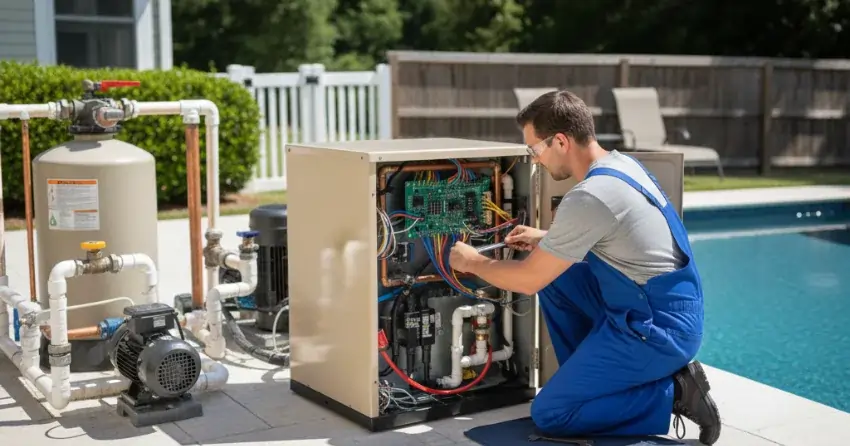
No. The heater is a separate unit on the equipment pad, and the pool water stays in the pool. The technician turns off the pump, closes isolation valves if present and works on the heater itself; any water that sits in the heater and nearby pipes may run out when connections are opened, which a bucket and towels handle. Replacing a heat exchanger or reworking connections takes longer but still leaves the pool full. Afterward the pump is restarted and the system is checked for leaks and air. Draining is only discussed when the repair involves the pool shell or a skimmer below the water line.
How can I reduce how long my pool heater runs?
Think of the pool as a bathtub with an open top: most of the heat leaves by the surface. Covers, windbreaks and sunny placement address that directly. Next, consider your schedule. A pool kept at a steady temperature suits a heat pump, while a gas heater suits a pool you heat for a weekend. Pool automation and timers can start the heater before you swim and stop it afterward. Lowering the set point a degree or two when nobody is home or the weather turns cool is the simplest habit of all.
How do pests get into a pool heater and cause trouble?
Yes, small creatures cause more pool heater trouble than many owners expect. Spiders spin webs in burner tubes, wasps and mud daubers build nests in small openings, and mice shelter inside warm cabinets and chew wiring. These intruders can block gas flow, disturb the flame, trip safety controls and damage insulation or wires. Keep vegetation trimmed, store nothing against the unit and ask your technician to clean the burner area at each service. Covers that seal the cabinet tightly are not advised, as they hold moisture and give pests shelter.
How do you decide between repairing and replacing a pool heater?
The decision rests on a few questions. How old is the heater, and how often has it needed repairs? What failed: an inexpensive part, or the heat exchanger or compressor that makes up much of the unit’s value? Are parts still available? Is it efficient and sized correctly for your pool? A single modest repair on a heater that otherwise runs well is usually sensible. Repeated failures, a leaking exchanger, heavy corrosion or a repair that approaches the cost of a new unit all point toward replacement.
Get a clear quote for your pool heater
A quote is easier to trust when it is based on your actual home. Share the basics, such as the type of home and what prompted the call, and we will explain what pool heater repair would involve. Ask for your quote here, with no obligation to book.
