

































A reliable heater stretches the swimming season at both ends, which is why a failure feels so out of proportion to the size of the box. You may be dealing with a heater that will not fire, a puddle underneath or a gauge that looks wrong. For households in Edmonton typing “pool heaters” into a search bar, this page gathers practical answers on pool heaters, written the way a technician would explain them while standing beside your equipment pad.
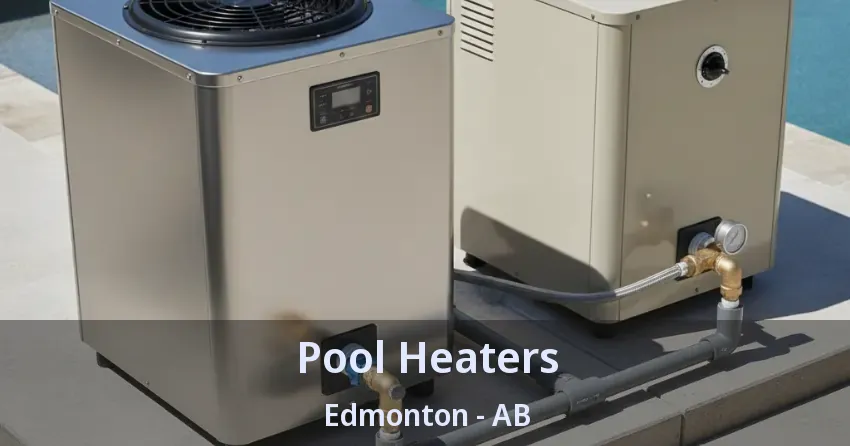
What happens inside a gas pool heater when it fires up?
Inside the cabinet, a gas heater has a combustion chamber, a gas valve, an igniter, a flame sensor, a blower or natural draft stack and a finned-tube heat exchanger bolted to inlet and outlet headers. The sequence is strict: water flow is proven, the igniter warms or sparks, gas is released, the sensor sees flame and the heater runs until the water reaches your setting. If one step fails, the board stops and often shows a code. Knowing the sequence helps us narrow a fault quickly, and it is why a heater that clicks but never lights points us toward ignition parts rather than the pump.
When does an electric resistance pool heater make sense?
Where an electric heater fits, it is hard to beat for simplicity. Elements, a contactor, a thermostat, a flow switch and a high-limit sensor make up most of the parts, and there are no burners or combustion air to worry about. The load, however, is serious, and the circuit, breaker and wiring must be sized by an electrician to match the nameplate. Hard water can crust the elements with scale, which is a common reason they burn out. If you are choosing between types, be sure to compare how much power your panel can actually spare.
What do the numbers on a pool heater’s label mean?
The label lists ratings that tell you what the heater can do. For gas models, the input rating is the amount of fuel energy the burner uses each hour, and the output is the portion that reaches the water, which depends on the heater’s efficiency. A larger rating heats the water faster. Heat pumps are described by their heating capacity and a coefficient of performance, which compares heat delivered with electricity used. Voltage, amperage and maximum working pressure also appear, and a technician uses them to size wiring and connections. When you compare pool heaters, read these figures alongside your pool’s volume instead of choosing by size or looks alone.
Does a heat pump pool heater make its own heat?
Picture an air conditioner running in reverse, with the pool as the thing being warmed. The outdoor fan, evaporator coil, compressor and refrigerant circuit pick up heat from the air, and the water-side exchanger releases it into the pool. Heat pumps run for long stretches at a gentle pace rather than in short bursts, which suits owners who keep the pool at a steady temperature. They need free airflow around the cabinet and a healthy electrical supply. Any work inside the sealed refrigerant circuit is handled by a technician with the proper tools, never by the homeowner.
Why does a pool heater depend on the pump and filter?
A heater is only as dependable as the water it receives. The pump supplies the flow that the pressure switch and sensors expect, and the filter keeps debris from entering the exchanger. A clogged filter or a pump losing prime reduces flow and can stop the heater entirely, while a dirty basket starves it quietly. At the other extreme, a very strong pump can overpower the exchanger. That is why technicians check pressure gauges, baskets, valves and pump operation before blaming the heater itself.
What decides the price of pool heater repair?
Two heaters that both refuse to start can have repair bills that are far apart, which is why we avoid quoting before we have looked. A dirty sensor is a short job with little material. A failed exchanger involves headers, gaskets, labor to dismantle and a pressure test. We also factor in whether the cause has to be removed too, such as scale, a flow problem or a drainage fault, since leaving it behind would invite a repeat failure. Ask any company what the estimate covers, what it leaves out and whether the diagnostic visit is separate.
How long does a pool heater usually last, and what shortens its life?
Lifespan varies widely, because the same model can last many seasons in one backyard and far fewer in another. Heavy use, a year-round pool or spa, poor water chemistry, scale, constant short cycling and a cabinet exposed to sprinklers or standing water all shorten it. Regular maintenance, steady flow and balanced water help it last. The heat exchanger usually decides the end of a gas heater’s life, while a heat pump’s compressor often does the same. When a heater is older, a good technician talks about its condition rather than its age alone and gives you a realistic picture before you invest more in your heater.
What does a pool heater inspection tell a home buyer?
If a home comes with a pool, the heater deserves its own look during the purchase. A general home inspection often notes only that the equipment is present, so a pool technician can add real detail. A pool heater inspection covers its type, age, model, visible leaks, corrosion, venting, clearances and how it starts, runs and shuts off. Ask the seller for service records, the manual and any repair history. The findings help you judge remaining life, budget for repairs and negotiate sensibly before the sale closes.
Are some pool heaters better suited to salt pools?
Yes, many heaters are designed to work with salt pools, but the model has to be made for it. Salt water is more corrosive than fresh, so the exchanger materials matter. Heat pumps often use titanium for that reason, and gas heaters offer corrosion-resistant exchangers and headers. Check the manual for the salt levels the manufacturer allows. Keep the salt cell downstream of the heater, keep the water balanced and rinse away salt spray around the unit. Salt systems are not harmful to a well-matched heater, but they are unforgiving of neglect.
Leave with a written summary
After the visit you get a short summary of what we found, what we did and anything worth planning for later. It makes future decisions about your pool heater much easier. Book with Gas Fireplace Edmonton and keep it on file.
