




























Gas, electric resistance and heat pump heaters all warm pool water, yet they fail in different ways and call for different checks. Knowing which kind you own saves a lot of guessing. If you are researching “Raypak gas pool heaters” from Edmonton, this page walks through gas pool heaters with those differences in mind, covering common symptoms, what a visit involves and the routine care that keeps each type running dependably.
What safety features does a gas pool heater have?
Most safety trouble comes from shortcuts, not from the heaters themselves. Jumpering a pressure switch, blocking the vent with a cover, storing paint or fuel near the cabinet or stacking boxes against a heat pump all create real hazards. Wiring and bonding matter too, because electricity and water share the same space. If you ever smell gas, leave the area and call your gas utility from a safe distance. Keeping the surroundings clear, scheduling regular service and acting early on warning signs go a long way toward keeping everything uneventful.
How does a gas pool heater warm the water?
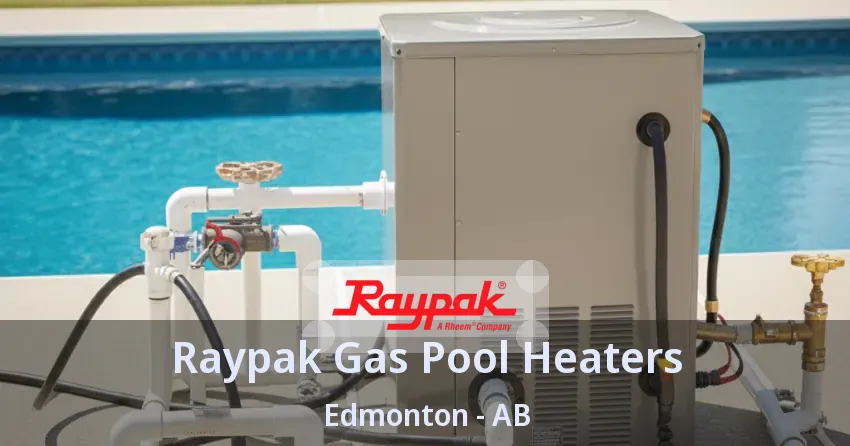
The pool pump sends water through the heater, where it passes through a heat exchanger, a set of finned tubes. Below them, a burner fires natural gas or propane, and hot combustion gases wrap around the tubes and hand their warmth to the water before leaving through the vent. When the water reaches the thermostat setting, the burner shuts off and the water keeps circulating. Because the burner can fire at full strength whatever the weather, a gas heater can warm a pool quickly on a cool evening. If you are reading about “Raypak gas pool heaters” to compare options, that speed is the usual selling point.
Why does a pool heater depend on the pump and filter?
Think of the pump and filter as the heater’s support crew. When the filter is overdue for cleaning, pressure builds and flow falls, and the first thing to notice may be a heater that refuses to fire. Variable-speed pumps add another twist: at low speed they may not move enough water to satisfy the heater’s switch, so the schedule needs a minimum heating speed. Pool owners can help by cleaning baskets, backwashing or cleaning cartridges on schedule and telling us about any gauge readings that look different from normal.
How do you size a gas pool heater for your pool?
Sizing balances four things: how much water the pool holds, how many degrees you want to add, how quickly you want it done and how much heat the pool loses to wind and open air. A larger input rating warms faster but costs more to buy, and an oversized unit may short-cycle in a small pool. Heaters are usually described by their gas input, so you will see it in the model number or on the label. Share the pool’s dimensions, location and whether it has a cover with the supplier, who can match the rating to the demand.
What affects the cost of pool heater installation?
Installation pricing depends on the heater itself and the work around it. The type and size of the unit come first, then the site: distance from the gas meter or tank, the state of the electrical panel, the plumbing route and whether a pad, bypass valve or check valve must be added. Permits, inspections, vent work for indoor units and the removal of an old heater add further items. Hard-to-reach equipment pads or fences can add labor. A detailed written quote that lists each of these keeps comparisons fair.
Is yearly service enough for a pool heater?
Once a year is the usual recommendation, and the ideal moment is before the swimming season, when any problem can be fixed before you need the heat. Heavily used heaters, those near trees, dust or salt air, and units in humid indoor rooms may benefit from a mid-season check as well. Between visits, keep the area clear and watch for changes in how the heater behaves, such as slower heating, new noises or codes. Your manual may specify its own interval, so it is worth following.
What water readings protect a pool heater?
A heater is the one piece of equipment that heats the chemistry too, so it works as an early warning for water that is out of balance. Hot surfaces make scale form faster, and hot, acidic water corrodes faster. We often learn more from the inside of a heater than from the test strip. Bring your water test results when you book a visit. Keep in mind that shock treatments, very fresh fills and big swings in sanitizer all stress the exchanger, so slow, steady adjustments are kinder to it.
How do you choose between a gas and a heat pump gas pool heater?
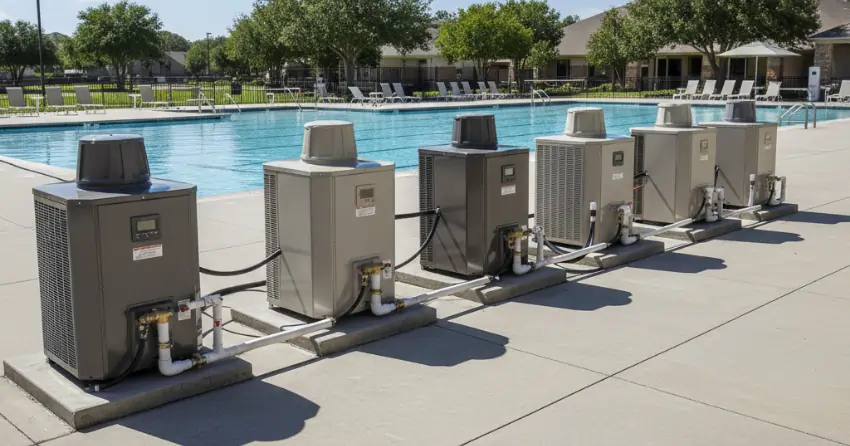
Gas heaters excel at speed. They warm a pool quickly in any weather, suit occasional use and spas, and cost less up front, though fuel is the main running expense. Heat pumps cost more to buy but use less energy for the heat they produce, do their finest work in mild weather and suit pools kept at a steady temperature all season. Gas needs a supply line or tank and venting space, while heat pumps need good airflow and electrical capacity. Your climate, swim habits, utility prices and equipment pad all affect which one comes out ahead.
Does a pool heater company serve my area?
When you call, give us your address or nearest cross streets and the type of heater you have, and we can tell you right away whether we cover Edmonton and what is realistic. Travel time affects scheduling more than most people expect, so it is fair to ask how soon a first visit and a return for parts would fit. Rural properties and gated communities may need a little extra planning for access. We would rather say honestly that an address is outside our area than promise something we cannot deliver.
Peace of mind for the people at home
A proper look at your gas pool heater means one less worry for everyone under your roof. We explain what we checked and what we recommend, step by step, in plain words. Call (587) 853-6668 to book gas pool heaters in Edmonton.
