




























Treat this page as a reference you can return to. It covers the pool heater topics that cause the most confusion, from lockouts and leaks to sizing, plumbing and routine care, and it spells out where your part ends and the technician’s begins. If “Rheem pool heater leaking water” is how you arrived from Edmonton, you will find careful, practical detail about pool heater leak repair and no obligation to book anything.
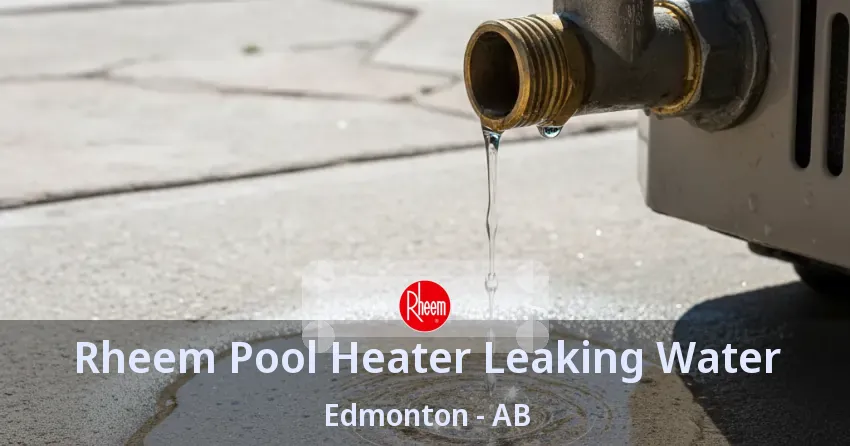
Can a leaking pool heater damage the equipment around it?
Yes, and the damage grows the longer the leak continues. Constant moisture rusts the cabinet and burner tray, corrodes screws and brackets and leaves mineral crust on fittings. Water that reaches the control board, wiring or switches can cause shorts, flickering displays and faults that come and go. Dripping onto the pad can undermine its edges, and a wet area becomes a slipping hazard for anyone working near the equipment. Chemically treated pool water is harder on metals than plain water. Even a slow leak is worth reporting early. Keep the heater off until it is checked, since water and electricity do not mix.
How do the pump and filter affect a pool heater?
Think of the pump and filter as the heater’s support crew. When the filter is overdue for cleaning, pressure builds and flow falls, and the first thing to notice may be a heater that refuses to fire. Variable-speed pumps add another twist: at low speed they may not move enough water to satisfy the heater’s switch, so the schedule needs a minimum heating speed. Pool owners can help by cleaning baskets, backwashing or cleaning cartridges on schedule and telling us about any gauge readings that look different from normal.
Why does a heat exchanger develop a leak?
Confirming the exchanger is the source takes care, because many drips are only fittings or headers. We isolate the heater, pressurize the water side and watch where moisture appears, then open the combustion area and inspect the tubes. If the exchanger is breached, the decision is financial and practical: is a replacement exchanger available for this model, how does its price compare with a new heater, and what shortened its life in the first place? Fixing that cause, usually water balance or freeze protection, is what keeps a second failure from following.
What will a technician do when servicing a pool heater?
Each visit opens with a discussion of the symptoms you have seen, followed by a look at the heater’s display, history and surroundings. The technician then checks power and water flow, inspects the cabinet for leaks, scale, corrosion and pests, and tests the controls and safety switches. On gas models that includes cleaning the burner area, testing ignition and flame signals and examining the venting. Heat pumps get coil, fan and electrical checks. The visit ends with a full heating cycle to confirm the unit lights, runs and stops as intended, and you receive a summary of findings.
How does a technician find the exact source of a heater leak?
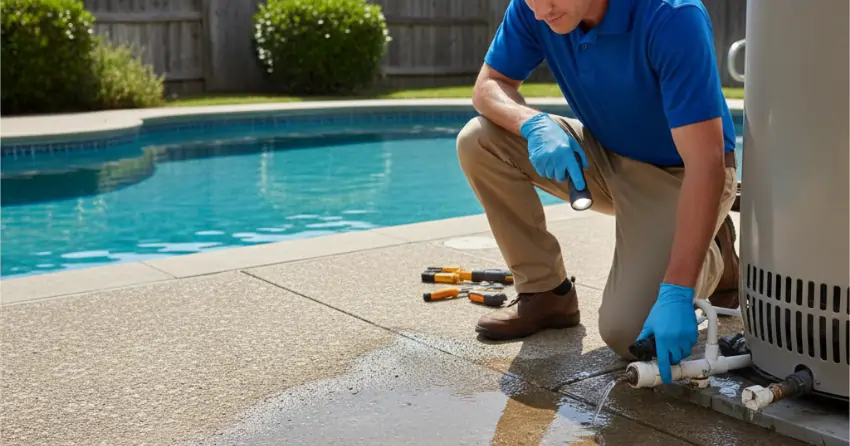
The technician first dries the area so new water stands out, then runs the pump with the heater off and watches where moisture appears. Comparing a dry start with a running pump separates a leak under pressure from condensation. Panels come off to follow the water upward to the header, the tube joints or the plumbing above, and a flashlight and paper towel help trace a slow seep. If the cause is hidden, the water side may be pressure-tested after isolating the heater with its valves. Photographs of the wet spot, taken before and after drying, help explain the findings to you and justify the repair that follows.
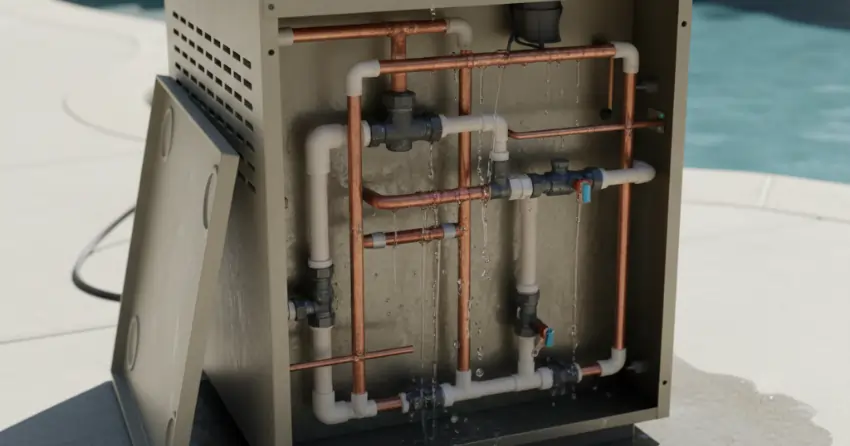
What is a bypass valve on a pool heater?
A bypass valve lets part of the pool’s water skip the heater so the unit receives the flow it was designed for. Modern pumps and filters can move more water than a heater can accept, and too much flow wears the exchanger and can rattle internal parts. Some heaters include an internal bypass, while others rely on a valve added to the plumbing. The setting should follow the manufacturer’s flow range, not a guess. Too much bypass starves the heater of water and slows heating, while too little pushes flow beyond its limit.
How long does a pool heater repair take?
Many pool heater repairs are finished in a single visit, particularly when the cause is something like a dirty flame sensor, a clogged flow path, a worn igniter or a tripped safety. Others depend on a part that has to be ordered, which stretches the job across two visits. Diagnosis itself takes time, because the technician needs to watch the heater run through its sequence and test each stage. Older or less common models may need extra searching for parts. Ask for an honest estimate of the visit itself and of any waiting for parts.
What should be kept clear around your pool heater?
It is easy to forget the heater when planning landscaping, fences or storage sheds, yet those additions often cause problems later. A hedge that has grown against a heat pump chokes its airflow. A fence built close to a gas heater can trap exhaust. Chemical containers stored on the pad release fumes that corrode metal. We walk around the unit when we visit and note anything that crowds it. If you are building a deck, wall or shed nearby, check the clearances first.
How do you decide between repairing and replacing a pool heater?
The decision rests on a few questions. How old is the heater, and how often has it needed repairs? What failed: an inexpensive part, or the heat exchanger or compressor that makes up much of the unit’s value? Are parts still available? Is it efficient and sized correctly for your pool? A single modest repair on a heater that otherwise runs well is usually sensible. Repeated failures, a leaking exchanger, heavy corrosion or a repair that approaches the cost of a new unit all point toward replacement.
Know the price before work starts
We agree on the scope and the price before any work begins, and we check in with you if we find something that changes the plan. Request your quote for pool heater leak repair and see exactly what is included for your home.
