




























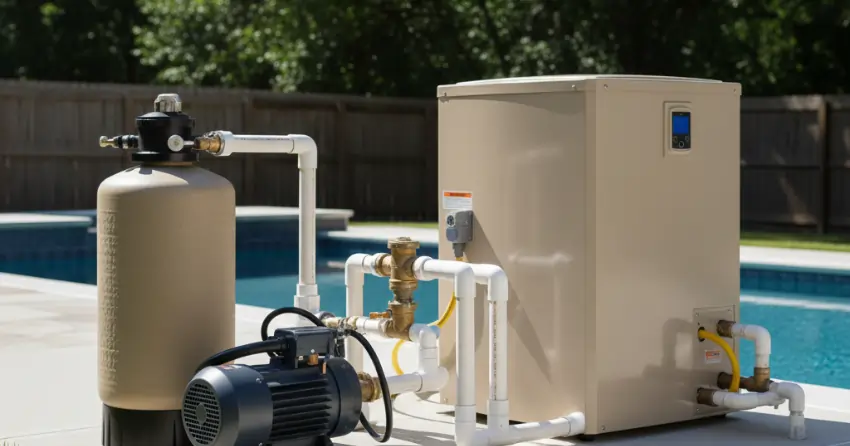
A pool heater never works alone. It depends on the pump, the filter, the valves and the pipes around it, and it reacts badly to water that is out of balance. That wider view is why a thorough diagnosis rarely stops at the heater cabinet. For readers in Edmonton searching for “Rheem pool heater”, the answers below explain pool heater service and repair in that bigger context, so you know what a careful visit really covers.
What is the heat exchanger in a pool heater?
The heat exchanger is the part that transfers heat into the pool water, and it is the heart of every heater. In gas units it is a set of finned tubes sitting above the burners. In heat pumps it is a corrosion-resistant coil or tube bundle that the hot refrigerant gas passes around. In electric heaters the elements play the same role. Because pool water, chemicals and heat all meet here, it is the component most affected by poor water balance. Scale, corrosion and freezing can each damage it, so a heater often lives only as long as its exchanger does.
What power and fuel does each kind of pool heater need?
Each type draws on different resources. Gas heaters burn natural gas or propane, but they also need a small electrical supply for the control board, igniter, sensors and sometimes a blower, so a power outage stops them. Heat pumps run on electricity and usually need their own circuit, with a fan and a compressor working whenever they heat. Electric resistance heaters use elements that draw large amounts of power. Solar systems use sunshine and only need the pool pump to move water through the panels. Knowing which one you have makes it easier to describe the problem when you search for “Rheem pool heater” help, and tells you which utility to check first.
How do you pick the right heater capacity for a pool?
We start with the surface of the water, not its volume, because heat is lost mostly at the top. Then we ask how the pool is used. If you want quick warm-ups on cool evenings, you need more output than someone who maintains one temperature all summer. Wind exposure, shade, a solar cover and even the temperature of the nights count too. Plumbing, gas line or electric supply must also handle the larger unit, so sizing up is not always as simple as ordering the bigger model. A short site visit gives a clearer answer than any chart.
What does a pool heater installation involve?
A heater installation begins with choosing the location and checking clearances, the pad, the gas or electrical capacity and the plumbing route. The crew then sets the heater level on a pad, connects pipework with unions and a bypass or check valve as required, and brings in the fuel or power. Gas lines, electrical circuits and vents are installed by qualified trades to the local code, often with a permit and inspection. The final stage is start-up: priming the pump, checking for leaks, setting the thermostat, observing the first heating cycle and explaining the controls to you.
Why does a pool heater depend on the pump and filter?
Think of the pump and filter as the heater’s support crew. When the filter is overdue for cleaning, pressure builds and flow falls, and the first thing to notice may be a heater that refuses to fire. Variable-speed pumps add another twist: at low speed they may not move enough water to satisfy the heater’s switch, so the schedule needs a minimum heating speed. Pool owners can help by cleaning baskets, backwashing or cleaning cartridges on schedule and telling us about any gauge readings that look different from normal.
How long can a pool heater be expected to keep working?
A pool heater can last many seasons when it is installed correctly and cared for, but there is no fixed lifespan. Water chemistry is the biggest factor: balanced water protects the exchanger, while acidic or hard water attacks it. Usage, climate, how well the unit is shielded from weather and pests, regular servicing, freeze protection and the quality of the original installation all play a part. Gas, electric and heat pump models wear differently. When repair needs begin to pile up, comparing repair cost with the value of a new unit is a sensible next step.
How long does it take a heater to warm a pool?
Warm-up time depends on the size of the pool, how many degrees you are raising it, the heater’s output and how much heat is escaping. A gas heater with plenty of capacity can warm a pool in a day or so, while heat pumps work more slowly and steadily, sometimes over several days from a cold start. Wind, night air and an uncovered surface all slow things down. A good cover helps more than most people expect. The manufacturer’s sizing information gives an estimate for your pool, but real conditions always make some difference.
How should you set the thermostat on a pool heater?
Set it to the temperature you want to swim in, not higher. A higher setting does not make the heater warm the water faster; it only keeps the burner or compressor running for longer. Many heaters read the water as it enters the heater, so the pump must be running for the reading to be accurate. Make small, planned changes rather than big swings, and lower the setting or switch the heater off when nobody will swim for several days. Some models have separate pool and spa settings. Give the water time to rise before deciding something is wrong, since larger pools change temperature slowly.
What questions should you ask a pool heater repair company?
Look for a company that works on your type of heater and is willing to explain its process. Ask whether the technicians handle gas, electrical and plumbing aspects or involve other trades, how diagnosis is charged and whether estimates are given in writing before work begins. A good technician asks questions about symptoms, wants to see the model number and explains findings in plain terms. Be cautious about anyone who recommends replacement without testing, will not put the scope in writing or pressures you to decide on the spot.
Fair advice, whatever you decide
Sometimes the right call is a small fix, sometimes a bigger job and sometimes nothing at all. We tell you which one applies to your pool heater and why. Ask Gas Fireplace Edmonton for advice and decide in your own time.
