

































A working gas fireplace adds warmth and atmosphere to a room with almost no effort, which is why it is so frustrating when it stops cooperating. Before you book anything, it helps to understand what is going on inside the unit. This page collects what homeowners in Edmonton want to know after searching “service a gas fireplace”, with clear answers about gas fireplace servicing, the safety basics and the routine care that keeps a gas fireplace dependable.
What happens inside a gas fireplace when you switch it on?
A gas fireplace works by sending a measured flow of gas to a burner, where a pilot flame or an electronic igniter lights it behind a glass front or screen. A control valve decides how much gas reaches the burner, and a safety sensor closes that valve if no flame is detected. On most models, a vent carries exhaust outdoors and brings in fresh air for combustion. Ceramic logs, stones or glass media sit on top of the burner to shape the flames. A wall switch, thermostat or remote tells the valve when to open, which is why the fire responds within seconds of the button being pressed.
Is carbon monoxide a concern with your gas fireplace?
Yes, a gas fireplace can produce carbon monoxide if the gas does not burn cleanly or the exhaust cannot leave the house properly. A blocked vent, a damaged gasket, logs knocked out of position or a burner clogged with debris can all contribute. Carbon monoxide has no color or smell, so you will not notice it on your own. Keep working carbon monoxide alarms on each level of the home and near bedrooms, test them regularly and have the fireplace serviced on a schedule. If an alarm sounds, get everyone outside into fresh air and call 911 from there.
How can you tell whether the flames in a gas fireplace look healthy?
Healthy flames in most gas fireplaces are steady, yellow-orange across the top and blue near the burner, with an even height from side to side. Many models are designed to show lazy yellow flames for a natural look, so color alone is not a warning sign. What deserves attention is a change: flames that suddenly turn tall and smoky, lift off the burner, lean hard in one direction or shrink to a low blue strip. Weak flames can come from low gas pressure, a flame-height setting turned down or a clogged burner. If you notice soot, a strange odor or a flame that looks different from last season, book a check.
Why won’t my gas fireplace light?
A gas fireplace usually refuses to light because of a power, signal or ignition problem rather than anything dramatic. Start with the safe checks: replace the batteries in the remote and, if your model has one, in the battery pack or receiver; confirm the wall switch is on; and make sure the home’s gas service is working by checking that another gas appliance lights. If the unit runs on household power, look at the breaker. Beyond that, the cause is often a dirty pilot, a worn sensor or an igniter that no longer sparks, and those parts belong to a qualified gas technician. If you smell gas at any point, leave and call the utility from outside.
What tools are used to service a gas fireplace properly?
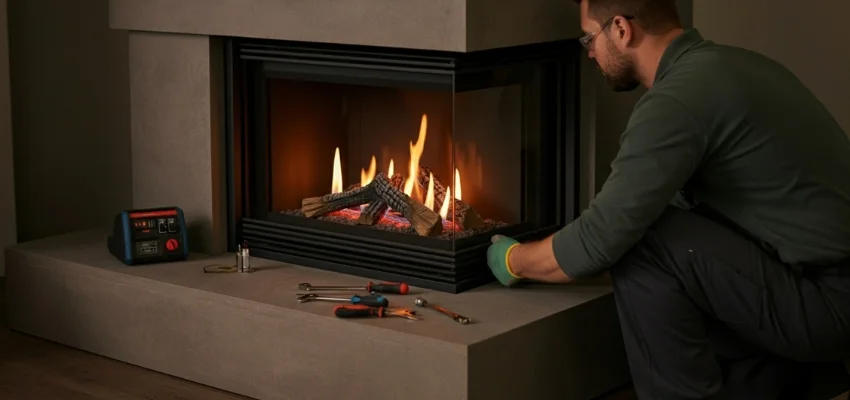
A proper service relies on a handful of specialized tools. A manometer measures gas pressure at the valve, a multimeter checks the output of the thermocouple or thermopile and the voltage reaching the ignition, and an electronic gas detector and leak solution confirm the fittings are tight. A vacuum with fine attachments, soft brushes and a glass cleaner made for fireplaces handle the cleaning. Some technicians also carry a carbon monoxide meter to check the air near the fireplace while it runs. If a company plans to service your fireplace without testing tools, ask how it confirms the unit is safe.
How long does a gas fireplace service take?
Most of our service visits run about an hour from setup to final test, and the cooling time is what people forget. Glass on a fireplace that ran that morning can still be hot enough to burn, so we ask homeowners to leave it off for a few hours beforehand. Units packed with dust, logs that need resetting or a gasket that has to be replaced add time. For repairs, we give an estimate once we know the fault. If a part is not on the truck, we make the fireplace safe, order the correct part and book a return visit.
Can you service a gas fireplace yourself?
Only partly. The cleaning and safety testing that make up a real service involve gas parts and need tools most homeowners do not own, such as a pressure gauge, a meter for sensor output and a gas leak detector. What you can do is the outside work: brush dust from the grilles when the fireplace is cold, swap remote batteries, keep the hearth clear and glance at the outdoor vent cap. If you were hoping to “service a gas fireplace” on your own, think of those tasks as upkeep between visits and leave the burner, pilot, valve, glass removal and testing to a technician.
Do homes with a gas fireplace need more than one carbon monoxide alarm?
Alarms belong near bedrooms and on every floor, and we ask about them at nearly every gas fireplace visit because they are the only reliable way to know if exhaust ends up indoors. A well-kept, properly vented fireplace should not cause a problem, but vents can be blocked by nests and seals can fail without warning. In the homes we visit, the gaps we see most are alarms missing from bedroom hallways, units with dead batteries and alarms well past their replacement date. Pressing the test button once a month takes seconds. Combination smoke and carbon monoxide alarms are a convenient choice where only one device fits.
Which questions should you ask before booking gas fireplace servicing?
A few direct questions reveal a lot about a gas fireplace technician:
- What does the visit include, and is a leak check part of it?
- Do you work on this make and fuel type, and can you get parts for it?
- How will you show me what you found, and can I see any old parts?
- Is the price for the visit only, or will diagnosis and parts be extra?
Clear, specific answers are a good sign. Vague replies or reluctance to explain the safety steps are reasons to keep looking.
Get ready for the season ahead
The weeks before heavy use are the calmest time to deal with your gas fireplace. Appointments are easier to find and any repair can be planned without pressure. Book gas fireplace servicing in Edmonton while your calendar still has room.
