




























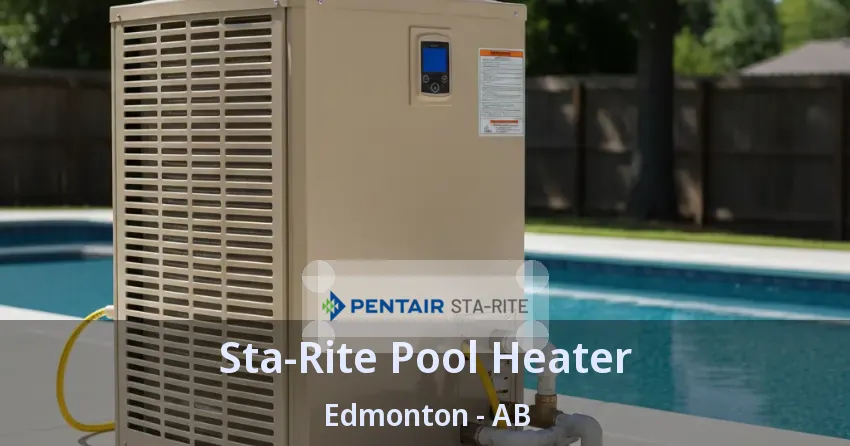
Every pool heater does the same basic job, whatever fuel it uses: water leaves the pool, passes the pump and filter, picks up heat and returns a little warmer. When anything in that loop misbehaves, the heater stalls, locks out or never starts. If “Sta-Rite pool heater” is what brought you here, the answers below explain pool heater service and repair for pools around Edmonton in everyday language, including the checks homeowners can make safely and the jobs that belong to a trained technician.
What power and fuel does each kind of pool heater need?
Each type draws on different resources. Gas heaters burn natural gas or propane, but they also need a small electrical supply for the control board, igniter, sensors and sometimes a blower, so a power outage stops them. Heat pumps run on electricity and usually need their own circuit, with a fan and a compressor working whenever they heat. Electric resistance heaters use elements that draw large amounts of power. Solar systems use sunshine and only need the pool pump to move water through the panels. Knowing which one you have makes it easier to describe the problem when you search for “Sta-Rite pool heater” help, and tells you which utility to check first.
What size pool heater do I need?
Heater size is measured in BTU output for gas and electric models, and in a similar capacity rating for heat pumps. The right number depends on pool surface area, how many degrees you want to raise the water, how much wind the pool sees and whether a cover is used. A pool heated only for weekends needs more capacity than one kept warm all season. An undersized heater runs constantly and still struggles, while an oversized one costs more up front and may cycle often. The rating plates and sizing charts supplied by manufacturers guide the choice, and a technician can apply them to your site.
Can I keep using a pool heater that is acting up?
Our rule is simple: if it involves fuel, fire, power or water in the wrong place, shut it down. If it is only about comfort, such as a pool that heats slowly, the heater can often keep running until we arrive. The danger in carrying on is that safety devices can mask a worsening problem. A heater that restarts after each reset is still reporting trouble, and ignoring it may damage the exchanger or board. When in doubt, turn it off, note what you saw and call us with the details.
Why does a pool heater depend on the pump and filter?
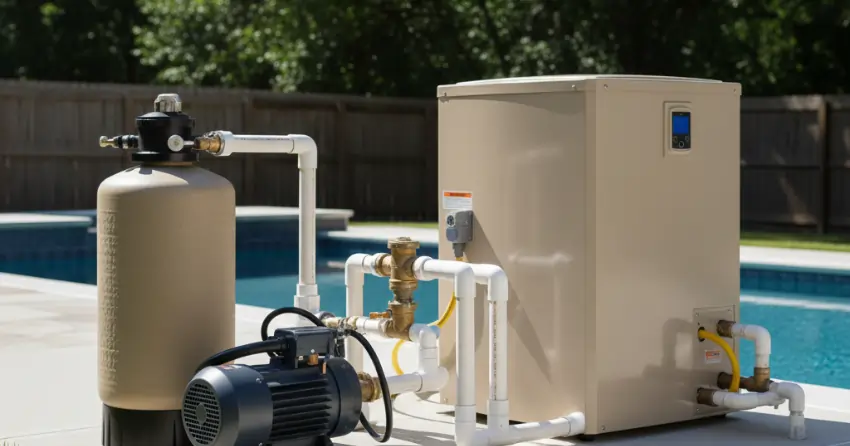
Think of the pump and filter as the heater’s support crew. When the filter is overdue for cleaning, pressure builds and flow falls, and the first thing to notice may be a heater that refuses to fire. Variable-speed pumps add another twist: at low speed they may not move enough water to satisfy the heater’s switch, so the schedule needs a minimum heating speed. Pool owners can help by cleaning baskets, backwashing or cleaning cartridges on schedule and telling us about any gauge readings that look different from normal.
What does a pool heater service visit include?
Think of it as a physical for your heater. We inspect, clean, measure and test, and then we tell you what we found. Typical steps are removing the access panels, checking connections for heat damage, clearing debris and insect nests, verifying water pressure and temperature rise, and watching the start-up sequence from beginning to end. If a part is close to failing, we point it out with the reason, so you can decide whether to replace it now or monitor it. A thorough visit leaves you knowing the heater’s condition, not just that it is running.
How long do pool heaters last?
It helps to think of a heater as a collection of parts with different lives. Igniters, sensors, switches and boards may be replaced several times, while the exchanger tends to decide whether the whole unit is worth keeping. Owners who test their water and winterize properly often get more seasons out of the same heater than neighbors who do not. A unit parked in a damp, chemical-laden or leaf-filled spot ages faster. If yours is showing rust, repeated leaks or scale and parts are hard to find, it is time for a conversation about replacement.
Why is my pool slow to heat up?
Think in degrees per day rather than hours. Water is slow to change temperature, so even a strong heater needs time to lift a full pool, and a cool, windy night can undo part of the day’s progress. We usually advise starting early, using a cover whenever the pool is idle and expecting heat pumps to need patience at the start of the season. If your pool seems slower than it used to be, the heater may be scaled, restricted or partially bypassed, and we can measure its output to find out.
How often does a pool heater need professional service?
We suggest one thorough visit each year, timed ahead of the season, with extra attention if the heater runs through the winter or the pool sits under trees. Heaters that run constantly collect scale and wear their ignition parts faster than those used on weekends. If you have noticed anything unusual since the last service, mention it when you book, since a small symptom is a good reason to come sooner. For heat pumps, we also like to look at the coil after any season of heavy pollen, leaves or lawn clippings.
How should you set the thermostat on a pool heater?
Set it to the temperature you want to swim in, not higher. A higher setting does not make the heater warm the water faster; it only keeps the burner or compressor running for longer. Many heaters read the water as it enters the heater, so the pump must be running for the reading to be accurate. Make small, planned changes rather than big swings, and lower the setting or switch the heater off when nobody will swim for several days. Some models have separate pool and spa settings. Give the water time to rise before deciding something is wrong, since larger pools change temperature slowly.
What happens after you reach out
We confirm the details of your home, suggest a visit window and explain what pool heater service and repair will involve. On the day, the technician checks in before starting and walks you through the results at the end. Get started with a quote from Gas Fireplace Edmonton.
