




























Pool heaters work quietly out of sight for most of the year, which makes it easy to forget they contain burners or heating elements, pressure switches, sensors and a heat exchanger that all have to cooperate. When one of them does not, owners in Edmonton often begin with a search such as “Sta-Rite pool heater”. The questions below cover pool heater service and repair in plain terms, with the safety points that matter whenever gas, electricity and water share the same cabinet.
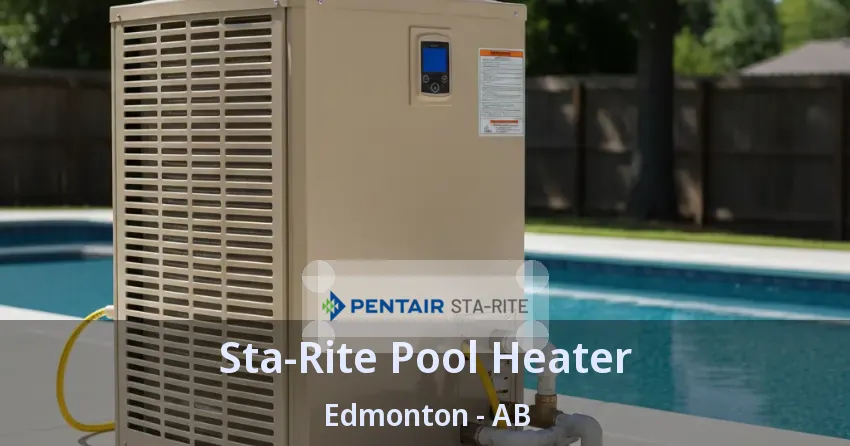
How does a pool heater work?
Think of the heater as a heat exchanger with a safety system wrapped around it. Water comes in cool, gets warmed as it travels through tubes or chambers, and leaves a few degrees higher, so a pool changes temperature slowly as the same water makes many trips. Controls watch three things: whether water is flowing, how warm it is and whether the heat source is behaving. If any reading falls out of range, the unit pauses or locks out. That is why a heater can look dead when the real trouble is a clogged filter or a pump that is not moving water.
What does a pool heater heat exchanger do?
The heat exchanger is the part that transfers heat into the pool water, and it is the heart of every heater. In gas units it is a set of finned tubes sitting above the burners. In heat pumps it is a corrosion-resistant coil or tube bundle that the hot refrigerant gas passes around. In electric heaters the elements play the same role. Because pool water, chemicals and heat all meet here, it is the component most affected by poor water balance. Scale, corrosion and freezing can each damage it, so a heater often lives only as long as its exchanger does.
Is it safe to run a pool heater that has a fault?
Our rule is simple: if it involves fuel, fire, power or water in the wrong place, shut it down. If it is only about comfort, such as a pool that heats slowly, the heater can often keep running until we arrive. The danger in carrying on is that safety devices can mask a worsening problem. A heater that restarts after each reset is still reporting trouble, and ignoring it may damage the exchanger or board. When in doubt, turn it off, note what you saw and call us with the details.
Why does a pool heater depend on the pump and filter?
Think of the pump and filter as the heater’s support crew. When the filter is overdue for cleaning, pressure builds and flow falls, and the first thing to notice may be a heater that refuses to fire. Variable-speed pumps add another twist: at low speed they may not move enough water to satisfy the heater’s switch, so the schedule needs a minimum heating speed. Pool owners can help by cleaning baskets, backwashing or cleaning cartridges on schedule and telling us about any gauge readings that look different from normal.
How much does a heater extend the swimming season?
A heater lets you choose the water temperature instead of waiting for the sun, which can stretch the swimming season at both ends. How far depends on the local climate, the pool’s size and exposure, the type of heater and whether you use a cover. Gas heaters can bring the water up for an evening swim, while heat pumps and solar tend to hold temperature over a longer stretch. A heater cannot overcome cold air and wind alone, since the pool loses heat constantly, so the cover and shelter shape the results. Think about when you want to swim before choosing equipment.
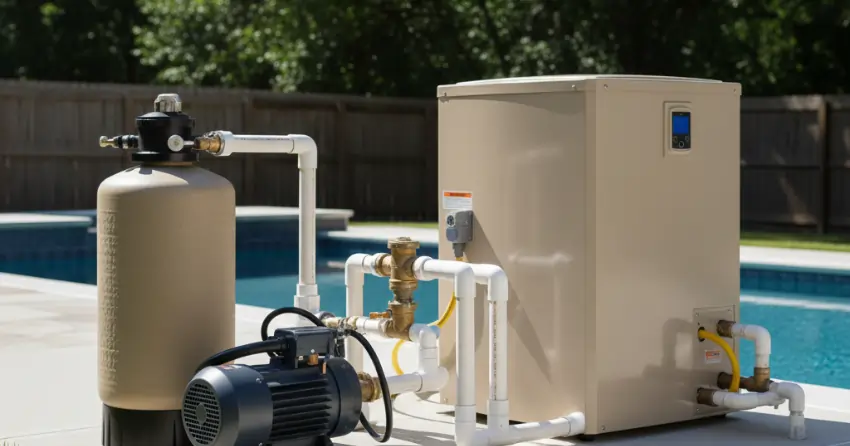
How long can a pool heater be expected to keep working?
A pool heater can last many seasons when it is installed correctly and cared for, but there is no fixed lifespan. Water chemistry is the biggest factor: balanced water protects the exchanger, while acidic or hard water attacks it. Usage, climate, how well the unit is shielded from weather and pests, regular servicing, freeze protection and the quality of the original installation all play a part. Gas, electric and heat pump models wear differently. When repair needs begin to pile up, comparing repair cost with the value of a new unit is a sensible next step.
How often should a pool heater be serviced?
We suggest one thorough visit each year, timed ahead of the season, with extra attention if the heater runs through the winter or the pool sits under trees. Heaters that run constantly collect scale and wear their ignition parts faster than those used on weekends. If you have noticed anything unusual since the last service, mention it when you book, since a small symptom is a good reason to come sooner. For heat pumps, we also like to look at the coil after any season of heavy pollen, leaves or lawn clippings.
How should you set the thermostat on a pool heater?
Set it to the temperature you want to swim in, not higher. A higher setting does not make the heater warm the water faster; it only keeps the burner or compressor running for longer. Many heaters read the water as it enters the heater, so the pump must be running for the reading to be accurate. Make small, planned changes rather than big swings, and lower the setting or switch the heater off when nobody will swim for several days. Some models have separate pool and spa settings. Give the water time to rise before deciding something is wrong, since larger pools change temperature slowly.
How do I choose a pool heater technician?
Look for a company that works on your type of heater and is willing to explain its process. Ask whether the technicians handle gas, electrical and plumbing aspects or involve other trades, how diagnosis is charged and whether estimates are given in writing before work begins. A good technician asks questions about symptoms, wants to see the model number and explains findings in plain terms. Be cautious about anyone who recommends replacement without testing, will not put the scope in writing or pressures you to decide on the spot.
Booking takes a few clicks
Use the short form to tell us what you need and when you are available. We confirm the details with you before anything is scheduled. Open the quote form and Gas Fireplace Edmonton will be in touch about pool heater service and repair for your home.
