

































Think of this page as a reference to come back to whenever something about your hot water seems off. It collects the questions people ask most about tank and tankless heaters, from noises and temperature swings to flushing, relief valves and replacement planning. Reached it from Edmonton with a search for “tankless hot water maintenance”? You will find practical detail about tankless hot water maintenance here and no pressure to book anything.
How does a tankless water heater work?
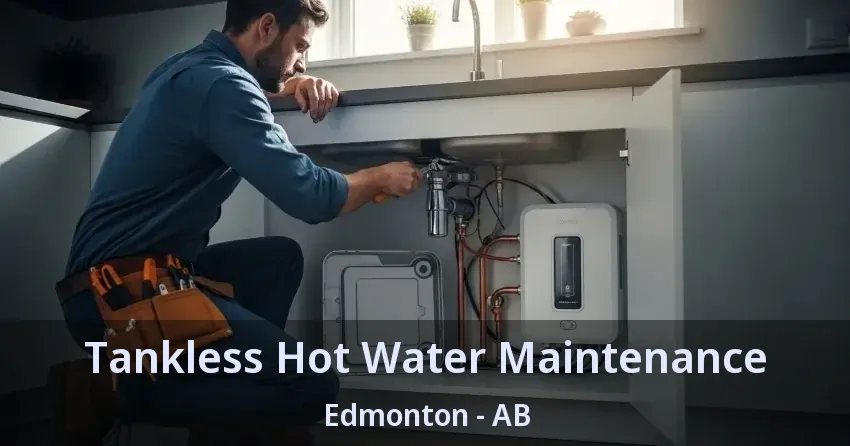
When a hot tap opens, a flow sensor inside the tankless unit notices water moving and tells the control board to start heating. On a gas model, a fan pushes air through, an igniter lights the burner and the flames heat a metal exchanger that the water passes through. Electric versions use powerful elements instead. A temperature sensor and a modulating valve adjust the heat so the outlet stays near your setting even when flow changes. When the tap closes, the unit shuts down and cools. Because nothing is stored, the system only works while there is demand, which is why minimum flow matters.
Is a tankless hot water system really maintenance free?
No, and the idea probably comes from the absence of a tank to flush. A tankless system has fewer places for sediment to settle, yet its compact exchanger is far more sensitive to scale. Add inlet filters, condensate drains, igniters, fans and venting that all need occasional attention, and the system turns out to be easy to live with rather than free of upkeep. Think of maintenance here as a short annual routine instead of constant tinkering. Anyone who tells you “tankless hot water maintenance” is not needed should explain how scale and grit will be handled instead.
Is your tankless water heater too small for your household?
Hot water that disappears after a few minutes means the supply is smaller than the demand. In a tank, sediment may have displaced part of the volume, a broken dip tube may be sending cold water to the top, or a failing lower element may leave half the tank unheated. A household that has grown, or has added a soaker tub or an extra bathroom, can simply outgrow the capacity. Tankless models can fall short when scale restricts flow or when several fixtures run together. A technician can test the unit, measure flow and tell you whether the issue is a fault or a sizing limit.
Why does a tankless unit need a descaling flush?
Descaling clears mineral deposits from the heat exchanger. The technician shuts off the unit’s power and gas, closes the water valves and connects hoses to the service ports. A small pump then circulates a descaling solution, often vinegar based or approved by the manufacturer, through the exchanger for a set time. Afterward the system is rinsed with clean water, the inlet filter is cleaned and the valves are reopened. The unit is then restarted and tested. The flush needs isolation valves with service ports, so units installed without them may need those added first.
How do condensate drains and neutralizers factor into tankless maintenance?
High-efficiency tankless units cool their exhaust so much that water vapor condenses inside the unit. That condensate is slightly acidic and leaves through a small drain line, sometimes passing through a neutralizer cartridge first. If the line clogs, the unit may shut down or leak, and a spent neutralizer lets acidic water reach drain pipes. During maintenance the technician checks that the line is clear, sloped and connected, and replaces the cartridge media when it is used up. If your unit is a condensing model, ask that this step is included.
How frequently does your tankless water heater need maintenance?
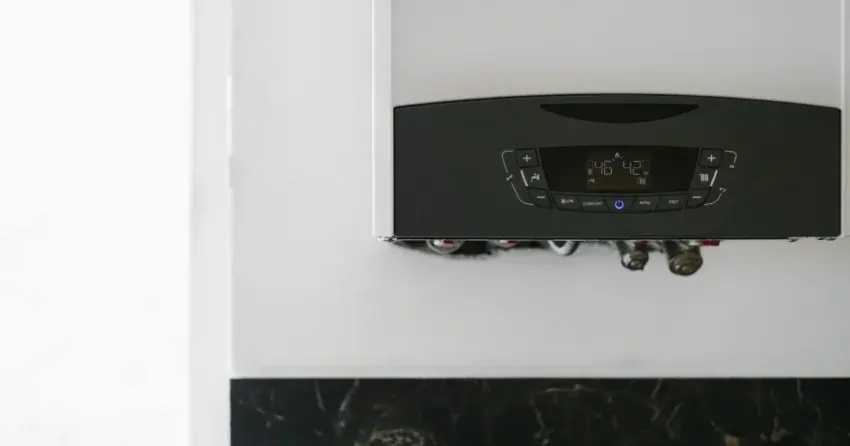
There is no single interval that suits every home, since water hardness and usage decide how fast buildup accumulates. A couple in a soft-water area may stretch the gap, while a busy family on very hard water could see scale in a tankless unit sooner than expected. As a starting point, many manufacturers suggest annual attention, and that rhythm is easy to remember. Pair it with a quick tour of the unit twice a year to look for drips, rust or crusty deposits. If the previous owner left no record, a first thorough visit sets the baseline for everything after it.
How do you know when a tankless unit needs descaling?
Treat the manufacturer’s annual suggestion as a starting point, and tighten it in tougher conditions. Scale forms because heated water drops its minerals, and the more minerals in your supply, the faster the exchanger narrows. Begin with a yearly flush, then look at what comes out: heavy flakes mean the interval is too long, while clean rinse water means you are fine. Some owners fit a scale inhibitor or softener to extend the gap. Because filters can clog independently, a quick screen cleaning between flushes often helps too.
What should the household do about hot water during a repair or installation?
Plan for a gap, and it will feel minor. Heat a kettle or a pot for washing dishes, take a quick wash with warm water from the stove and save full showers for a friend’s home or a gym if the work spans a day. Fill a few containers with cold water ahead of time if the main supply will be shut off. Ask the technician when the water will be turned back on and when the heater is expected to recover. After a tank is refilled, hot water can take a while to build up, so patience is part of the process.
How does local water quality change water heater care?
Water quality varies from one neighborhood to the next, and hardness is the part that affects heaters most. Dissolved minerals drop out as water heats, forming sediment in tanks and scale in tankless exchangers. The harder the water, the faster that happens, which can mean shorter intervals between flushes, quicker wear on anode rods and noisier operation. Your water supplier can usually tell you the hardness level, and a simple test kit gives a quick indication. If your water is hard, a softener or a scale-control device on the supply line can reduce buildup, and a technician can recommend options.
Plain answers about your tankless water heater
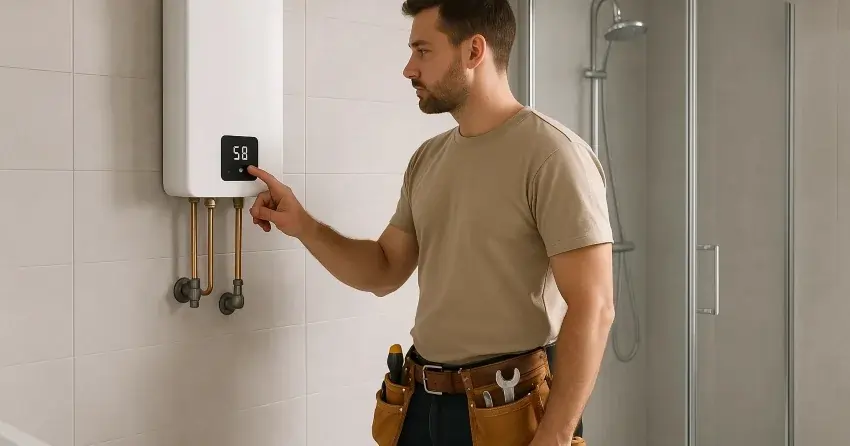
We would rather explain one thing clearly than list ten things you do not need. Ask us what matters for your home in Edmonton and we will give you a straight reply. Get in touch with Gas Fireplace Edmonton whenever you are ready.
