

































Some homes have a tall storage tank in the utility room, others a slim tankless unit mounted on the wall, and both can leave you without hot water at the worst moment. This page was written for homeowners in Edmonton who typed “tankless water heater installation” and want clear answers before booking anyone. It covers how each type heats water, which problems are common, what tankless water heater installation includes and which small checks are safe for you to make yourself.
Do water heaters run on gas or on electricity?
Both. Many homes have a natural gas heater, some use propane and others run on electricity with heating elements. Gas units burn fuel in a chamber and vent exhaust outdoors, so they need a clear flue or vent pipe and a steady supply of combustion air. Electric units have no flame and no exhaust, but they depend on a correctly sized circuit, working elements and sound thermostats. The rating plate on the side of the unit states the fuel type. That detail matters, because the parts, safety checks and the tradesperson who handles the connections differ between a gas model and an electric one.
What are the steps of a water heater installation?
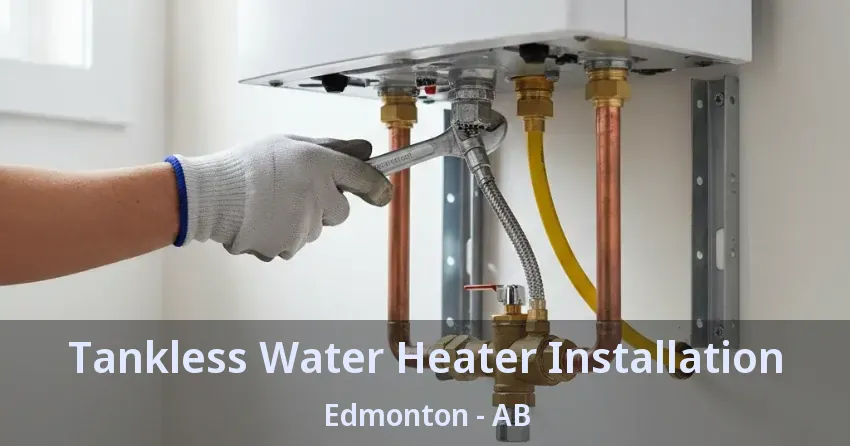
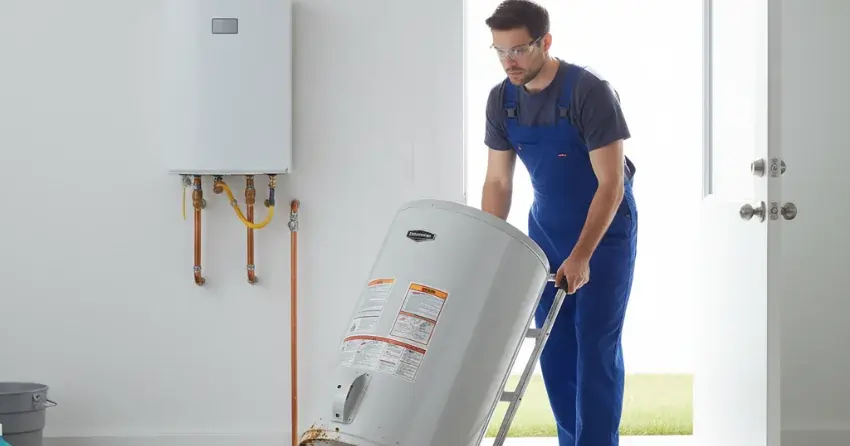
Installation begins with confirming the new unit suits your fuel, space and demand. On the day, the technician shuts off power or gas and the water supply, drains the old unit and disconnects it. The new heater is set in place, then water lines, the relief valve and discharge pipe, venting and fuel or electrical connections are made to match the instructions and local rules. Next the system is filled, purged of air, leak-checked and started. Controls are set, performance is verified and the old unit is removed. Gas and electrical connections are always made by trained technicians.
What shortens the life of a water heater?
Think in ranges rather than expiry dates. Many tank units give a decade or so of service, and many tankless units run well beyond that if their scale is kept in check. What shortens that range is neglect: heavy sediment, an exhausted anode rod, high water pressure, poor ventilation or constant overheating. What extends it is regular attention. Look at the serial number to estimate age, since manufacturers encode the build date in it. If the unit is old and needs another repair, it is reasonable to ask whether that money is better spent on a replacement.
What size of water heater suits your household?
Sizing starts with how your household really uses hot water. For a tank, the number to watch is the first-hour rating, which describes how much hot water the unit can supply in a busy hour, not just its gallon label. For a tankless unit, the key figure is flow rate: add the gallons per minute of the fixtures you expect to run together and compare that with what the unit can heat at your local incoming water temperature. Colder incoming water reduces output. Undersizing leaves you short, while oversizing wastes money, so a technician can calculate the match.
What should be decided before ordering a tankless unit?
Several choices shape the result. Capacity comes first, based on peak simultaneous flow and the winter inlet temperature. Next is condensing versus non-condensing, which affects efficiency, venting material and the need for a condensate drain. Then come fuel type, indoor or outdoor mounting, and whether you want a built-in recirculation option. Think about where the unit will hang, what the vent route looks like and whether the electrical supply is nearby. When you request “tankless water heater installation” quotes, ask each company which model it proposes and why, so the comparison is between equal choices.
What needs to be ready before a new water heater is installed?
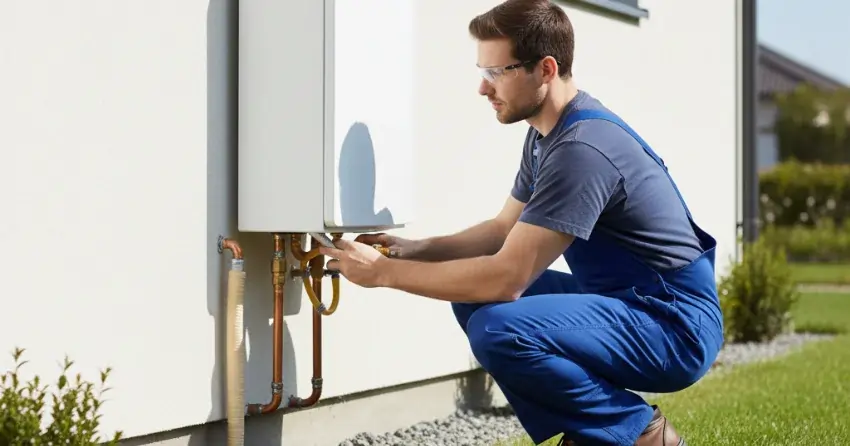
A new heater needs more than floor space. Confirm that the location has suitable clearances, a safe route for venting and a floor drain or a spot for the discharge pipe. Gas models need a gas line sized for the unit, and tankless gas models often need a bigger line than the old tank used. Electric models need adequate circuit capacity, and many tankless units need a nearby outlet to power the control board. Clear the area and protect nearby flooring. The installer will assess each of these during a pre-visit and tell you what to arrange.
What should you be shown at the end of a tankless installation?
Before the installer leaves, you should be walked through the display and settings, shown how to change the temperature and read an error code, and shown where the shutoff valves, filter and service ports are. Ask for the model and serial numbers, the manual and any commissioning notes, such as gas pressure and combustion readings. Ask when the first descaling should happen and what water conditions might change that. Confirm that the discharge or condensate drain is in place and that nothing is left leaking. A few minutes spent on this saves confusion months later.
Does a tankless water heater work with a recirculation loop?
A recirculation system keeps hot water moving through a loop of pipe, so it is waiting at the tap instead of cooling in the line. A small pump pushes it back toward the heater, often controlled by a timer, a thermostat or a button. The benefit is a shorter wait and less water going down the drain while you stand there. The tradeoffs include pump energy and extra heat loss from the pipes. Some tankless units have built-in recirculation or work with a separate kit. A technician can check your piping layout and advise whether a loop makes sense.
Will a technician work on any brand of water heater?
Brand matters less than model and age. A popular tank from a few years ago is easy to service because parts are stocked widely. A niche tankless model from a smaller maker, or something installed decades back, may need special-order components. The more precise your description, the better, so photograph the label and note the serial number. Ask whether the technician has serviced that line recently and can source parts without long delays. If a repair would involve scarce parts and an aging unit, a candid conversation about replacement is a sign of good service, not a sales trick.
Not sure where to start?
Start with whatever you noticed, even if it seems minor. A short description is enough for us to suggest the right kind of visit for your tankless water heater. Call (587) 853-6668 and the Gas Fireplace Edmonton team will guide you from there.
