




























Convenience is the reason most people choose gas: no logs to carry, no ashes to scoop and warmth at the touch of a switch. That convenience still depends on a valve, an ignition system, a vent and a handful of small parts that need occasional care. Homeowners in Edmonton who look up “Town & Country gas fireplace repair” usually want to know what is normal, what is not and when to call for help. The answers below cover gas fireplace troubleshooting and repair in practical terms, with safety notes wherever they matter.

Can a gas fireplace give off carbon monoxide?
It can, and that possibility is why we treat venting and flame quality as safety checks rather than cosmetic ones. A sealed direct-vent unit draws its air from outdoors and pushes exhaust back out, so room air stays separate as long as the glass seal and vent joints are sound. Trouble starts when a vent cap is blocked, a pipe joint separates or the flame is disturbed enough to burn poorly, which often shows up as soot. During service we inspect those points and watch how the fire burns. We also remind every household to keep carbon monoxide alarms working, because they catch what nobody can see.
Why does gas fireplace glass crack, and can it be replaced?
Fireplace glass usually cracks from heat stress, an impact or a problem with how it was mounted. A cold drink spilled on hot glass, a toy thrown against it, a frame that was overtightened or flames striking the glass from misplaced logs can all do it. Cracked glass should not be used, since the firebox is no longer sealed and the panel could fail further while hot. Replacement glass must be the heat-rated assembly specified for your fireplace, never ordinary window glass, and it needs a proper gasket seal. A “Town & Country gas fireplace repair” visit can confirm the right part and install it safely.
Why won’t my gas fireplace light?
A fireplace that will not light has a break somewhere in the chain of signal, spark, pilot and main burner, so we check those links in that order. A surprising number of no-start calls end with fresh batteries in a receiver hidden behind the lower panel. Next we watch for a spark or a glowing igniter; clicking with no flame often points to a dirty or misaligned igniter, or to gas not reaching the pilot. If the pilot lights but the burner never follows, the sensor or the valve may be at fault. Every step after the remote, the wall switch and the batteries involves gas components, so that part of the checking should be left to a technician.
Why is there a delay between pressing the button and the fire lighting?
A short delay is normal on many fireplaces with electronic ignition, because the system first proves the pilot before opening the main burner valve. That sequence often takes a few seconds and may include clicking. A delay that grows longer over time, many clicks before lighting or a soft whoomp when the burner catches suggests a problem: weak batteries, a dirty igniter or pilot, or a flame sensor that is slow to confirm the flame. On some remote systems, a weak handheld signal adds a pause too. Note how long the delay lasts and whether it has changed, and share that when you book a visit.
What should the flames in a gas fireplace look like?
Healthy flames in most gas fireplaces are steady, yellow-orange across the top and blue near the burner, with an even height from side to side. Many models are designed to show lazy yellow flames for a natural look, so color alone is not a warning sign. What deserves attention is a change: flames that suddenly turn tall and smoky, lift off the burner, lean hard in one direction or shrink to a low blue strip. Weak flames can come from low gas pressure, a flame-height setting turned down or a clogged burner. If you notice soot, a strange odor or a flame that looks different from last season, book a check.
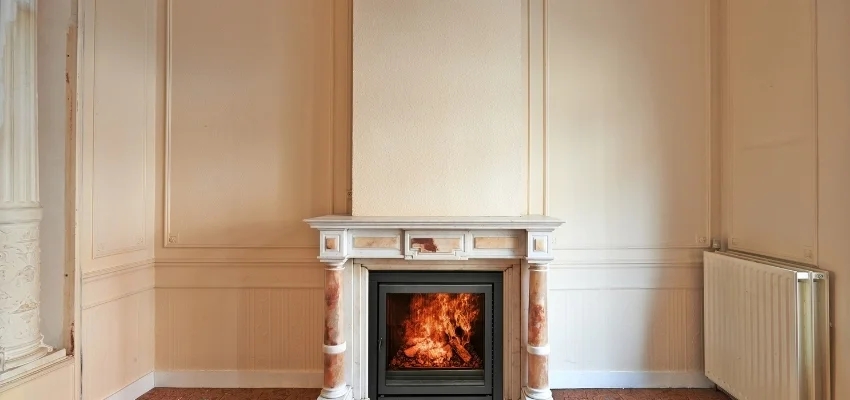
How is the white film cleaned off the glass of your gas fireplace?
Gas fireplace glass is cleaned with a cleaner made for fireplace glass and a soft cloth, once the fireplace is off and completely cool, to remove the white film that builds up inside. That cloudy film is a normal mineral deposit from burning gas, and ordinary household glass cleaners tend to smear it or leave residue that bakes on during the next fire. On sealed units, cleaning the inside means removing the glass front, and refitting it so the gasket seals evenly is part of keeping exhaust out of the room. Leave the inside of the glass to the yearly service and wipe only the outside yourself.
How often do homes in Edmonton have their gas fireplaces serviced?
A common guideline is to have a gas fireplace serviced once a year, ideally before you start using it regularly in the cooler months. Yearly service keeps the burner and pilot clean, confirms the safety controls work and catches vent problems early. Some homes need attention more often: fireplaces used daily through the season, homes with pets that shed heavily and units that have shown soot, odors or ignition trouble. A fireplace that is rarely used still benefits from a yearly look, since spiders, dust and nesting animals do not wait for the fire to run. Your owner’s manual may list its own schedule.
Is it safe to use a gas fireplace that needs repair?
Our advice is simple: if the problem involves flame, gas, glass or exhaust, the fireplace stays off. Those symptoms can mean incomplete combustion, a leak or a breach in the sealed firebox, and none of them are worth the risk. If the issue is purely about convenience, such as a remote that needs a second press or a blower that rattles, careful use until the visit is generally reasonable. Either way, keep children and pets away from the glass, test your carbon monoxide alarms and note what you observe, because those details help us pin down the cause.
Why hire a local company for gas fireplace service?
A local company is often the practical choice for gas fireplace work because it can come back easily if a part has to be ordered or a fault reappears. Many repairs take two visits, one to diagnose and one to install, and a short drive makes that simpler to schedule. Nearby technicians also get to know the fireplace styles common in surrounding neighborhoods, which can speed up diagnosis. Before booking, confirm that the company works in your area itself rather than passing the job along, and ask how follow-up questions are handled once the visit is over.
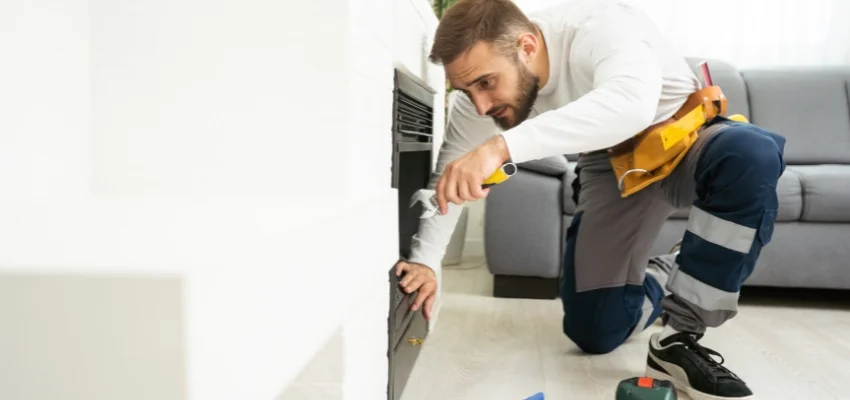
Managing a rental in Edmonton?
Tenants rely on things working, and owners want clear records. We coordinate access, keep the visit short where we can and send a plain summary afterward. Request gas fireplace troubleshooting and repair for your property and tell us how to reach the occupants.
