




























Whether your gas fireplace is new to you or has warmed the living room for many winters, doubts tend to creep in sooner or later. An odd smell, cloudy glass or a flame that looks different from last year is enough to make anyone wonder. For homeowners in Edmonton who typed “Town & Country gas fireplace repair”, this page offers calm, practical answers about gas fireplace troubleshooting and repair, along with the safety steps every household with a gas appliance should know.

What is the difference between a propane and a natural gas fireplace?
The main difference is the fuel supply, and a fireplace can switch fuels only with the manufacturer’s conversion kit: natural gas arrives through a utility line, while propane is stored in a tank on the property. The fireplaces look alike, but each one is set up for a single fuel, with burner openings and pressure settings to match. Running a unit on the wrong fuel is unsafe, so a qualified gas technician must fit the conversion parts, and not every model can be converted. Both fuels carry an added sulfur-like smell. Propane is heavier than air and can pool in low spots, so any gas odor means leaving the home and calling your gas utility or propane supplier from outside.
Why is there a delay between pressing the button and the fire lighting?
A short delay is normal on many fireplaces with electronic ignition, because the system first proves the pilot before opening the main burner valve. That sequence often takes a few seconds and may include clicking. A delay that grows longer over time, many clicks before lighting or a soft whoomp when the burner catches suggests a problem: weak batteries, a dirty igniter or pilot, or a flame sensor that is slow to confirm the flame. On some remote systems, a weak handheld signal adds a pause too. Note how long the delay lasts and whether it has changed, and share that when you book a visit.
Why does gas fireplace glass crack, and can it be replaced?
Fireplace glass usually cracks from heat stress, an impact or a problem with how it was mounted. A cold drink spilled on hot glass, a toy thrown against it, a frame that was overtightened or flames striking the glass from misplaced logs can all do it. Cracked glass should not be used, since the firebox is no longer sealed and the panel could fail further while hot. Replacement glass must be the heat-rated assembly specified for your fireplace, never ordinary window glass, and it needs a proper gasket seal. A “Town & Country gas fireplace repair” visit can confirm the right part and install it safely.
Why won’t my gas fireplace light?
A fireplace that will not light has a break somewhere in the chain of signal, spark, pilot and main burner, so we check those links in that order. A surprising number of no-start calls end with fresh batteries in a receiver hidden behind the lower panel. Next we watch for a spark or a glowing igniter; clicking with no flame often points to a dirty or misaligned igniter, or to gas not reaching the pilot. If the pilot lights but the burner never follows, the sensor or the valve may be at fault. Every step after the remote, the wall switch and the batteries involves gas components, so that part of the checking should be left to a technician.
Can the logs in your gas fireplace be moved or replaced?
Logs should go back exactly where the diagram puts them, because from our side placement is part of how the burner works, not decoration. The flame has to rise through gaps between the logs; if a log blocks that path, combustion suffers and soot follows within days. We often find logs that were shifted during cleaning, bumped when the glass came off or rearranged for a fuller look. Resetting them to the diagram usually fixes the flame on the spot. Ember material, glass beads and stones follow the same idea: they belong only where the manual says. When logs have cracked or started shedding fibers, we replace them with parts intended for that model.
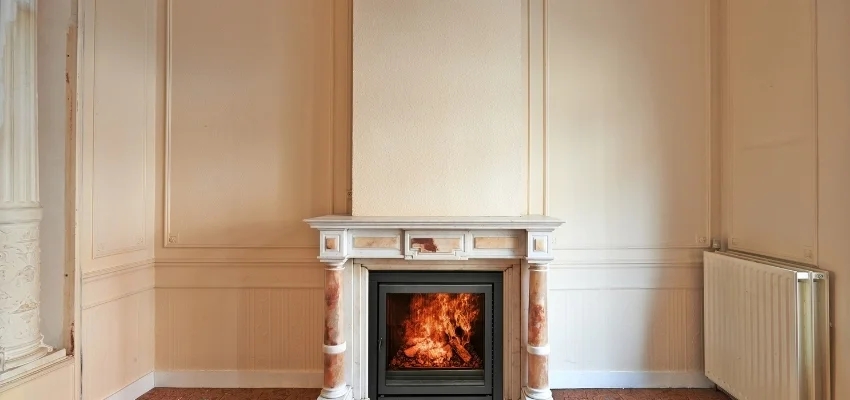
How is the white film cleaned off the glass of your gas fireplace?
Gas fireplace glass is cleaned with a cleaner made for fireplace glass and a soft cloth, once the fireplace is off and completely cool, to remove the white film that builds up inside. That cloudy film is a normal mineral deposit from burning gas, and ordinary household glass cleaners tend to smear it or leave residue that bakes on during the next fire. On sealed units, cleaning the inside means removing the glass front, and refitting it so the gasket seals evenly is part of keeping exhaust out of the room. Leave the inside of the glass to the yearly service and wipe only the outside yourself.
Should you keep using your gas fireplace until the technician arrives?
It depends on the symptom, but when in doubt, leave the fireplace off until it has been checked. Stop using it right away if there is a gas smell, black soot, a carbon monoxide alarm, cracked glass, flames escaping the firebox or a pilot that keeps going out. For a gas smell, leave the home and call the utility from outside. Lesser issues, such as a remote that responds slowly or a noisy fan, are usually fine to live with for a short time. Do not open panels or attempt fixes on gas parts while you wait; simply keep the area clear and your carbon monoxide alarms working.
How can you tell a gas fireplace service was done properly?
When we finish, the fireplace should behave the way it did when it was new, or close to it: quick ignition, even flames, no soot and a smooth shutdown. We relight it with you present and walk through anything we adjusted or replaced. If we measured a sensor that still works but is getting weak, we say so, since it may be the next part to fail. The glass should be clear, the logs set to the diagram and the access panel secured. If anything about the fire looks different in the following weeks, call and describe it rather than holding off until next year.
Why hire a local company for gas fireplace service?
Hiring locally makes follow-through easier, and gas fireplace work involves a lot of it: ordering a part, coming back to fit it, checking a fix after a few cold evenings. Being close by makes all of that easier for us and for you. Because the same builders tend to use the same fireplace models and venting layouts across a district, we often know where to look before the panel comes off. Calling Gas Fireplace Edmonton puts you in touch with people based around Edmonton who expect to see your fireplace again, and that expectation tends to encourage careful work the first time.
What happens after you reach out
We confirm the details of your home, suggest a visit window and explain what gas fireplace troubleshooting and repair will involve. On the day, the technician checks in before starting and walks you through the results at the end. Get started with a quote from Gas Fireplace Edmonton.
